
XRP Sell-off Hits $1.09 as Traders Face Fresh Downside Risk
AI-summarised from reporting by Bitcoin.com. How we use AI.
What happened
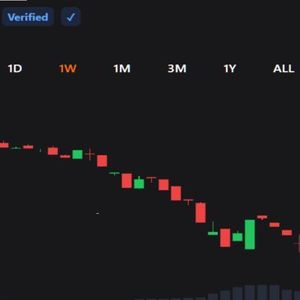
XRP, a prominent cryptocurrency frequently discussed among Australian investors, has recently experienced significant selling pressure, pushing its price towards a critical support level. The token, primarily associated with Ripple Labs for its role in facilitating international payments, saw its value dip, reflecting a broader bearish sentiment in the market. This decline occurred amidst a period of weak momentum and technical indicators suggesting further downside potential.
At a specific point earlier this week, XRP was observed trading just above its recent low. This movement indicates that bears have maintained control, with persistent selling interest outweighing buying activity. The cryptocurrency's struggle to reclaim higher price points underscores the prevailing cautious investor sentiment.
This price action is not isolated, often correlating with macroeconomic factors and overall dips in the wider digital asset market. For Australian investors closely monitoring their portfolios, such movements necessitate a careful re-evaluation of their positions and risk exposure in the current climate.
Why it matters for Australian investors
The performance of XRP holds particular relevance for the Australian cryptocurrency market. Many Australian investors hold XRP, acquired through local exchanges like CoinSpot, Independent Reserve, Swyftx, and BTC Markets. A price drop affects these holdings directly, impacting portfolio valuations and potential tax implications as defined by the Australian Taxation Office (ATO).
Beyond direct investment, XRP's underlying technology, RippleNet, aims to offer faster and cheaper cross-border payments. Should XRP's price volatility continue, it could influence the perceived stability of such decentralised finance (DeFi) solutions. This is particularly pertinent in Australia, a nation with strong trade ties and a growing interest in improving international payment efficiency.
Furthermore, the ongoing regulatory landscape surrounding XRP and Ripple Labs in the United States continues to cast a shadow. While Australian regulators like ASIC and AUSTRAC operate independently, global legal developments can influence market sentiment and investor confidence in Australia. Australian investors often look to international precedents when assessing regulatory risk for their assets.
Impact on the AUD market
The fluctuating price of XRP, when converted to Australian Dollars (AUD), presents a distinct scenario for local traders. A decline in XRP's USD value is amplified or mitigated depending on the AUD/USD exchange rate. If the AUD strengthens against the USD, the AUD-denominated price of XRP might not fall as sharply, offering a partial buffer for Australian holders.
Conversely, a weakening AUD alongside a falling XRP price could lead to a more significant percentage loss when viewed from an Australian perspective. Local exchanges provide AUD pairings for XRP, making these conversions immediate and visible for traders. This interplay between the cryptocurrency's performance and the national currency's strength is a constant factor for Australian market participants.
Trading volumes on Australian platforms for XRP will also reflect investor sentiment. Increased selling pressure will likely see higher volumes of XRP being sold for AUD or other stablecoins, indicating a flight to perceived safety. Such movements contribute to the overall liquidity and price discovery mechanisms within the Australian digital asset ecosystem, under the watchful eye of bodies like AUSTRAC for anti-money laundering compliance.
What to watch next
Moving forward, Australian investors should closely monitor several key indicators. The technical support level that XRP is currently testing remains crucial; a sustained break below this point could signal further declines. Conversely, a rebound from this level, coupled with increased buying volume, could indicate a change in market sentiment.
Broader market trends, particularly the performance of Bitcoin and Ethereum, will also play a significant role. Given the interconnected nature of the cryptocurrency market, a recovery in major assets often ushers in a recovery for altcoins like XRP. Investors should keep an eye on global economic data and central bank policies, which frequently influence investor appetite for risk assets.
Regulatory developments, especially those emanating from the ongoing legal battles involving Ripple Labs, will continue to be a focal point. Any definitive outcomes or significant progress could have a material impact on XRP's price action globally, and subsequently, on Australian-held assets. Locally, while AUSTRAC and ASIC continue their oversight, no immediate changes specific to XRP are anticipated, but general shifts in regulatory posture could always impact the broader market.
Finally, observing on-chain metrics such as large whale movements or changes in exchange reserves can offer insights into potential future price trends. For Australian investors, staying informed through reputable news sources and adapting investment strategies to these evolving conditions will be paramount.
Coins covered




Common questions
How is XRP taxed in Australia?
In Australia, the ATO treats cryptocurrencies like XRP as property for capital gains tax (CGT) purposes. This means that if you sell, trade, or otherwise dispose of XRP for a profit, you may incur CGT. Records of transaction dates, costs, and selling prices are essential for accurate tax reporting. Always consult a qualified tax professional for personalised advice on your crypto holdings.
Which Australian exchanges offer XRP?
Several prominent Australian cryptocurrency exchanges provide services for buying and selling XRP. These include CoinSpot, Independent Reserve, Swyftx, and BTC Markets. Each platform offers varying features, fee structures, and AUD pairing options, so investors should compare them to find one that best suits their trading needs and preferences.
What regulatory bodies oversee crypto in Australia?
In Australia, two main bodies play a role in regulating the cryptocurrency sector. AUSTRAC (Australian Transaction Reports and Analysis Centre) is the financial intelligence agency responsible for anti-money laundering (AML) and counter-terrorism financing (CTF) compliance. ASIC (Australian Securities and Investments Commission) oversees financial services and consumer protection, with a growing focus on regulating crypto assets that fall under their existing legal frameworks, such as those deemed financial products.
XRP faces selling pressure, impacting Australian investors. Discover why this matters for your portfolio, the AUD market, and what to watch next with CoinPuls
About this article: this is an AI-generated summary of reporting by Bitcoin.com. It has not been reviewed by a human editor. We use AI to localise crypto news for Australian readers, and we link back to the original source so you can verify the facts.
Informational only — not financial advice. Always do your own research. Read our AI & editorial policy →