
Why Is Bitcoin Crashing? Worst Week of 2026, $59,100 Low, and More Than Half of All BTC Now in the Red
AI-summarised from reporting by Bitcoin.com. How we use AI.
What happened
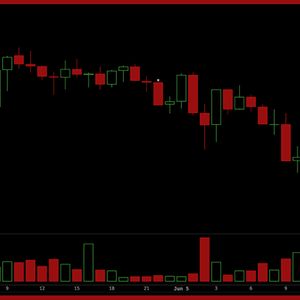
The cryptocurrency market experienced significant turbulence recently, with Bitcoin (BTC) registering its lowest price point of 2026. On a particularly volatile Friday, Bitcoin touched an intraday low of USD$59,100. This sharp decline wasn't isolated, as the broader crypto market saw over 351,000 traders face liquidations within a mere 24-hour period. It underscored a week of intense selling pressure.
This recent downturn extended a broader market correction. Bitcoin's price had already fallen by 19.3% over a seven-day period. Zooming out slightly further, the premier cryptocurrency had shed 22.2% from its valuation in just the prior two weeks. Such rapid depreciation prompted concern and close monitoring across the global financial landscape, including among Australian investors and regulators.
Why it matters for Australian investors
For Australian investors, Bitcoin's performance often sets the tone for their wider crypto portfolios. While local exchanges like CoinSpot, Independent Reserve, Swyftx, and BTC Markets quote Bitcoin in Australian Dollars (AUD), the underlying price action is heavily influenced by the USD-denominated global market. A significant dip in the USD price inevitably translates to a lower AUD price, impacting portfolio valuations across the board.
Furthermore, the volatility highlights the importance of understanding the Australian Tax Office's (ATO) guidelines on cryptocurrency. Disposing of crypto, whether through selling, trading, or even gifting, can trigger a capital gains tax (CGT) event. Significant price movements, particularly sharp drops, can lead to investors crystallising losses – which may be used to offset future capital gains, provided accurate records are maintained in accordance with ATO requirements.
Liquidations, a prominent feature of this recent market correction, are also a crucial point for Australian investors using leverage. While less prevalent on some regulated Australian platforms due to stricter risk management, those utilising international exchanges or decentralised finance protocols might face margin calls or automatic liquidations during periods of high volatility. This underscores the need for sound risk management and awareness of the specific terms and conditions of their chosen platforms.
Impact on the AUD market
The Australian Dollar (AUD) price of Bitcoin directly reflects these global movements. When Bitcoin's USD price plunges, its value against the AUD follows suit, irrespective of the AUD/USD exchange rate at that exact moment. Australian exchanges would have reflected the USD$59,100 low as a corresponding AUD figure, causing immediate impacts on the capital held by local investors.
This kind of market correction also tends to affect trading volumes on Australian platforms. While some investors might see dips as buying opportunities, others may retreat, leading to decreased activity. Monitoring these trends is crucial for organisations like AUSTRAC, which oversees financial transactions to prevent illicit activities, as significant market shifts can sometimes coincide with changes in trading patterns.
Moreover, the performance of Bitcoin often correlates with the broader sentiment in the Australian crypto market. Altcoins, frequently priced and traded against Bitcoin, generally experience magnified movements during BTC downturns. This ripple effect means that Australian investors holding diverse portfolios beyond just Bitcoin would have likely seen a reduction in overall value during this period of market stress.
What to watch next
The immediate focus for Australian investors will be on Bitcoin's ability to stabilise and potentially recover from these lows. Key technical levels and trading volumes on major global and Australian exchanges will provide insights into market sentiment. Any signs of sustained buying pressure or a decrease in sell-side liquidity would be positive indicators. Financial regulators like ASIC will also be closely observing market stability and consumer protection measures during such volatile periods.
Beyond just immediate price action, it’s imperative to monitor broader macroeconomic factors that influence global finance. Statements from central banks, inflation data, and geopolitical events can all play a significant role in cryptocurrency market movements. For Australian investors, keeping an eye on the Reserve Bank of Australia's (RBA) policies and the local economic outlook is also vital, as these can indirectly influence investment appetite for higher-risk assets like crypto.
Furthermore, regulatory developments both globally and within Australia will continue to shape the landscape. Clarifications or changes to ATO guidance, or potential new frameworks from AUSTRAC or ASIC, could influence how Australian investors interact with and report their crypto holdings. Staying informed about these evolving dynamics is crucial for prudent participation in the Australian digital asset space.
Coins covered


Common questions
How does Bitcoin's price drop affect my ATO tax obligations in Australia?
A Bitcoin price drop can create a capital gains tax (CGT) event if you sell or dispose of your crypto at a loss. This 'capital loss' can then be used to offset future capital gains. It's crucial to keep accurate records of all your crypto transactions, including purchase price, sale price, and dates, to correctly report to the ATO.
Will Australian crypto exchanges like CoinSpot or Swyftx delist assets due to market volatility?
While extreme market volatility can impact asset liquidity and trading conditions, Australian exchanges typically have robust policies in place. Delisting is usually reserved for assets that no longer meet their listing criteria, such as low trading volume over an extended period, security concerns, or regulatory non-compliance, rather than just market price fluctuations.
What is liquidation in crypto, and how does it affect Australian investors?
Liquidation in crypto occurs when a trader's leveraged position is automatically closed by an exchange due to their collateral falling below a certain threshold. For Australian investors using leverage, often on international platforms, significant price drops can trigger liquidations, leading to the loss of their staked capital. This highlights the high risk associated with leveraged trading and the importance of understanding margin requirements.
Bitcoin plunged to its 2026 low, impacting Australian crypto portfolios. Unpack what happened, its significance for AUD markets, and what's next.
About this article: this is an AI-generated summary of reporting by Bitcoin.com. It has not been reviewed by a human editor. We use AI to localise crypto news for Australian readers, and we link back to the original source so you can verify the facts.
Informational only — not financial advice. Always do your own research. Read our AI & editorial policy →