
US Targets Brazil’s Pix: Trade Report Claims Instant Payment System Restricts American Commerce
AI-summarised from reporting by Bitcoin.com. How we use AI.
What happened
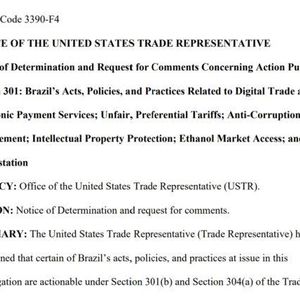
The Trump administration has flagged a proposal to levy 25% tariffs on Brazilian imports, citing Section 301 of the Trade Act of 1974. This move stems from an ongoing investigation alleging that Brazil's instant payment system, Pix, is unfairly disadvantaging US companies operating in the electronic payment sector. The core of the complaint suggests that by promoting Pix, the Brazilian government is creating an unlevel playing field that inhibits foreign competitors.
Pix, which has rapidly become Brazil's dominant instant payment solution, allows for real-time transfers and payments. Its widespread adoption has reshaped the country's financial landscape, offering a fast, low-cost alternative to traditional payment methods. The US trade report appears to view Pix's success and government backing as a barrier to market access for American-based payment service providers and fintech firms.
The proposed tariffs are a significant escalation in trade tensions, with potential ramifications beyond the immediate economic impact on Brazil. Such actions underscore the increasing scrutiny governments are placing on national digital infrastructure and its potential competitive effects. This situation highlights a broader global trend where financial technology, particularly state-backed or heavily promoted systems, can become points of international contention.
The Section 301 investigation framework grants the US broad authority to respond to unfair trade practices, as defined by its own laws. While tariffs are the primary tool, other retaliatory measures could theoretically be considered depending on the investigation's findings. The current proposal specifically targets Brazilian goods, reflecting a direct economic pressure point to address the perceived trade imbalance caused by Pix's prominence.
Why it matters for Australian investors
While the direct impact of US tariffs on Brazilian goods might seem distant for Australian investors, this development offers crucial insights into the evolving landscape of digital currencies and payments. Australia is increasingly exploring its own digital payment infrastructure, including discussions around a potential Central Bank Digital Currency (CBDC) and the ongoing adoption of the New Payments Platform (NPP).
The Brazilian Pix scenario serves as a cautionary tale: government support for domestic payment systems, however beneficial internally, can spark international trade disputes. For Australian investors watching the fintech space, this highlights the delicate balance between fostering local innovation and maintaining an open, competitive market. It also suggests that future regulatory or governmental pushes for digital payment solutions within Australia could, theoretically, attract similar international attention or scrutiny.
Furthermore, this development underscores the growing intersection of geopolitics, trade policy, and financial technology. Australian investors with exposure to global payment processors, cross-border remittance companies, or even blockchain-based payment solutions should track such international trade disputes closely. These events can influence market sentiment, regulatory frameworks, and ultimately the profitability of companies operating in the digital finance sector.
The Australian financial market, including its crypto exchanges like CoinSpot, Independent Reserve, Swyftx, and BTC Markets, operates within a global ecosystem. While Pix itself doesn't directly compete in Australia, the principles of national digital payment systems affecting international commerce are highly relevant. Any significant shifts in global trade policy or attitudes towards national digital infrastructure could create ripple effects on Australian businesses and investment opportunities.
Impact on the AUD market
The immediate impact on the Australian dollar (AUD) market is likely to be indirect, primarily driven by overall shifts in global trade sentiment and investor risk appetite. Trade disputes, particularly those involving major economies, tend to increase market uncertainty, which can lead to a 'flight to safety' in global markets. While the AUD is not typically considered a safe-haven currency, it can be sensitive to fluctuations in global trade confidence and commodity prices.
Should this trade dispute escalate or become a precedent for similar actions elsewhere, it could contribute to a broader environment of protectionism. Such an environment might weigh on global economic growth prospects, which would in turn affect demand for Australian exports and potentially put downward pressure on the AUD. Investors should monitor how global trade tensions evolve, as these broader movements can influence the AUD's trajectory.
For Australian companies or investors engaged in international trade with Brazil or the US, understanding the mechanisms of Section 301 and its potential application is crucial. While not directly linked to Australian trade policy, the precedent set could inform future approaches to digital trade disputes. The broader implications for global digital commerce and the movement of capital should be factored into investment decisions, especially for those with international exposure.
On a more nuanced level, the situation might also influence discussions within Australia regarding the regulation of digital assets and payment systems. If national digital infrastructure becomes a point of trade contention, it could prompt Australian regulators like AUSTRAC or ASIC to consider the international implications of their policies more closely. This proactive consideration could shape future Australian digital finance legislation, indirectly affecting the AUD market by impacting investor confidence or capital flows.
What to watch next
Investors should closely monitor the progression of the US Section 301 investigation into Brazil's Pix system. The findings of this investigation, and whether the proposed 25% tariffs are ultimately imposed, will set an important precedent for how national digital payment systems are viewed in the context of international trade law. Any resolution, or lack thereof, could influence future trade dialogues involving digital services.
Pay attention to the international response to these trade allegations. Other countries, particularly those developing or considering their own instant payment systems or CBDCs, will be keenly observing this situation. Their reactions, potentially through international bodies or bilateral trade discussions, could indicate broader shifts in global trade policy pertaining to digital financial infrastructure. This could have long-term implications for the interoperability and acceptance of various digital payment systems worldwide.
Domestically, Australian investors should continue to watch the development of Australia's own digital payment landscape. This includes advancements in the NPP, ongoing discussions around an Australian CBDC, and the regulatory environment for digital assets. The Brazilian example illustrates that government involvement in payment systems can attract international scrutiny, shaping how Australia might navigate its own digital finance future.
Finally, keep an eye on the broader geopolitical implications of digital finance. As nation-states increasingly develop and promote their own digital financial tools, conflicts over market access and fair competition are likely to become more frequent. Understanding these evolving dynamics will be key for Australian investors seeking to navigate the complex intersection of technology, trade, and global economic policy in the years to come.
Coins covered

Common questions
How does the US targeting Brazil's Pix system relate to Australian crypto regulations and taxation?
While the US-Brazil dispute is about traditional payment systems, it highlights how governments protect domestic financial infrastructure. For Australian crypto investors, this could signal increasing government scrutiny over digital financial services. Discussions around an Australian CBDC or payment system reforms could be influenced by these international trade considerations. Regarding taxation, the ATO's current guidance on crypto assets is generally unaffected immediately, but any major shifts in global digital finance policy could provoke reviews in the long term.
Could Australian payment systems like the NPP face similar international trade scrutiny?
Theoretically, yes. The Section 301 action against Brazil's Pix suggests that national payment systems, particularly those with strong government backing or promotion, can become subjects of international trade disputes if perceived to disadvantage foreign competitors. While Australia's NPP is not identical to Pix and is not directly government-run in the same manner, investors should be aware of the precedent being set globally regarding national digital infrastructure and its potential trade implications.
What impact might this have on Australian crypto exchanges like CoinSpot or Swyftx?
The direct impact on Australian crypto exchanges like CoinSpot, Independent Reserve, Swyftx, and BTC Markets is likely minimal for now, as Pix operates in a different financial sector. However, indirectly, if this development creates a more protectionist global trade environment or sparks broader discussions about national digital financial sovereignty, it could influence future regulatory approaches to digital assets in Australia. This might, in turn, affect the operating environment for these exchanges and their users over the long term.
US targets Brazil's Pix payment system, proposing tariffs citing trade disadvantage. CoinPulse AU analyses the implications for Australian investors and the A
About this article: this is an AI-generated summary of reporting by Bitcoin.com. It has not been reviewed by a human editor. We use AI to localise crypto news for Australian readers, and we link back to the original source so you can verify the facts.
Informational only — not financial advice. Always do your own research. Read our AI & editorial policy →