
US Lawmakers Propose the ‘ARMA’ Bill to Build a 1-Million-Bitcoin Strategic Reserve
AI-summarised from reporting by Bitcoin.com. How we use AI.
What happened
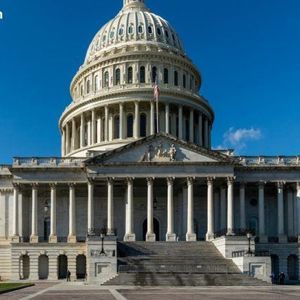
US Representatives Nick Begich and Jared Golden recently introduced a bipartisan bill, the 'American Reserve Modernization Act of 2026' (ARMA), to the US Congress. This proposed legislation aims to establish a Strategic Bitcoin Reserve for the United States. If passed, the reserve would be mandated to maintain a minimum of one million Bitcoin for at least 20 years.
The ARMA bill represents a significant step towards formalising Bitcoin's role within national financial strategies. The bipartisan nature of the proposal suggests a growing recognition across the political spectrum of Bitcoin's potential as a strategic asset. The long-term retention period highlights an intent to treat Bitcoin not just as a speculative investment, but as a foundational component of a nation's financial resilience.
Why it matters for Australian investors
The introduction of the ARMA bill in the US is a development with potential global ramifications, including for Australian investors. While direct impacts on an individual's Bitcoin holdings are not immediate, such institutional moves by major economies can influence market sentiment and global adoption trends. A US strategic reserve could lend further legitimacy to Bitcoin as an asset class, potentially drawing in more institutional capital worldwide.
For Australian investors holding Bitcoin purchased via local exchanges like CoinSpot, Independent Reserve, Swyftx, or BTC Markets, this news might reinforce their long-term conviction. Increased institutional confidence from a market as influential as the US could contribute to long-term price stability or appreciation, though volatility remains a characteristic of the crypto market. It also signals a potential shift in how governments perceive and interact with decentralised digital assets.
Impact on the AUD market
While the ARMA bill specifically concerns the US, its implications could extend to the Australian dollar (AUD) denominated crypto market. Enhanced global legitimacy for Bitcoin could lead to increased demand from both retail and institutional investors worldwide, including Australia. This heightened demand could, in turn, influence Bitcoin's price when exchanged against the AUD on local platforms.
Furthermore, if major global players like the US begin to formally integrate Bitcoin into their strategic reserves, it might encourage other nations, potentially including Australia, to explore similar pathways. Such shifts could influence regulatory discussions within Australia, possibly impacting how organisations like AUSTRAC and ASIC approach digital assets. Currently, the ATO already provides clear guidance on the tax treatment of cryptocurrencies, and formal government involvement could either solidify or prompt further refinement of these frameworks.
Should there be a significant increase in international demand spurred by such initiatives, AUD-denominated Bitcoin pairings on Australian exchanges could see increased trading volumes. This would reflect a broader market acceptance and potentially enhance liquidity for Australian traders. However, it's crucial to remember that the Australian market is also influenced by local economic factors and global macroeconomic trends.
What to watch next
Australian investors should closely monitor the progress of the ARMA bill through the US legislative process. While its passage is not guaranteed, its journey through Congress will offer insights into the evolving perspectives of lawmakers on digital assets. Any amendments or debates surrounding the bill could reveal significant details about the strategic thinking behind such initiatives.
Beyond the US, it will be important to observe whether other major economies begin to explore similar strategic reserves or formally integrate Bitcoin into their national balance sheets. Such movements could create a cascading effect, further normalising Bitcoin as a global reserve asset. Domestically, watch for any commentary or policy discussions from Australian financial regulators and government bodies regarding national digital asset strategies.
Consider how the evolving global regulatory landscape might influence local investment products and services. The emergence of more robust regulatory frameworks, potentially inspired by international developments, could lead to a broader array of crypto investment options for Australian everyday investors, while also providing clearer guidelines for tax compliance and consumer protection.
Coins covered


Common questions
What is the Australian government's current stance on Bitcoin as a reserve asset?
The Australian government has not indicated any plans to establish a Bitcoin strategic reserve. Its primary focus regarding digital assets currently revolves around regulation (via ASIC and AUSTRAC) and taxation (via the ATO), rather than direct national ownership for reserve purposes.
How would a US Strategic Bitcoin Reserve affect AUD Bitcoin prices on Australian exchanges?
A US Strategic Bitcoin Reserve could indirectly boost global confidence in Bitcoin, potentially increasing overall demand. This increased demand could lead to higher Bitcoin prices globally, which would likely be reflected in AUD Bitcoin prices on Australian exchanges like CoinSpot and Independent Reserve, assuming other market factors remain constant.
Are there any equivalent crypto legislative proposals in Australia to the US ARMA bill?
Currently, there are no publicly known legislative proposals in Australia directly comparable to the US ARMA bill, which aims to create a strategic Bitcoin reserve. Australian legislative efforts concerning crypto are primarily focused on consumer protection, market licensing, and combating illicit finance.
US lawmakers propose the 'ARMA' bill for a 1-million-Bitcoin strategic reserve. Explore its implications for Australian investors and the AUD market.
About this article: this is an AI-generated summary of reporting by Bitcoin.com. It has not been reviewed by a human editor. We use AI to localise crypto news for Australian readers, and we link back to the original source so you can verify the facts.
Informational only — not financial advice. Always do your own research. Read our AI & editorial policy →