
Unlike the FTX collapse, the $89 million Coldcard exploit has investors sending bitcoin back to exchanges
AI-summarised from reporting by CoinDesk. How we use AI.
What happened
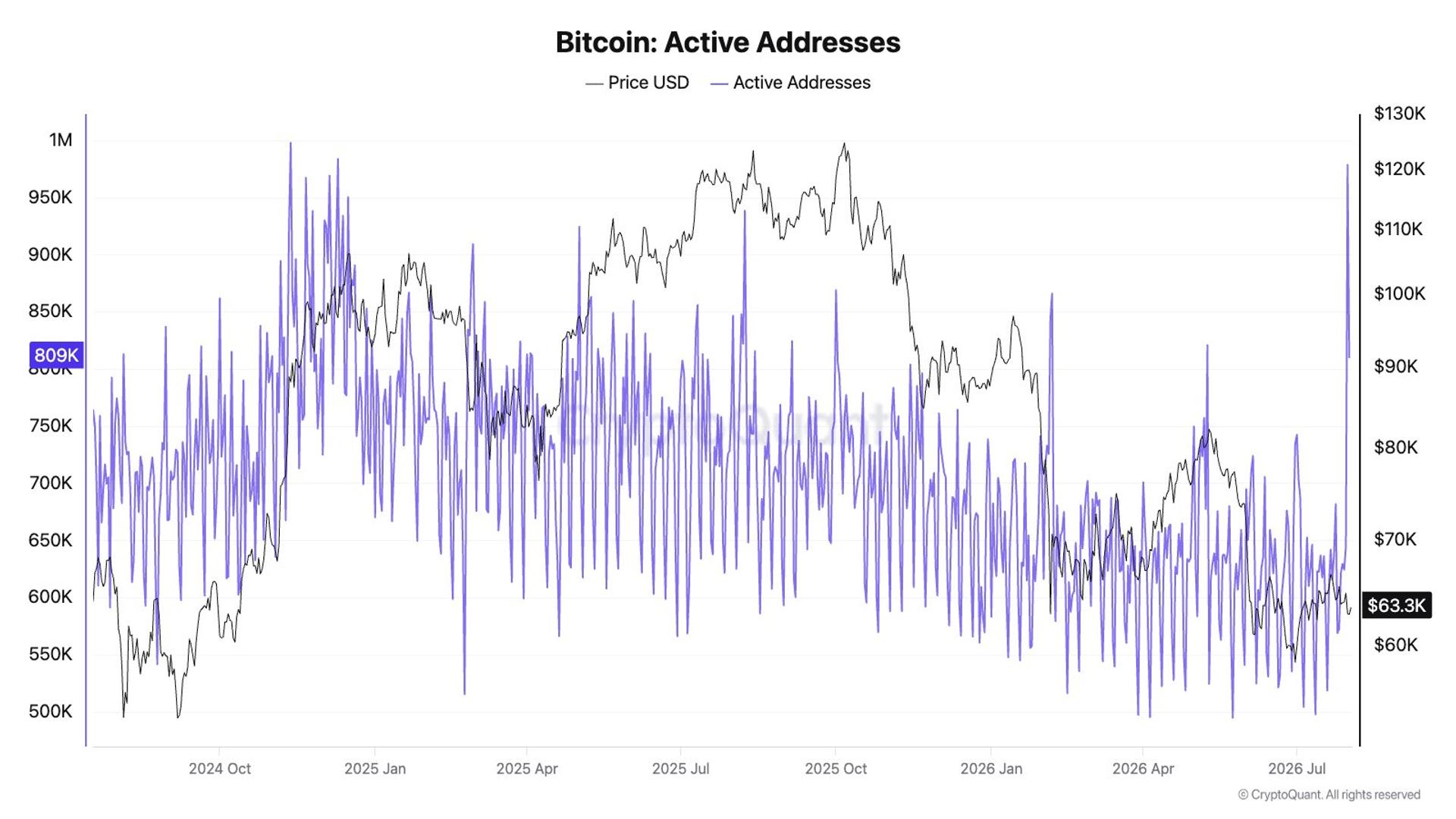
Recent reports indicate a significant shift in Bitcoin holder behaviour following a vulnerability discovered in Coldcard hardware wallets. Unlike the rush to self-custody witnessed after the FTX collapse in late 2022, blockchain analytics firms are observing a trend of smaller Bitcoin investors moving their funds back onto centralised exchanges. This unexpected reaction stems from concerns surrounding the Coldcard exploit, which, despite the company's strong reputation for security, appears to have rattled a segment of the market.
The Coldcard hardware wallet is widely regarded for its robust security features, particularly its air-gapped operation which minimises exposure to online threats. However, the discovery of a vulnerability has seemingly prompted a re-evaluation of self-custody practices among some users. Instead of doubling down on personal wallet security, these investors are opting for the perceived safety and liquidity offered by established cryptocurrency exchanges.
This shift highlights a complex psychological dynamic in the crypto space. While the ethos of 'not your keys, not your coin' remains strong, the practical realities and anxieties associated with managing private keys, especially in the wake of security concerns, can drive investors towards familiar, albeit centralised, platforms. The perceived burden of securing one's own crypto may, for some, outweigh the risks associated with third-party custodians when a hardware wallet's integrity is questioned.
Why it matters for Australian investors
For Australian investors, this development underscores the ongoing tension between self-custody and using centralised exchanges. While leading Australian exchanges like CoinSpot, Independent Reserve, Swyftx, and BTC Markets offer robust security measures and operate under Australian regulatory oversight (including AUSTRAC registration), the fundamental principle of 'not your keys' still applies. The decision of where to store digital assets involves a careful consideration of personal risk tolerance, technical proficiency, and trust in custodians.
Australian investors often weigh the convenience and liquidity provided by local exchanges against the ultimate control and security of hardware wallets. The Coldcard situation demonstrates that even highly-regarded hardware solutions can face vulnerabilities, potentially influencing how Australians perceive the overall security landscape. This could lead to increased scrutiny of the security protocols of both hardware wallet providers and centralised exchanges within the Australian market.
Furthermore, the ATO's guidance on cryptocurrency taxation in Australia applies regardless of where an investor stores their assets. Whether Bitcoin is held on an exchange or in a hardware wallet, capital gains tax implications remain a crucial consideration. Therefore, while storage methods are a security decision, they do not alter an investor's tax obligations.
Impact on the AUD market
While the direct impact on the AUD-denominated crypto market from the Coldcard exploit is not immediately clear, the behavioural shift observed globally could subtly influence local dynamics. If Australian investors mirror the global trend of moving Bitcoin back to exchanges, it could theoretically lead to a slight increase in on-exchange liquidity for AUD trading pairs. This might make it marginally easier for larger trades to be executed without significant price slippage on platforms offering AUD trading.
However, it's more likely that the primary impact would be a psychological one. Increased scrutiny of wallet security, both hardware and software, would become more prominent in investor discussions. Australian crypto educators and platforms might find themselves addressing more questions about best practices for asset custody, potentially leading to a renewed emphasis on cold storage solutions, but with an added layer of due diligence on the part of users.
Any significant movement of funds could also draw the attention of regulatory bodies like AUSTRAC, which monitors transactions to prevent illicit activities. While not directly related to the exploit, large-scale shifts in fund location could, in theory, trigger enhanced monitoring. For now, the key takeaway for the AUD market is a reinforced awareness of security risks across all forms of crypto custody.
What to watch next
Moving forward, Australian investors should closely monitor how hardware wallet manufacturers respond to such vulnerabilities. Transparency and swift action in addressing security concerns will be crucial for maintaining user trust. Expect a heightened focus on independent security audits and clear communication from hardware wallet providers regarding their security posture and any discovered exploits.
We should also observe whether this trend of moving funds back to exchanges persists or if it's a temporary reaction. A sustained shift could indicate a broader re-evaluation of self-custody, potentially leading to more sophisticated insurance offerings or enhanced security features from centralised custodians to attract and retain users. Conversely, if the security concerns are adequately addressed, we might see a return to self-custody as confidence is restored.
Finally, keep an eye on how regulatory bodies like ASIC and AUSTRAC might react to these market shifts, if at all. While this event doesn't directly trigger new regulation, any large-scale movement of assets or significant security incidents can inform future policy discussions around investor protection and market integrity in the Australian crypto ecosystem. For Australian investors, continuous education on secure practices and staying informed about both hardware and exchange security is paramount.
Coins covered

Common questions
What does the Coldcard vulnerability mean for my Bitcoin held on Australian exchanges like CoinSpot or Swyftx?
If your Bitcoin is held on a reputable Australian exchange like CoinSpot, Independent Reserve, Swyftx, or BTC Markets, it is generally unaffected by a specific hardware wallet vulnerability like the one reported for Coldcard. Your funds are managed by the exchange, which employs its own security protocols. However, it's always wise to use strong, unique passwords and enable two-factor authentication on your exchange accounts.
Is it safer to keep my Bitcoin on a hardware wallet or an Australian exchange after hearing about the Coldcard exploit?
Both hardware wallets and reputable Australian exchanges have different risk profiles. Hardware wallets offer maximum control over your private keys, aligning with the 'not your keys, not your coin' principle, but require you to manage security yourself. Exchanges offer convenience and often have insurance policies, but you're trusting a third party. The Coldcard incident highlights that even hardware wallets can have vulnerabilities, reinforcing the need for careful research and risk assessment for any storage method you choose.
How does AUSTRAC or the ATO view Bitcoin movements between hardware wallets and exchanges in Australia?
AUSTRAC, as Australia's financial intelligence agency, monitors transactions for illicit activities, regardless of where your Bitcoin is stored. Moving funds between a hardware wallet and an exchange is a common activity and typically not a concern unless it's part of a larger pattern of suspicious transactions. The ATO's tax rules apply to capital gains or losses when you dispose of your Bitcoin (e.g., selling it for AUD or trading it for another crypto), not just when you move it between your own wallets or to an exchange.
Coldcard exploit sees Bitcoin flowing back to exchanges. CoinPulse AU analyses what this means for Australian investors, AUD markets, and crypto security.
About this article: this is an AI-generated summary of reporting by CoinDesk. It has not been reviewed by a human editor. We use AI to localise crypto news for Australian readers, and we link back to the original source so you can verify the facts.
Informational only — not financial advice. Always do your own research. Read our AI & editorial policy →