
Trump refuses to sign law with U.S. CBDC ban, demands approval of elections bill
AI-summarised from reporting by CoinDesk. How we use AI.
What happened
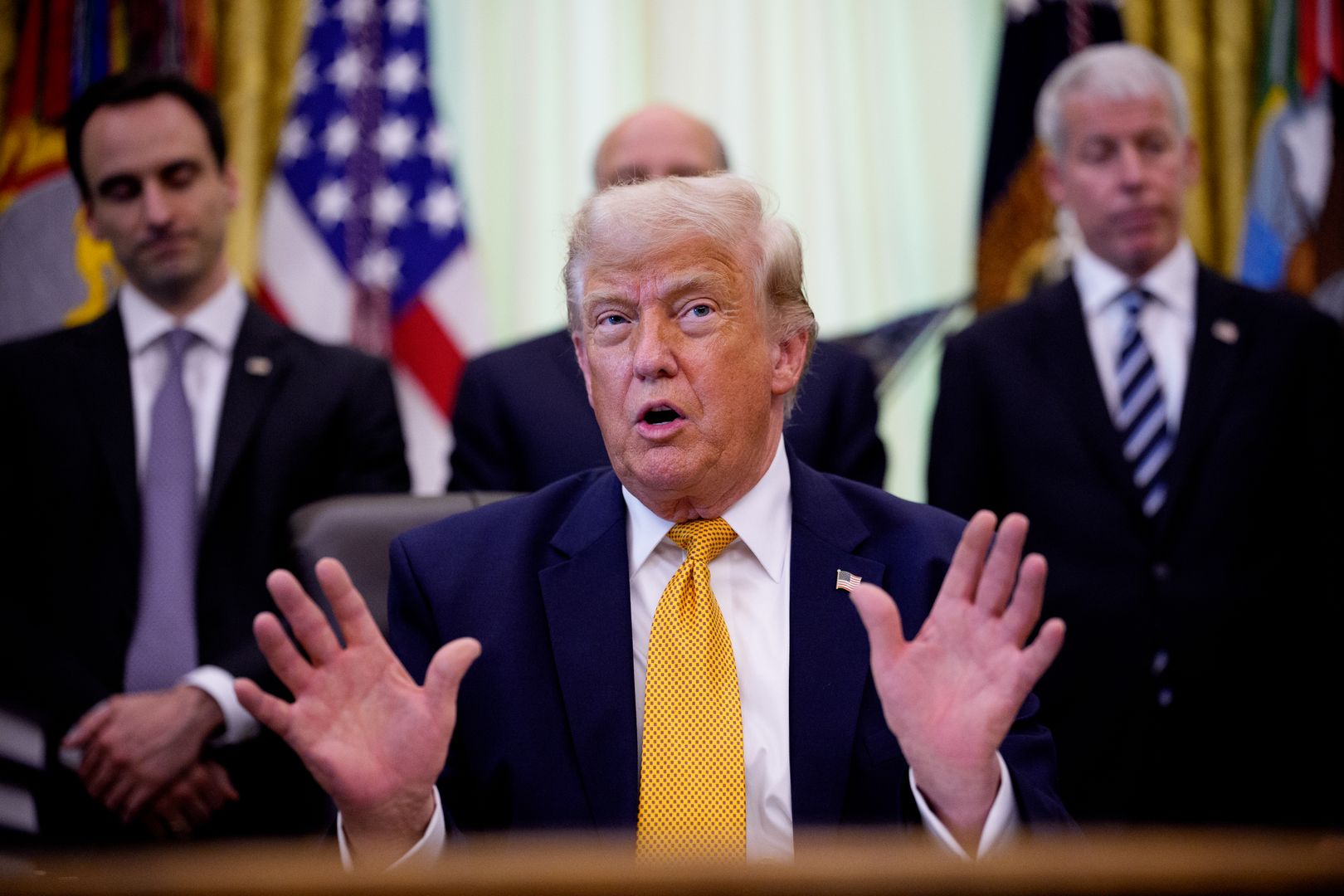
Former US President Donald Trump recently declined to sign a bipartisan housing bill that included a provision to ban a prospective US Central Bank Digital Currency (CBDC). This unexpected move occurred just as Congress was preparing for a celebratory signing event. The cancellation of the event and the refusal to sign indicates a shift in the administration's priorities or a strategic political manoeuvre.
While the housing bill itself was largely uncontroversial, the inclusion of the CBDC ban had garnered significant attention from the crypto community. Proponents of the ban viewed it as a protective measure against potential government overreach and surveillance. Opponents, however, argued that a CBDC could offer efficiencies in payments and financial inclusion, though concerns about privacy remain paramount.
Trump's decision to withhold his signature was reportedly tied to demands for approval of an unrelated elections bill. This suggests that the CBDC ban, despite its significance to the digital asset space, became a bargaining chip in broader political negotiations. The intertwining of crypto policy with other legislative agendas highlights the complex landscape facing digital currency initiatives globally.
The development has left many wondering about the future of a US CBDC under a potential Trump presidency. His previous rhetoric has been largely sceptical of CBDCs, often aligning with the 'freedom and privacy' narrative that many in the cryptocurrency world champion. This latest action, however, shows a willingness to leverage such policy for other political gains.
Why it matters for Australian investors
While this development directly concerns US legislative policy, its implications can ripple through global financial markets, including those in Australia. The world's largest economy signalling its stance on a CBDC, even indirectly, contributes to the broader narrative around digital sovereign currencies. Australian investors often look to US regulatory and political trends as indicators for future global directions.
For Australian investors holding US dollar-denominated stablecoins or other crypto assets with significant exposure to the US market, shifts in American policy can influence market sentiment and price stability. A definitive stance on a US CBDC, whether for or against, has the potential to impact the perceived legitimacy and future role of decentralised digital assets.
Furthermore, Australia is currently exploring its own CBDC options, with the Reserve Bank of Australia (RBA) having conducted pilot programs and published research. The US political debate provides a case study for the challenges and complexities involved in introducing a sovereign digital currency. Australian policymakers and regulators like ASIC and AUSTRAC will be closely watching international developments to inform their own strategies.
Should the US eventually move towards or away from a CBDC, it could set a precedent that influences other G7 and G20 nations, including Australia. This could affect the competitive landscape for private stablecoins and traditional payment systems, which in turn impacts investment opportunities and risk assessments for Australian portfolios.
Impact on the AUD market
The immediate impact on the Australian Dollar (AUD) market is likely to be minimal, as the news pertains to specific US domestic policy. However, in the medium to long term, broader shifts in global digital currency adoption could have indirect effects. If the US were to ban a CBDC, it might contribute to a perception of continued dominance for decentralised cryptocurrencies, potentially boosting sentiment in that sector globally.
For Australian crypto exchanges such as CoinSpot, Independent Reserve, Swyftx, and BTC Markets, the US stance on CBDCs informs the evolving regulatory environment. While these exchanges operate under Australian regulations, global trends can influence product offerings, user behaviour, and investment flows. A clear US direction could provide more certainty for participants in the broader crypto ecosystem.
The absence of a US CBDC, or even a protracted debate, could maintain the status quo where fiat-backed stablecoins, often pegged to the USD, continue to play a significant role. This dynamic could affect liquidity and trading pairs available on Australian platforms. Australian investors utilising AUD/crypto pairs might see indirect effects based on the overall health and sentiment of the global crypto market.
Taxation of crypto assets in Australia, as outlined by the ATO, remains consistent regardless of US CBDC policy. However, the nature of future digital currencies, whether sovereign or decentralised, will continually challenge existing frameworks. Decisions made in major economies like the US can help shape the global conversation around the definition and treatment of various digital assets.
What to watch next
Australian investors should closely monitor how the US CBDC debate evolves in the coming months. The outcome of the US elections will be a critical factor, as different administrations may adopt varying approaches to digital currency policy. Trump's current stance, while seemingly against a CBDC, is now intertwined with other legislative priorities, making a clear prediction difficult.
Further legislative attempts in the US to either ban or enable a CBDC will be important to observe. These developments could signal the direction of travel for the world's largest economy and, by extension, influence global regulatory discussions. The specific language used in any future bills will be crucial for understanding the potential scope and implications of any US digital dollar.
Keep an eye on statements from influential US regulatory bodies and economic institutions. Their perspectives often shape public and political discourse. Meanwhile, here in Australia, continue to track the RBA's progress on its own CBDC research and any policy statements from ASIC and AUSTRAC. The interplay between international and domestic developments will define the future of digital finance Down Under.
Finally, the actions of other major economies regarding CBDCs will also provide context. China's digital yuan, the European Union's digital euro plans, and various pilot projects around the globe contribute to a complex picture. Australian investors should view the US situation as one piece of a much larger, interconnected global digital currency puzzle.
Coins covered


Common questions
How might a US CBDC ban affect my cryptocurrency holdings on Australian exchanges?
A US CBDC ban would not directly affect your cryptocurrency holdings on Australian exchanges like CoinSpot or Swyftx. However, if such a ban were to significantly impact global crypto market sentiment or the perceived value of decentralised assets, you might see indirect price fluctuations in your portfolio. Australian regulations for crypto trading remain separate from US policy.
Will a US decision on a CBDC change how the ATO taxes my crypto gains in Australia?
No, a US decision regarding a CBDC will not directly change the Australian Taxation Office (ATO)'s current tax treatment of cryptocurrency in Australia. The ATO's rules on capital gains tax for crypto assets operate independently. However, broad global digital currency trends can eventually influence future policy discussions in Australia.
Could a US CBDC ban lead to more adoption of stablecoins pegged to the AUD?
While a US CBDC ban wouldn't directly lead to more AUD-pegged stablecoin adoption, it could potentially reinforce the role of private stablecoins if a major economy opts out of a sovereign digital currency. Increased private stablecoin use, both USD and potentially AUD-pegged, could then be seen on Australian platforms as the market adapts to the evolving digital finance landscape globally.
Explore how former US President Trump's refusal to sign a CBDC ban bill impacts Australian crypto investors and the broader AUD market. CoinPulse AU analysis.
About this article: this is an AI-generated summary of reporting by CoinDesk. It has not been reviewed by a human editor. We use AI to localise crypto news for Australian readers, and we link back to the original source so you can verify the facts.
Informational only — not financial advice. Always do your own research. Read our AI & editorial policy →