
Trump lands in Senate's crosshairs over $500 million UAE investment in his crypto venture
AI-summarised from reporting by CoinDesk. How we use AI.
What happened
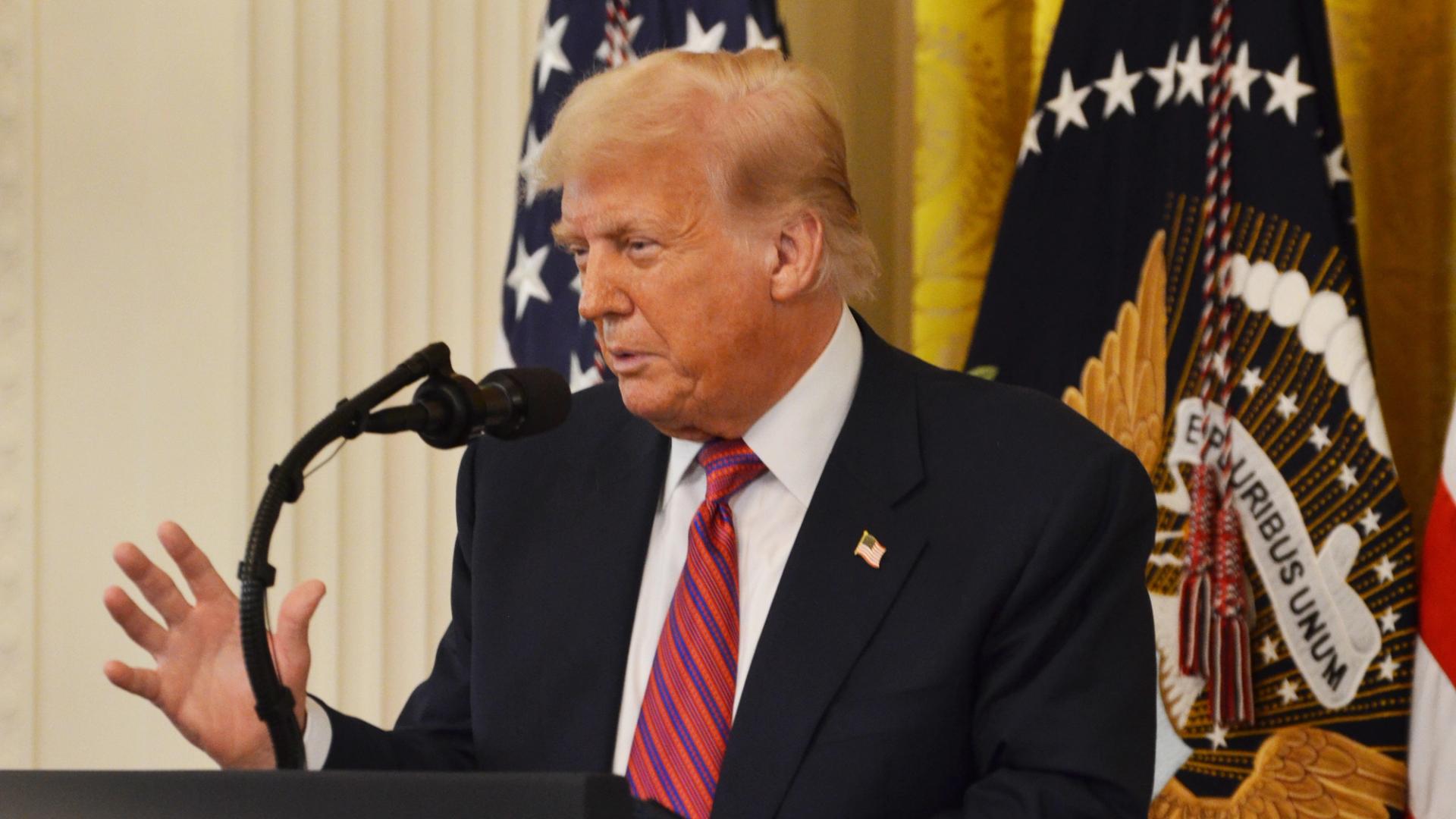
Former United States President Donald Trump is facing increased scrutiny from Senate Democrats following a significant investment by officials from the United Arab Emirates (UAE) into his new crypto venture, World Liberty Financial. Senate Democrats have formally called for hearings to investigate the nature and implications of this US$500 million investment. The primary concern is whether this substantial financial backing could potentially influence, or has already influenced, Trump's policy decisions, particularly those related to foreign affairs and national security, should he return to office.
The investment itself has raised eyebrows due to its scale and the political prominence of the individuals involved. World Liberty Financial, a new entity, is reported to be involved in the cryptocurrency space, making the timing and source of its funding particularly sensitive. The call for hearings suggests a desire to establish transparency and to ensure that no foreign entanglements could compromise the integrity of US presidential policy-making.
This development comes amidst a broader global discussion about the intersection of politics, finance, and the rapidly evolving cryptocurrency market. The direct involvement of a former head of state in a crypto venture, particularly one funded by foreign government-linked entities, introduces complex questions regarding conflict of interest, national security, and regulatory oversight.
Why it matters for Australian investors
While this situation centres on US politics and a US-based venture, Australian investors should pay close attention due to its potential broader implications for the global cryptocurrency market and regulatory environment. Any major political scandal or investigation involving a high-profile figure and a significant crypto investment could trigger increased regulatory scrutiny worldwide. This could lead to a tightening of know-your-customer (KYC) and anti-money laundering (AML) requirements, even for Australian exchanges like CoinSpot, Independent Reserve, Swyftx, and BTC Markets, to prevent similar situations.
Furthermore, if the US Senate hearings uncover any significant malfeasance or systemic risks associated with political figures' involvement in crypto, it could influence how Australian regulators like ASIC (Australian Securities and Investments Commission) and AUSTRAC (Australian Transaction Reports and Analysis Centre) approach the digital asset space. While the Australian market is distinct, it is often influenced by global precedents, especially those set by major economies.
For Australian investors holding assets priced in USD or tied to global sentiment, such as Bitcoin (BTC) or Ethereum (ETH), any shift in the international political or regulatory landscape could impact their portfolio's AUD value. A significant scandal could introduce market uncertainty, potentially affecting a broad range of digital assets and leading to increased volatility. It underscores the importance of understanding the macro-political context surrounding crypto investments.
Impact on the AUD market
The direct impact on the Australian Dollar (AUD) market is likely to be indirect but still noteworthy. A major political controversy in the US involving cryptocurrency could lead to a general risk-off sentiment in global markets. In such scenarios, investors often retreat from riskier assets, including cryptocurrencies, and sometimes even from currencies perceived as relatively less stable, such as commodity-linked currencies like the AUD.
Should there be a significant downturn in the global crypto market due to this investigation, Australian investors might see the AUD value of their digital assets decline, even if the underlying USD price depreciates. Conversely, if the situation is resolved without severe repercussions, the impact on AUD-denominated crypto prices might be minimal or short-lived.
Australian crypto exchanges are already subject to stringent regulations from AUSTRAC regarding AML/CTF (Anti-Money Laundering and Counter-Terrorism Financing). Should the US investigation highlight new vectors for financial misconduct through crypto, AUSTRAC might review or even strengthen its directives, further embedding compliance costs that could indirectly affect traders and investors on platforms operating in Australia.
What to watch next
The immediate focus for Australian investors and market watchers should be on the progression of the US Senate Democrats' call for hearings. The scope and findings of any potential investigation will be crucial in determining the narrative surrounding political involvement in crypto. Should hearings commence, the details unearthed – particularly concerning the source of funds and any alleged quid pro quo arrangements – will be paramount.
Investors should also monitor statements from US regulatory bodies like the SEC (Securities and Exchange Commission) and FinCEN (Financial Crimes Enforcement Network). While they are not directly involved in this specific political inquiry, their reactions or any new guidance following such an event could cascade into global regulatory practices, including those enforced by ASIC and AUSTRAC in Australia.
Finally, significant developments in this case could influence the broader institutional adoption of cryptocurrencies. If the involvement of high-profile political figures leads to clearer regulatory frameworks, it could pave the way for increased mainstream acceptance. Conversely, if it results in greater mistrust or regulatory hurdles, it could slow down the pace of institutional integration, impacting the long-term growth trajectory of the crypto market from an Australian perspective.
Monitoring how major cryptocurrencies like Bitcoin and Ethereum react to the news, particularly concerning their AUD trading pairs on Australian exchanges, will provide real-time indicators of market sentiment as the situation unfolds. This serves as a reminder that the global crypto landscape is interconnected, and events far from Australian shores can still ripple through local portfolios.
Coins covered



Common questions
How might Australian crypto tax (ATO) be affected by US political crypto investigations?
While this US political investigation doesn't directly change Australian tax law, any new global precedents it sets for crypto regulation or transparency could indirectly influence future ATO guidance. The ATO consistently monitors international developments, and increased scrutiny on crypto nationally could lead to more robust reporting requirements for Australian investors.
Could this US situation impact my crypto holdings' AUD value on Australian exchanges?
Yes, indirectly. If this US political investigation causes broader market uncertainty or a 'risk-off' sentiment in global cryptocurrency markets, the USD value of major cryptos like Bitcoin or Ethereum could fall. This depreciation, combined with changes in the AUD/USD exchange rate, would then affect the AUD value of your holdings on Australian exchanges like CoinSpot or Swyftx.
Are Australian crypto exchanges like BTC Markets or Independent Reserve required to report foreign investments in crypto ventures?
Australian exchanges are subject to AUSTRAC's Anti-Money Laundering and Counter-Terrorism Financing (AML/CTF) regulations. They must report suspicious transactions and significant cash transactions. If a foreign investment were to flow through an Australian exchange, it would be subject to these reporting obligations, but the current US political issue directly concerns an investment into a US venture, not an Australian one.
US Senate Democrats are scrutinising a $500M UAE investment in Trump's crypto venture. Discover how this political saga could impact Australian investors and
About this article: this is an AI-generated summary of reporting by CoinDesk. It has not been reviewed by a human editor. We use AI to localise crypto news for Australian readers, and we link back to the original source so you can verify the facts.
Informational only — not financial advice. Always do your own research. Read our AI & editorial policy →