
Trump Defends Prediction Markets and Bitcoin in Truth Social Post Praising CFTC’s Selig
AI-summarised from reporting by Bitcoin.com. How we use AI.
What happened
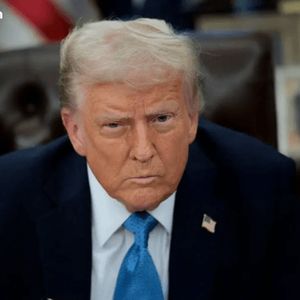
Donald Trump recently posted on Truth Social, defending the Commodity Futures Trading Commission's (CFTC) authority over prediction markets. His statement emphasised the importance of protecting the United States' position as a leading global crypto destination. This public stance from a prominent political figure has drawn attention to the regulatory landscape surrounding digital assets.
The former President's remarks specifically supported CFTC Chairman Kristin Johnson's prior statements concerning prediction markets. Johnson had asserted the CFTC's exclusive federal jurisdiction over these markets, suggesting that states should yield to federal oversight. This push for federal primacy aims to create a consistent regulatory environment rather than a fragmented one across different states.
Trump's intervention adds a political dimension to the ongoing debate about which regulatory body should govern various aspects of the crypto industry. While prediction markets are a niche, his broader comments about the US maintaining its leadership in crypto resonate across the wider digital asset space. This indicates a recognition of cryptocurrency's growing economic and technological significance.
The underlying tension between federal and state-level regulation is a recurring theme in the broader US financial system. For the crypto sector, it dictates how innovative products and services can be brought to market and how effectively they can scale. Trump's statement signals a preference for a clear, unified federal approach, aiming to prevent regulatory hurdles that could stifle innovation or drive businesses overseas.
Why it matters for Australian investors
While Trump's comments directly address the US regulatory environment, they have notable implications for Australian investors. The global nature of the cryptocurrency market means that major policy shifts in one prominent jurisdiction often create ripple effects worldwide. A clear and unified regulatory framework in a market as large as the US could set precedents or influence approaches taken by other nations, including Australia.
Australian regulators like AUSTRAC and ASIC, along with the ATO, are continuously navigating the complexities of digital assets. Consistent federal regulation in the US might encourage a more defined approach here, potentially impacting how crypto services are offered by Australian exchanges such as CoinSpot, Swyftx, Independent Reserve, and BTC Markets. Clarity from a major economy can foster a more stable global market, which benefits all participants.
Furthermore, if the US establishes itself more firmly as a crypto leader, it could attract significant investment and talent. This might lead to enhanced product offerings and infrastructure development that eventually filter down to the Australian market. Conversely, regulatory uncertainty anywhere creates FUD (fear, uncertainty, and doubt), which can impact market sentiment globally, including AUD-denominated crypto assets.
Australian investors should also consider how such regulatory discussions might influence the future of decentralised finance (DeFi) and tokenised assets. Clear regulatory frameworks, even if initially applied to prediction markets, demonstrate a grappling with novel financial instruments. This can inform how Australian authorities choose to classify and oversee similar emerging technologies, affecting everything from investment access to tax treatment.
Impact on the AUD market
The immediate impact on the AUD-denominated crypto market from Trump's specific comments is likely to be indirect. Australian crypto prices, while influenced by global sentiment, are primarily driven by broader market trends, local supply and demand, and the Australian dollar's performance against major currencies like the USD. However, the theme of regulatory clarity is highly relevant.
A more stable and predictable regulatory environment in the US could contribute to increased institutional adoption globally. If major US financial players gain clearer pathways to engage with crypto, it might encourage similar institutions in Australia. This heightened institutional interest could bring more capital into the overall market, potentially benefiting AUD-pegged crypto assets and the liquidity on local exchanges.
For Australian crypto businesses, a clearer global regulatory picture could reduce operational uncertainty. This might translate into stronger growth, more robust offerings, and better protections for Australian consumers. Clarity on issues like market manipulation or consumer safeguards established overseas could provide a template for local policy discussions, affecting how Australian firms comply with AUSTRAC reporting or ASIC guidelines.
Conversely, a lack of global regulatory harmonisation, even if the US makes progress, can still pose challenges. Australian investors often trade on both local and international platforms. Discrepancies in regulation could create arbitrage opportunities or, more concerningly, expose investors to different levels of risk depending on where they choose to transact. The ATO's tax guidance, for example, remains consistent regardless of the international regulatory shifts.
What to watch next
Investors should closely monitor how the CFTC's assertion of authority over prediction markets evolves. This case could establish critical precedents regarding the classification of digital assets and the scope of federal oversight. Any subsequent legislative or judicial actions in the US will be crucial for understanding the trajectory of crypto regulation.
Beyond prediction markets, keep an eye on broader regulatory developments from key US agencies like the SEC and the CFTC. Their ongoing efforts to classify various digital assets will significantly impact market structure and investment opportunities. A clear, cohesive approach from these bodies would be a major development for the global crypto industry.
In Australia, it's important to observe how local regulators like ASIC and AUSTRAC respond to international developments. Pay attention to any new guidance or legislative proposals regarding digital assets, especially concerning consumer protection, market licensing, and the treatment of novel crypto products. The Australian government's approach to a digital asset framework is an ongoing process.
Finally, the actions of Australian crypto exchanges will be indicative of the local market's adaptation to both domestic and international regulatory changes. Any announcements from platforms like CoinSpot, Swyftx, or Independent Reserve regarding new compliance measures or product offerings could signal how the industry is preparing for future landscapes. Continued engagement between the industry and organisations like the Blockchain Australia will also be key to shaping sensible policy.
Coins covered

Common questions
How does US crypto regulation impact Australian crypto investors?
Major regulatory decisions in the US often set global precedents or influence market sentiment, which can indirectly affect Australian crypto prices and investment opportunities. Harmonised global regulation can lead to increased institutional adoption and market stability, benefiting all participants, including those in Australia.
Will Trump's comments change how I pay tax on crypto in Australia?
No, Donald Trump's comments on US prediction markets do not directly alter the current Australian tax treatment of cryptocurrencies. The Australian Taxation Office (ATO) has established guidelines for crypto assets, and these remain in effect irrespective of international political statements on regulation.
What Australian bodies oversee cryptocurrency activities?
In Australia, several bodies have oversight depending on the activity. AUSTRAC is responsible for anti-money laundering and counter-terrorism financing (AML/CTF) regulations for crypto businesses. The ASIC provides guidance and regulates certain crypto-related financial products, while the ATO handles the taxation of crypto assets.
Donald Trump's defence of prediction markets and crypto leadership impacts global regulation. Explore what this means for Australian investors and the AUD mar
About this article: this is an AI-generated summary of reporting by Bitcoin.com. It has not been reviewed by a human editor. We use AI to localise crypto news for Australian readers, and we link back to the original source so you can verify the facts.
Informational only — not financial advice. Always do your own research. Read our AI & editorial policy →