
Tokenization's next use case is personalized portfolios, NYLIM executive says
AI-summarised from reporting by CoinDesk. How we use AI.
What happened
Tokenisation, the process of converting rights to an asset into a digital token on a blockchain, is rapidly evolving beyond its initial applications. A New York Life Investment Management (NYLIM) executive recently highlighted a significant, emerging use case: personalised portfolio construction. This represents a pivot from simply digitising existing assets to fundamentally rethinking how investment portfolios are designed and managed.
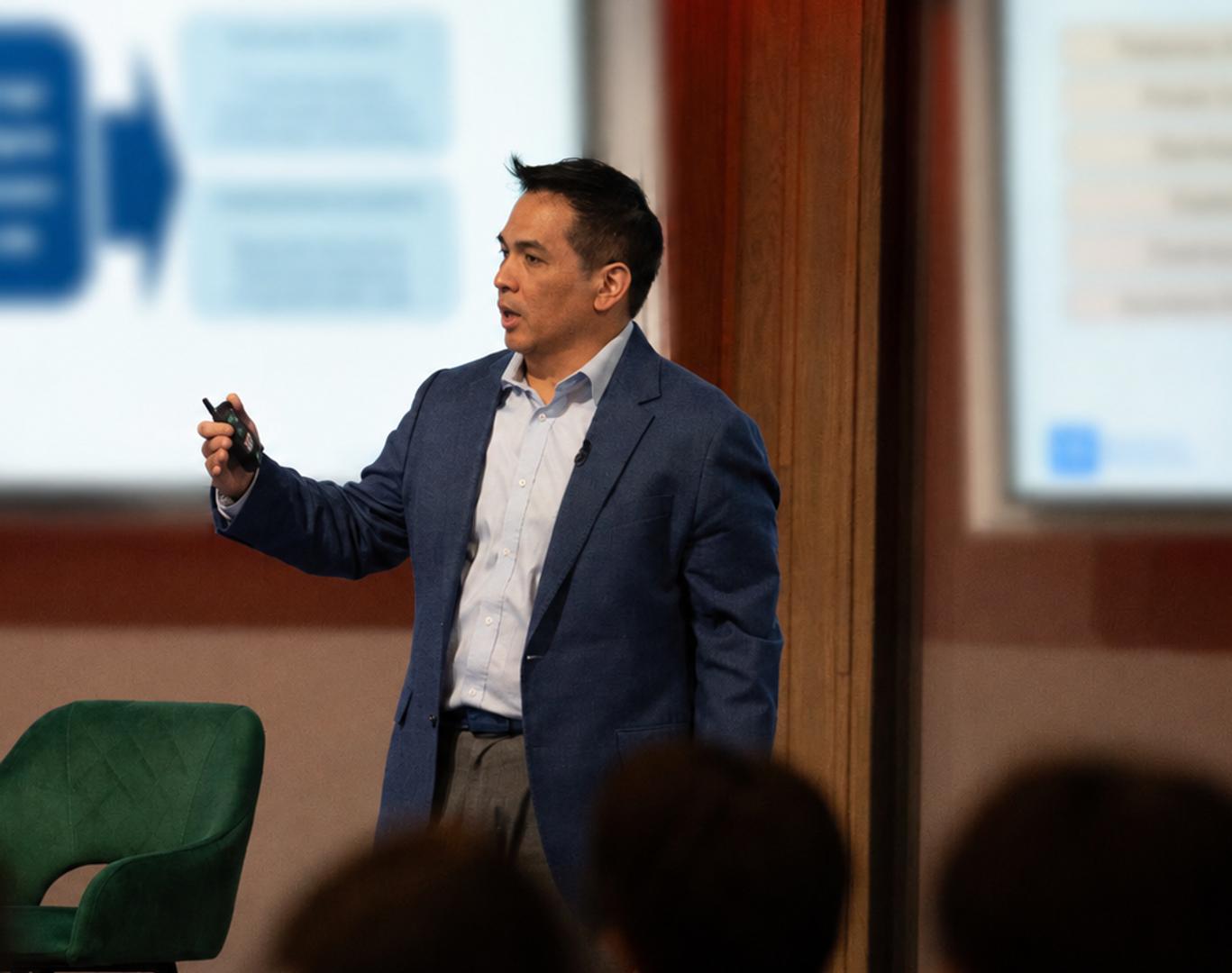
Thomas Sy, the head of multi-asset solutions at the substantial $800-million asset manager, articulated this vision. He posits that blockchain technology possesses the inherent capabilities to facilitate complex, highly customised portfolio structures. These sophisticated arrangements, he argues, are currently beyond the practical reach of traditional finance due to existing technological and logistical constraints.
This perspective suggests a future where investors could have unparalleled granularity in their holdings. Instead of fractional ownership in large, pre-packaged funds, tokenisation could allow for direct, digitised ownership of specific slices of diverse assets. This could range from real estate and art to less liquid investments, all bundled into a bespoke digital portfolio.
Sy's comments underscore a growing recognition within established financial institutions of blockchain's transformative potential. While initial tokenisation efforts focused on stablecoins or securitised real estate, the emphasis is shifting towards its ability to create more agile and tailored investment products. This pushes the boundaries of what is achievable in standard financial markets, promising a new era of investment customisation.
Why it matters for Australian investors
For Australian investors, the expansion of tokenisation into personalised portfolios could unlock significant new opportunities. Currently, accessing highly bespoke investment strategies often requires substantial capital or involvement with boutique wealth managers. Tokenisation could democratise this access, allowing a broader range of investors to construct portfolios precisely matched to their risk tolerance, ethical preferences, and financial goals.
Imagine an Australian investor wanting exposure to a specific basket of global infrastructure projects, local renewable energy assets, and a fraction of a regional art collection. In a tokenised world, these diverse asset classes, regardless of their liquidity or traditional market access, could be represented by digital tokens and assembled into a single, cohesive investment portfolio. This could move beyond the standard managed fund offerings available on platforms like those linked to major Australian banks.
Moreover, the transparency and immutability inherent in blockchain technology could offer enhanced security and record-keeping for such complex portfolios. This is particularly relevant in Australia, where bodies like AUSTRAC oversee financial transactions to prevent illicit activities, and ASIC regulates investment products to protect consumers. A tokenised system could streamline compliance and provide clearer audit trails.
The potential for reduced intermediaries and improved efficiency could also lead to lower fees over time, a welcome development for Australian investors where superannuation fees are a constant point of discussion. While initial adoption and regulatory clarity are still developing, the long-term implications for how Australians invest their wealth are substantial, offering a higher degree of control and customisation than previously possible.
Impact on the AUD market
While the primary impact of personalised tokenised portfolios is on investment structure rather than direct currency dynamics, there could be flow-on effects for the Australian Dollar (AUD) market. Increased global interest in tokenised assets, especially those representing real-world assets, could indirectly influence capital flows. If Australian assets become more readily tokenisable and accessible to international investors, it could attract foreign capital, potentially bolstering demand for the AUD.
Conversely, if Australian investors gain easier access to a broader range of global tokenised assets, it might lead to a diversification of capital away from purely AUD-denominated investments. However, the overall effect is more likely to be positive, given the attraction of making Australian assets more liquid and discoverable on a global scale. This could particularly benefit niche Australian sectors that might otherwise struggle to attract international investment.
Australian crypto exchanges like CoinSpot, Independent Reserve, Swyftx, and BTC Markets could play a pivotal role in this evolution. As platforms for interacting with digital assets, they would be essential conduits for Australian investors to buy, sell, and manage these tokenised portfolios. Their ability to integrate with traditional finance, handle AUD on-ramps/off-ramps, and comply with local regulations will be crucial for widespread adoption.
Furthermore, the evolution of tokenisation could influence how the ATO views and taxes digital assets. As portfolios become more complex and fractionalised, the existing tax framework for capital gains and income from digital assets may need further refinement to accommodate these new structures accurately. Clarity in this area is vital for investor confidence and market growth within Australia.
What to watch next
The coming years will be crucial for the development and adoption of personalised tokenised portfolios. Key areas to observe include regulatory frameworks globally and within Australia. ASIC's stance on tokenised investment products, particularly those aiming for retail distribution, will heavily influence market growth. We need to see how regulators balance consumer protection with innovation.
Technological advancements are also paramount. The infrastructure supporting these complex tokenised portfolios, including secure custody solutions and interoperability between different blockchains, must mature. Scalability and transactional efficiency will be critical for handling large volumes of tailored investments, moving beyond pilot projects to mainstream adoption.
Furthermore, the engagement of traditional financial institutions in Australia will signal true market readiness. If major superannuation funds or wealth management firms begin to explore or integrate tokenised portfolio solutions, it would mark a significant turning point. This would indicate a shift from theoretical potential to practical application, potentially accelerating the development of the necessary ecosystem for Australian investors.
Finally, keep an eye on investor education. As these complex products emerge, it will be essential for platforms and financial advisers to clearly articulate the risks and benefits. Informed decision-making will be key to the sustainable growth of personalised tokenised portfolios in the Australian financial landscape. This innovation holds immense promise, but its successful integration hinges on cautious, considered development and clear communication.
Coins covered


Common questions
What is tokenisation in the context of investing for Australians?
For Australian investors, tokenisation means converting ownership rights to an asset into a digital 'token' on a blockchain. This digital token can represent anything from a fraction of a property to shares in a company, making assets more divisible and potentially easier to trade digitally. It opens up new ways to access and manage investments, bringing enhanced transparency and potentially lower costs.
How might personalised tokenised portfolios impact my superannuation in Australia?
While direct integration is still early, personalised tokenised portfolios could eventually offer superannuation funds and their members greater granularity in investment choices. Instead of traditional fund options, you might one day have the ability to select extremely specific asset exposures within your super, aligned precisely with your values or risk appetite. This could lead to more tailored retirement savings strategies once regulatory and technological hurdles are overcome.
Are tokenised assets taxable in Australia, and what does the ATO say?
Yes, the Australian Tax Office (ATO) generally treats tokenised assets as digital assets for tax purposes. This means that gains or losses from selling or exchanging tokenised assets are typically subject to Capital Gains Tax (CGT). If tokenised assets generate income (like staking rewards or rental income from tokenised property), that income is taxable. It's crucial for Australian investors to keep meticulous records and understand the ATO's guidance on digital assets, as rules can evolve.
Discover how tokenisation is revolutionising investment, offering personalised portfolios for Australian investors. Explore its impact on the AUD market.
About this article: this is an AI-generated summary of reporting by CoinDesk. It has not been reviewed by a human editor. We use AI to localise crypto news for Australian readers, and we link back to the original source so you can verify the facts.
Informational only — not financial advice. Always do your own research. Read our AI & editorial policy →