
South Korea Crypto Tax Petition Hits 50K, CFTC Signs NHL Prediction Markets MOU
AI-summarised from reporting by CoinOtag. How we use AI.
What happened
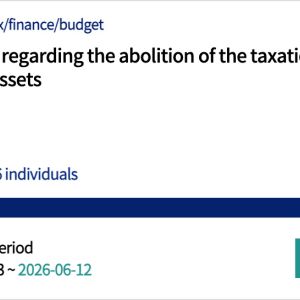
South Korea's proposed 22% tax on cryptocurrency investment gains has sparked significant public backlash, culminating in a petition that has now surpassed 50,000 signatures. This critical milestone mandates the Finance and Economy Committee of the National Assembly to formally review the taxation plan. The tax, initially slated for implementation in 2023 but now delayed until 2025, applies to crypto gains exceeding 2.5 million Korean Won (approximately AUD$2,700).
The petition argues that the proposed tax is premature and inequitable, particularly when compared to the country's stock market, where a 50 million Won (approx. AUD$54,000) tax-free threshold applies. The petitioners contend that the differing thresholds unfairly disadvantages crypto investors. They also highlight concerns that the tax could stifle innovation within South Korea's burgeoning blockchain sector and potentially drive capital overseas.
Simultaneously, in a development seemingly unrelated but indicative of evolving regulatory landscapes, the US Commodity Futures Trading Commission (CFTC) has signed a Memorandum of Understanding (MOU) with the National Hockey League (NHL). This agreement focuses on information sharing related to prediction markets involving NHL games. While not directly about cryptocurrency, it signals a broader trend of regulatory bodies engaging with and seeking to understand new digital and financial instruments, and their potential implications for existing frameworks.
Why it matters for Australian investors
While this specific tax petition and regulatory agreement occurred in South Korea and the US, they offer valuable insights and potential precedents for Australian crypto investors. Australia's cryptocurrency tax regime is already well-established, with the Australian Taxation Office (ATO) treating crypto as property for capital gains tax (CGT) purposes. This means that profits from selling, trading, or otherwise disposing of cryptocurrency are subject to CGT, similar to other assets like shares or real estate.
The South Korean debate on tax thresholds is particularly pertinent. Currently, in Australia, there isn't a specific tax-free threshold for crypto gains akin to the proposed South Korean 2.5 million Won or the stock market's 50 million Won exemptions. Instead, Australian investors are liable for CGT on all gains, albeit with potential deductions and the 50% CGT discount for assets held for more than 12 months. Any future discussions about differentiating tax treatment for various asset classes in Australia could draw parallels to these international discussions.
Furthermore, the concern in South Korea about capital flight and stifled innovation due to taxation policies resonates in Australia. Australian regulators navigate a delicate balance between fostering growth in the digital asset space and ensuring consumer protection and financial stability. Policies that are perceived as overly onerous could, in theory, encourage Australian investors and innovators to seek more favourable jurisdictions. This underscores the importance of a well-considered and competitive regulatory framework for Australia's crypto industry, affecting both individual investors and local crypto businesses like CoinSpot, Independent Reserve, Swyftx, and BTC Markets.
Impact on the AUD market
The direct impact of South Korea's tax petition on the Australian crypto market (AUD denominated prices) is minimal for now. However, indirect effects could emerge if South Korea's regulatory approach inspires similar calls for change or prompts other jurisdictions to reassess their frameworks. A significant shift in a major crypto market like South Korea can send ripples across the global ecosystem, potentially influencing overall market sentiment and, by extension, AUD-denominated crypto prices.
From a regulatory perspective, Australia already has robust frameworks in place. Bodies like AUSTRAC oversee anti-money laundering (AML) and counter-terrorism financing (CTF) compliance for digital currency exchanges, while ASIC is increasingly active in supervising crypto-related financial products. The CFTC's MOU, while American and focused on prediction markets, highlights a global trend towards regulatory engagement with novel digital financial products. This proactive approach could be a model for Australian regulators looking to expand their oversight into niche or emerging crypto sectors, ensuring market integrity and investor protection within the Australian context without stifling innovation.
Local exchanges and investors in Australia benefit from clearer guidelines than what appears to be a point of contention in South Korea. The ATO provides comprehensive guidance on crypto taxation, helping Australian investors understand their obligations. This clarity, while sometimes seen as stringent, provides a degree of certainty that can be appealing compared to markets grappling with significant policy uncertainty. However, ongoing policy debates in other major economies will always be on the radar for Australian policymakers and the crypto industry.
What to watch next
The immediate focus will be on the South Korean National Assembly's Finance and Economy Committee. Their review of the petition opposing the 22% crypto tax will be a critical juncture. The outcome could set a precedent for how future cryptocurrency taxation policies are shaped in other developing crypto economies, potentially influencing policy debates in Australia down the line. A successful petition could lead to a reassessment of the tax threshold or even the broader implementation timeline.
For Australian investors, it's crucial to stay informed about global regulatory shifts. While Australia's tax and regulatory landscape for crypto is relatively mature, international developments often serve as indicators of future trends or potential areas for reform. Keep an eye on how other G20 nations, particularly those with significant crypto adoption, address taxation challenges, as these discussions could inform future policy directions in Australia.
Beyond taxation, the ongoing evolution of regulatory engagement, such as the CFTC's MOU with the NHL, signals a broader focus on market integrity and consumer protection in digital financial products. Australian regulators, including ASIC and AUSTRAC, are continually assessing local and international developments to ensure the Australian market remains robust and compliant. These developments, while sometimes technical, ultimately shape the environment in which Australian investors operate and the products available on local platforms like CoinSpot and Independent Reserve.
Finally, the crypto community in Australia should continue to engage constructively with policymakers. Drawing lessons from international jurisdictions, both positive and negative, can help advocate for a balanced and competitive regulatory environment that supports innovation while protecting investors. The South Korean petition is a powerful example of community advocacy in action, demonstrating the potential for collective voices to influence national policy.
Coins covered

Common questions
How does Australia's crypto tax compare to South Korea's proposed tax?
Australia treats cryptocurrency as property for Capital Gains Tax (CGT) purposes, meaning profits from sales or disposals are taxed. There isn't a specific tax-free threshold for crypto gains in Australia, though the 50% CGT discount applies to assets held for over 12 months. South Korea's proposed tax includes a 2.5 million Won (approx. AUD$2,700) tax-free threshold, which is currently a point of contention due to its perceived unfairness compared to their stock market's 50 million Won threshold.
What regulatory bodies in Australia oversee cryptocurrency?
In Australia, the Australian Taxation Office (ATO) handles cryptocurrency taxation, providing guidelines for individuals and businesses. AUSTRAC is responsible for anti-money laundering (AML) and counter-terrorism financing (CTF) regulations for digital currency exchanges operating in Australia. The Australian Securities and Investments Commission (ASIC) oversees financial products and services, including those that involve crypto, focusing on consumer protection and market integrity.
Could South Korea's tax petition affect crypto prices on Australian exchanges like CoinSpot or Independent Reserve?
Directly, the impact is likely minimal. However, significant regulatory or taxation shifts in major global crypto markets like South Korea can indirectly influence overall market sentiment. This might lead to broader market fluctuations that could, in turn, affect AUD-denominated crypto prices on Australian exchanges such as CoinSpot, Independent Reserve, Swyftx, and BTC Markets.
Australia watches as South Korea's crypto tax petition sparks debate, influencing global regulatory discussions relevant to Aussie investors and the ATO.
About this article: this is an AI-generated summary of reporting by CoinOtag. It has not been reviewed by a human editor. We use AI to localise crypto news for Australian readers, and we link back to the original source so you can verify the facts.
Informational only — not financial advice. Always do your own research. Read our AI & editorial policy →