
Rare physical bitcoin worth $1.78 million gets cashed in after 12 years
AI-summarised from reporting by CoinDesk. How we use AI.
What happened
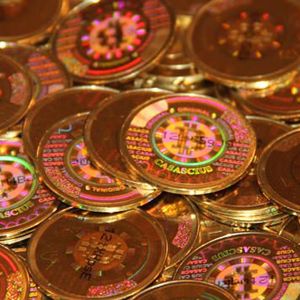
A rare physical Bitcoin, known as an S1-COIN-25, has been swept on-chain after 12 years. This particular coin, part of Mike Caldwell's 2011-2013 mint, held 25 Bitcoins. The process involved peeling back its tamper-evident hologram, indicating the private key was accessed and the cryptocurrency transferred from its physical representation to the blockchain.
Physical Bitcoins, while intriguing artefacts of the early crypto era, are essentially collectors' items that physically embody the private keys for cryptocurrency held digitally. Once the hologram is breached and the coins swept, their value shifts from their collectible status to the underlying digital asset. This event marks the end of its physical 'sleeper' status and its entry into active circulation on the Bitcoin network.
This specific cashed-in event highlights the unique intersection of early cryptocurrency adoption and the physical world. For over a decade, this store of value existed offline, essentially untouched. Its recent activation underscores the long-term holding patterns that have characterised a segment of the Bitcoin market since its nascent stages.
Why it matters for Australian investors
For Australian investors watching the crypto space, this event, while seemingly niche, provides several insights. Firstly, it's a potent reminder of Bitcoin's historical growth. An amount of Bitcoin that lay dormant for 12 years now represents considerable AUD value, reflecting the digital asset's journey from obscurity to mainstream investment interest. This long-term perspective is crucial for understanding Bitcoin's trajectory.
Secondly, it subtly reinforces the importance of secure key management. Whether holding digital assets on platforms like CoinSpot, Independent Reserve, Swyftx, or BTC Markets, or utilising hardware wallets, protecting private keys is paramount. The act of sweeping a physical coin is essentially retrieving and using a private key, a fundamental operation in cryptocurrency ownership.
Moreover, the nature of such a transaction is entirely transparent on the Bitcoin blockchain, which is a core tenet of its design. For Australian investors, this transparency is important for understanding market movements and for compliance with regulatory bodies like AUSTRAC and the ATO, particularly regarding capital gains tax implications when assets are ultimately sold. While this specific event doesn't directly impact the supply-demand dynamics in the AUD market, it showcases the unlocking of old supply.
Impact on the AUD market
The immediate direct impact of this single swept Bitcoin on the broader AUD crypto market is likely minimal. 25 BTC, while a significant sum, represents a tiny fraction of Bitcoin's daily trading volume globally and within Australia. Local exchanges such as CoinSpot, Independent Reserve, Swyftx, and BTC Markets process far larger volumes regularly, dwarfing the influence of this individual transaction.
However, events like these contribute to the ongoing narrative surrounding Bitcoin's scarcity and its status as a long-term store of value. For Australian investors, this reinforces the underlying principles of the asset they hold. The cashed-in event, when viewed through the lens of Bitcoin's total circulating supply, is a reminder that existing coins can enter active circulation at any time, adding to the accessible supply. This doesn't necessarily depress prices but is a background factor in market analysis.
Considering the ATO's position on cryptocurrencies as property for tax purposes, the unlocking of such a historic holding could, hypothetically, lead to a taxable event if the owner were an Australian resident and chose to sell or exchange the Bitcoin. While the details of the owner are unknown, the principle remains constant for Australian crypto participants: understanding the tax implications of accessing and potentially liquidating long-held assets is crucial.
What to watch next
Investors should continue to monitor broader market trends rather than focus extensively on isolated events like this. Key indicators for Australian investors include the overall health of the global Bitcoin network, major regulatory developments from bodies like ASIC or AUSTRAC, and evolving institutional adoption. These factors typically have a far more substantial influence on AUD-paired crypto markets.
While the sweeping of old Bitcoin holdings is a periodic occurrence, a trend of multiple long-dormant wallets becoming active could signal a change in sentiment among long-term holders. Such a pattern, if observed across various sleeper addresses, might warrant closer attention. However, one-off events are generally more anecdotal than market-moving.
Continue to prioritise robust security practices and stay informed about the evolving regulatory landscape in Australia. For those holding Bitcoin across various Australian platforms, understanding how these platforms manage and secure assets, and how they facilitate tax reporting, remains paramount. The story of this physical Bitcoin is a fascinating historical footnote that underscores the enduring principles of Bitcoin ownership and security rather than a predictor of immediate market shifts.
Coins covered


Common questions
What is an S1-COIN-25 physical Bitcoin and why is it rare?
An S1-COIN-25 is a rare physical Bitcoin produced by Mike Caldwell between 2011 and 2013. These coins physically encapsulate the private key for a set amount of Bitcoin (25 BTC in this case) under a tamper-evident hologram. They are rare because they were produced in limited quantities during Bitcoin's early years, making them collectible items and historical artefacts.
Does 'sweeping' a physical Bitcoin have tax implications in Australia?
Yes, for Australian residents, accessing the private key and 'sweeping' the Bitcoin from a physical coin to a digital wallet would not immediately trigger a tax event on its own. However, if the Bitcoin is subsequently sold, exchanged for another cryptocurrency, or used to purchase goods/services, it would likely be considered a capital gains tax (CGT) event by the ATO, calculated from its cost base at acquisition.
Can I buy physical Bitcoins on Australian crypto exchanges like CoinSpot or Swyftx?
Australian crypto exchanges such as CoinSpot, Independent Reserve, Swyftx, and BTC Markets deal exclusively with digital cryptocurrencies. They do not sell physical Bitcoins. While you can trade and hold digital Bitcoin on these platforms, collecting physical Bitcoins is a separate pursuit, typically involving direct purchases from collectors or specialised vendors, or through historical auctions.
A rare physical Bitcoin holding 25 BTC has been 'swept' on-chain after 12 years. Discover what this means for Australian crypto investors and the AUD market.
About this article: this is an AI-generated summary of reporting by CoinDesk. It has not been reviewed by a human editor. We use AI to localise crypto news for Australian readers, and we link back to the original source so you can verify the facts.
Informational only — not financial advice. Always do your own research. Read our AI & editorial policy →