
President Trump Signs AI Executive Order After Delaying It Over China Concerns
AI-summarised from reporting by Decrypt. How we use AI.
What happened
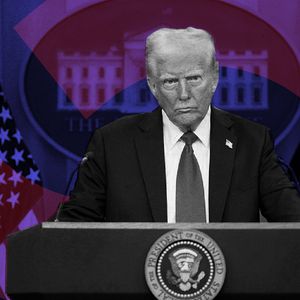
Donald Trump, in his capacity as President of the United States, recently signed an executive order focused on artificial intelligence (AI). This development comes after an initial delay, reportedly due to concerns surrounding China's advancements and influence in the AI sector. The executive order establishes a framework for evaluating highly advanced AI models, with an emphasis on a voluntary engagement approach from developers.
Beyond this foundational assessment, the order also mandates an expansion of AI's application within cybersecurity initiatives. This dual focus highlights a move towards both oversight and leveraging AI capabilities to enhance national security. While the US context is distinct, the broader implications for technological governance and development are globally relevant.
Why it matters for Australian investors
The signing of a significant AI executive order by a major global power like the United States carries considerable weight for Australian investors, even though it's a US-centric policy. AI is a foundational technology with the potential to reshape industries, from fintech to resources, which are cornerstones of the Australian economy. Regulations and policies in key markets often set precedents or influence international standards, including those that might eventually emerge in Australia.
For Australian investors holding exposure to global tech companies that are leaders in AI development, this order introduces an element of regulatory clarity – or potential scrutiny. While the framework is currently voluntary, it signals a growing governmental interest in the ethical and safety aspects of AI. This could influence R&D priorities and investment flows within the tech sector, impacting the valuations of companies Australian investors might hold directly or via managed funds on platforms accessible through Australian brokers.
Moreover, the expansion of AI in cybersecurity, as outlined in the order, underscores the increasing digital risks faced by all nations, including Australia. Australian businesses and government agencies are continually fortifying their digital defences, making cybersecurity a burgeoning sector. Investors might find opportunities in companies developing AI-powered security solutions, potentially looking for listed entities on the ASX or global firms accessible through local investment platforms like CommSec or Selfwealth.
Impact on the AUD market
While the direct impact on the Australian dollar (AUD) from a US AI executive order might not be immediately obvious, there are several indirect channels to consider. Global investor sentiment towards the technology sector, heavily influenced by US policy, can affect capital flows. If the executive order is perceived as fostering innovation responsibly, it could boost confidence in tech investments globally, potentially leading to stronger performance for tech-linked assets, some of which might be held by Australian institutions.
Conversely, if the framework is seen as overly restrictive or cumbersome in the future, it could dampen investor enthusiasm, indirectly affecting global market conditions that often correlate with the AUD's strength. Commodity prices, which are a major driver for the AUD, could also see subtle shifts if AI-driven efficiencies or automation significantly impact supply chains or demand for materials used in advanced computing.
Furthermore, the long-term implications for US economic competitiveness due to AI leadership could indirectly influence the AUD. A stronger US economy, partly driven by technological advancement, might lead to a stronger US dollar, potentially putting downward pressure on the AUD against the greenback. Australian regulators, like ASIC and AUSTRAC, are also keeping a close eye on emerging technologies. Future Australian policies around AI might be influenced by such international moves, creating regulatory environments that could affect local tech development and, by extension, the AUD market.
What to watch next
Australian investors should monitor the evolution of this US executive order and any subsequent regulatory actions. The 'voluntary framework' aspect is key; observe how widely and effectively it's adopted by major AI developers. Any moves towards mandatory compliance or stricter oversight could significantly shift the landscape for tech companies.
Keep an eye on how other major economies, particularly those in the EU and Asia, respond with their own AI policy initiatives. A fragmented global regulatory environment could create challenges for multinational tech companies but also opportunities for specific markets. For Australian investors, this means considering the global regulatory mosaic when evaluating tech-heavy portfolios.
Also, watch for any direct implications for Australian companies involved in AI, either as developers or significant users. While this US order doesn't directly dictate Australian policy, it sets a global tone. Australian exchanges like CoinSpot, Independent Reserve, Swyftx, and BTC Markets, though primarily crypto-focused, operate within a broader tech ecosystem. They, and by extension their users, could be indirectly affected by broad shifts in tech regulation and investment trends as new technologies intertwine.
Finally, the integration of AI into cybersecurity, as highlighted in the order, is a critical area. Increased investment and innovation in this space could present attractive opportunities. Australian businesses are increasingly sophisticated in their digital defence needs, aligning with global trends. Monitoring the progress in AI-powered cybersecurity advancements could reveal potential investment avenues within the Australian market or in globally accessible ETFs and companies that focus on this essential sector. The ATO also continues to consider how new technologies interface with existing tax frameworks, adding another layer of complexity for astute investors to monitor.
Coins covered

Common questions
How might a US AI executive order affect my crypto investments on Australian exchanges?
While the US AI executive order doesn't directly regulate cryptocurrency exchanges like CoinSpot or Swyftx, significant shifts in global tech policy can indirectly influence investor sentiment and capital flows. If AI-driven technological advancements lead to broader economic changes or cybersecurity implications, it could affect the overall investor appetite for digital assets, including those traded on Australian platforms. Additionally, as AI becomes more integrated into financial technology, future regulations might touch upon how AI is used within crypto platforms, which AUSTRAC and ASIC would closely monitor.
Will US AI regulations impact Australian tech companies listed on the ASX?
Yes, indirectly. Many Australian tech companies have global connections, either through partnerships, customer bases, or technology stacks. US regulations often set precedents or influence international standards. If a US AI executive order shapes the development or deployment of AI globally, Australian tech companies that utilise or provide AI services might need to adapt their strategies or ensure compliance with evolving best practices, potentially affecting their operations, market access, and ultimately, their performance on the ASX.
Could AI development, as influenced by this order, affect the value of the Australian dollar (AUD)?
The impact on the AUD would likely be indirect and long-term. Strong global economic growth driven by AI advancements could boost demand for Australian exports and attract foreign investment, potentially strengthening the AUD. Conversely, if US leadership in AI widens a technological gap with other nations, it could lead to a stronger US economy and US dollar, potentially putting downward pressure on the AUD against the greenback. The overall confidence in global technology sectors, influenced by such orders, also plays a role in broader market sentiment that affects currencies.
Explore how Trump's recent US AI executive order impacts Australian investors, the AUD market, and what to watch next for tech and crypto.
About this article: this is an AI-generated summary of reporting by Decrypt. It has not been reviewed by a human editor. We use AI to localise crypto news for Australian readers, and we link back to the original source so you can verify the facts.
Informational only — not financial advice. Always do your own research. Read our AI & editorial policy →