
NEAR vs FET: Infrastructure Upgrade or Agent Launchpad — Which Catalyst Is Stronger?
AI-summarised from reporting by Crypto Daily. How we use AI.
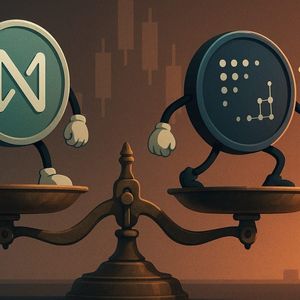
Crypto markets are dynamic, and understanding the catalysts that drive them is crucial for Australian investors. Two narratives are currently vying for attention: the infrastructure-focused upgrade by NEAR Protocol, and Fetch.ai's ambitious launch of an agent framework. Both present significant potential, but their approaches and immediate impacts differ. For Aussies looking to navigate the complexities of this evolving space, discerning which catalyst holds more weight could be key to informed decision-making.
What happened
NEAR Protocol has been systematically enhancing its core infrastructure, focusing on developer and user experience. Key recent developments include advancements in chain abstraction, which simplifies cross-chain interactions by hiding underlying complexity from the user. Their account model now supports human-readable accounts and flexible access keys, aiming to make onboarding as seamless as possible, even allowing for passwordless or email-based sign-ups through initiatives like FastAuth. Furthermore, NEAR is positioning itself as a crucial data availability (DA) layer, designed to support modular blockchain structures and rollups, offering lower latency and cost efficiency for app teams.
In parallel, Fetch.ai (FET) has been cultivating a vision centered on autonomous agents. These are intelligent software entities capable of making decisions, negotiating, and transacting on behalf of users or organisations. Their latest initiative, an 'agent launchpad,' is designed to provide developers with the tools, templates, and marketplaces needed to rapidly deploy these AI agents. The goal is to dramatically reduce the barrier to entry for creating sophisticated, autonomous workflows, connecting them to various data sources, services, and other blockchains.
Why it matters for Australian investors
For Australian investors, these developments represent different pathways to potential crypto adoption and market growth. NEAR's infrastructure play, with its focus on user-friendly onboarding and developer tools, could pave the way for a broader mainstream embrace of decentralised applications. Imagine a scenario where accessing a crypto application feels as intuitive as logging into your internet banking with a major Australian financial institution – that's the kind of friction reduction NEAR is aiming for. If successful, this could drive sustained organic demand and network activity, potentially affecting the AUD-denominated value of NEAR on exchanges like CoinSpot or BTC Markets.
Fetch.ai's agent launchpad, on the other hand, targets the burgeoning AI and automation sectors. Australian businesses and consumers are increasingly looking for efficiency gains through AI, and FET's proposition directly addresses this. If these autonomous agents can genuinely streamline business processes or consumer interactions, it could create significant demand for the FET token as a utility within this ecosystem. For investors, this offers exposure to the intersection of blockchain and artificial intelligence, a narrative that continues to gain traction globally and within Australia's tech-savvy investment community. Understanding the real-world utility of these agents will be critical for assessing FET's long-term potential.
Impact on the AUD market
The success of either NEAR's infrastructure or Fetch.ai's agent ecosystem could indirectly influence the broader AUD crypto market. If NEAR makes significant headway in abstracting blockchain complexity, it could lead to increased adoption of decentralised finance (DeFi) and Web3 applications across Australia. This would mean more Australians engaging with crypto, potentially increasing trading volumes on local exchanges such as Swyftx and Independent Reserve, and broadening the base of crypto users who need to manage their digital assets, often acquired using AUD.
Similarly, a breakthrough by Fetch.ai in autonomous agents could see Australian enterprises exploring decentralised solutions. If AI-driven agents become a common tool for supply chain optimisation or financial automation, it could create new use cases for blockchain technology within the Australian economy. This could attract new capital from traditional Australian investment sectors into the crypto space, potentially increasing liquidity and depth in AUD-pegged crypto markets. Australian investors should also consider the ATO's guidance on tax treatment for any gains or losses arising from these assets, whether from trading or staking, as adoption grows.
What to watch next
Australian investors should monitor several key indicators for each project. For NEAR, observe the adoption rate of their FastAuth and chain abstraction features. Are new decentralised applications launching on NEAR that genuinely simplify the user experience for non-crypto natives? Track developer activity and the number of active users on the network. Also, keep an eye on partnerships and integrations, particularly any that involve data availability solutions and rollups, as these could underscore NEAR's utility in the broader modular blockchain landscape. Its ability to onboard new developers and users with less friction will be a strong indicator of its immediate traction.
For Fetch.ai, the critical factor will be the real-world deployment and utility of their autonomous agents. Are developers actually building and deploying agents via the launchpad? Are these agents solving genuine problems for businesses or consumers? Look for tangible examples of agents performing valuable tasks, negotiating, and integrating with external data sources or services. The growth of their agent marketplace and the vibrancy of its ecosystem, rather than just technological promises, will ultimately determine FET's market performance. Furthermore, any clarity from regulators like AUSTRAC or ASIC regarding the classification or operation of AI-driven blockchain entities could also impact investor sentiment.
Coins covered
 View nearNEAR ProtocolnearLive price, charts & AUD analysis
 View fetArtificial Superintelligence AlliancefetLive price, charts & AUD analysis
 View vsnVisionvsnLive price, charts & AUD analysis
 View jstJUSTjstLive price, charts & AUD analysis
 View mkrMakermkrLive price, charts & AUD analysis
 View stxStacksstxLive price, charts & AUD analysis
 View gtGategtLive price, charts & AUD analysis
 View compCompoundcompLive price, charts & AUD analysis
Common questions
How does NEAR Protocol's chain abstraction benefit an everyday Australian crypto user?
NEAR's chain abstraction aims to simplify multi-chain interactions, meaning an Australian user won't need to juggle multiple wallets or understand complex bridging processes to use different decentralised applications. It's designed to make the overall experience of using crypto as straightforward as possible, akin to traditional online services, reducing barriers to entry for those new to digital assets.
If Fetch.ai's agents become popular, how might this affect Australian businesses?
Should Fetch.ai's autonomous agents gain traction, Australian businesses could leverage them for various tasks like automated supply chain management, optimised resource allocation, or even customer service. This could lead to increased efficiency, reduced operational costs, and new service offerings. Businesses might utilise these agents, driving demand for the underlying FET token as a utility for agent operations within the Fetch.ai ecosystem.
What Australian exchanges can I use to trade NEAR and FET?
Australian investors typically have access to NEAR and FET on several local cryptocurrency exchanges. Popular options that often list a wide range of assets include CoinSpot, Independent Reserve, Swyftx, and BTC Markets. It's always advisable to check the specific listings on your preferred exchange, as availability can vary and exchanges often update their offerings.
Dive deep into NEAR Protocol's infrastructure upgrades vs. Fetch.ai's AI agents. Which catalyst holds more sway for Australian crypto investors? Find out.
About this article: this is an AI-generated summary of reporting by Crypto Daily. It has not been reviewed by a human editor. We use AI to localise crypto news for Australian readers, and we link back to the original source so you can verify the facts.
Informational only — not financial advice. Always do your own research. Read our AI & editorial policy →