
Morgan Stanley predicts SpaceX valuation hitting $3.4 trillion by 2040
AI-summarised from reporting by Cryptopolitan. How we use AI.
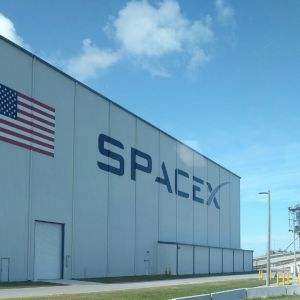
What happened
Wall Street titan Morgan Stanley has issued a bold prediction for Elon Musk's SpaceX, forecasting its annual revenue could reach an astronomical US$3.4 trillion by 2040. This represents a staggering 182-fold increase from its reported US$18.7 billion revenue in 2025. This forward-looking projection comes as SpaceX reportedly gears up for what could be the largest initial public offering (IPO) in history, aiming to raise US$75 billion.
The core of Morgan Stanley's optimistic outlook is rooted in the burgeoning potential of SpaceX's artificial intelligence (AI) division. This segment, which reportedly generated US$3.2 billion in revenue in 2025, is expected to surge to nearly US$190 billion by 2030, positioning it as the dominant revenue driver for the company, ahead of its rocketry and Starlink satellite operations. By 2030, Morgan Stanley anticipates SpaceX's total revenue nearing US$330 billion, with an adjusted EBITDA projected at US$230 billion.
Adding to the buzz, Goldman Sachs, another key player in the impending IPO, has an even more bullish take on SpaceX's AI arm. Goldman Sachs projects AI revenue to hit almost US$322 billion by 2030, contributing to a total revenue of US$474 billion and an adjusted EBITDA of US$352 billion. These projections underscore a significant industry confidence in SpaceX's long-term growth trajectory, particularly its diversification into AI.
Despite these lofty predictions, it's crucial to acknowledge SpaceX's current financial reality. While revenue increased by 33% from US$14 billion in 2024 to US$18.7 billion in 2025, the company recorded a net loss of US$4.9 billion in 2025, following a US$791 million profit in 2024. This significant loss suggests heavy capital expenditure, likely driven by the ongoing scaling of its satellite constellation and AI infrastructure investments.
Details emerging about the IPO indicate plans to sell 555.55 million shares at US$135 each, which would value the company at approximately US$1.75 trillion. Elon Musk is expected to maintain substantial control, retaining about 82.4% of the voting power post-Nasdaq listing. Investor meetings are underway, although reports suggest investors from China and Hong Kong may be excluded from participating.
Beyond AI, Goldman Sachs anticipates SpaceX's launch operations revenue to grow moderately from US$4.1 billion in 2025 to US$8.3 billion by 2030. Meanwhile, Starlink, with its expansive network of over 9,600 satellites serving around 10.3 million subscribers across 164 countries, is projected to generate US$144 billion in revenue by 2030, making it the second most profitable division.
Why it matters for Australian investors
This development, while focused on a private US company, holds implications for the broader tech and investment landscape that Australian investors should consider. The sheer scale of SpaceX's projected valuation and its reliance on AI innovation could signal a wider market shift towards space technology and advanced AI applications. Australian investors with exposure to global tech funds or space-themed ETFs, such as the Procure Space ETF (UFO) which has seen a 137% gain over the past year, might find their portfolios influenced by this increased investor interest.
For those considering the long-term outlook of their investments, this narrative highlights the potential for disruptive technologies to generate significant returns, albeit often accompanied by initial losses due to substantial upfront investment. The aggressive capital expenditure noted in SpaceX's current financials is a common characteristic of high-growth tech companies, which can eventually deliver substantial returns if their vision materialises. Australian investors often look for such growth stories, and SpaceX serves as a prime example of the potential and pitfalls.
Furthermore, the projected IPO on Nasdaq could open up direct investment opportunities for Australians with access to international markets. However, Australians considering participating in such an IPO would need to navigate global brokerage platforms and consider the associated foreign exchange risks between AUD and USD. The ATO's capital gains tax rules would also apply to any profits made from such international investments, requiring careful record-keeping.
The exclusion of certain international investors from the IPO also underscores the geopolitical nuances that can impact global investment opportunities. This highlights the importance for Australian investors to understand the regulatory and political landscapes of the markets they operate in, a consideration often overseen by bodies like AUSTRAC and ASIC for local markets.
Impact on the AUD market
While SpaceX is not an Australian entity, its meteoric rise and the substantial capital it's projected to attract could have indirect effects on the AUD market. A significant global event like the largest IPO in history, particularly one underpinned by major US financial institutions, tends to shift capital flows and investor sentiment worldwide. Strong performance in global tech and innovation sectors, especially those backed by US powerhouses like Morgan Stanley and Goldman Sachs, can bolster overall market confidence.
Increased confidence in the global tech sector might lead to a stronger appetite for risk assets, potentially benefiting companies listed on the ASX with exposure to technology or space-related industries. While direct linkages might be limited, a bullish sentiment in the tech space could see Australian tech stocks or related ETF’s experience a positive ripple effect. However, any major capital shift towards the US, perhaps to participate in such a high-profile IPO, could theoretically lead to strength in the USD against the AUD, as global investors convert their currency.
Cryptocurrency markets, which Australian investors are increasingly engaging with via platforms like CoinSpot, Independent Reserve, Swyftx, and BTC Markets, also often react to broader economic sentiment and significant capital market events. While not directly tied to SpaceX, an IPO of this magnitude could absorb liquidity from other investment avenues, including some riskier assets like cryptocurrencies, at least in the short term. Conversely, a general increase in risk appetite spurred by a successful IPO could indirectly support crypto markets as well.
Moreover, the long-term bullish forecast for SpaceX's AI division reinforces the narrative of AI as a transformative technology. Australian businesses and investors are increasingly looking at AI integration, and the success of a major player like SpaceX could accelerate local interest and investment in AI capabilities. This could manifest in increased investment in Australian companies developing AI solutions or those leveraging AI for efficiency.
What to watch next
For Australian investors, closely observing the details of SpaceX's IPO process will be key. While direct participation might be limited for some, the valuation metrics and investor appetite will provide valuable insights into the broader market's evaluation of high-growth, technology-driven companies, especially those diversifying into AI. Any updates regarding the timing, pricing, and eventual performance of the shares on Nasdaq will be critical indicators.
Beyond the IPO, monitoring the actual performance of SpaceX's AI division against the ambitious projections from Morgan Stanley and Goldman Sachs will be crucial. Discrepancies could impact investor confidence not just in SpaceX, but in the AI sector more broadly. The ability of SpaceX to convert its heavy capital expenditure into sustainable profitability will also be a major point of interest, demonstrating whether the long-term vision is translating into financial reality.
Keeping an eye on the competitive landscape within the space and AI sectors is also important. While SpaceX commands significant attention, other players and emerging technologies could influence its long-term trajectory. For Australian investors, this means staying informed about global innovation trends and how they might impact their diversified portfolios, whether through direct investments or through funds and ETFs.
Finally, market reactions to the IPO will be telling. A highly successful listing could ignite further interest in space tech and AI, potentially creating knock-on effects for related sectors globally. Conversely, any underperformance or unexpected challenges could temper investor enthusiasm. Australian investors should continue to use domestic exchanges like CoinSpot, Independent Reserve, Swyftx, and BTC Markets cautiously, understanding that global events can indirectly influence their local crypto and stock portfolios.
Coins covered




Common questions
How does ATO tax treatment apply to Australian investors participating in a major US IPO like SpaceX?
Australian investors who participate in a US IPO like SpaceX and realise profits from their investment would be subject to Australian capital gains tax (CGT). The ATO requires investors to declare any capital gains or losses from the sale of shares, regardless of whether the company is listed internationally. It's crucial to maintain accurate records of purchase and sale prices, denominated in AUD, and to report these figures in your annual tax return. Foreign exchange fluctuations between the AUD and USD also need to be considered when calculating the capital gain or loss.
Could a large US IPO like SpaceX impact the AUD to USD exchange rate?
Yes, a massive US IPO like SpaceX could indirectly influence the AUD to USD exchange rate. If Australian investors, or global investors generally, decide to convert substantial amounts of AUD into USD to participate in the IPO, it could increase demand for USD, potentially strengthening the USD against the AUD. Conversely, if US investors convert USD to AUD for other reasons, it could have a different effect. The overall impact depends on the scale of capital flows and other concurrent market dynamics.
Are there any Australian exchanges or platforms that would allow me to invest directly in a SpaceX IPO?
Australian crypto exchanges like CoinSpot, Independent Reserve, Swyftx, and BTC Markets primarily facilitate the trading of cryptocurrencies and would not offer direct investment in a traditional stock IPO like SpaceX. To invest in a US IPO, Australian investors would typically need to use an international brokerage platform that provides access to global stock markets, particularly the Nasdaq where SpaceX is expected to list. It's important to research brokers that allow Australian residents to open accounts and trade US-listed equities.
CoinPulse AU explores how Morgan Stanley's US$3.4 trillion SpaceX valuation prediction, driven by AI, could shape the global investment landscape for Australi
About this article: this is an AI-generated summary of reporting by Cryptopolitan. It has not been reviewed by a human editor. We use AI to localise crypto news for Australian readers, and we link back to the original source so you can verify the facts.
Informational only — not financial advice. Always do your own research. Read our AI & editorial policy →