
Grayscale Names 4 CLARITY Act Winners as SEC Delays Tokenized Stocks Exemption
AI-summarised from reporting by CoinOtag. How we use AI.
What happened
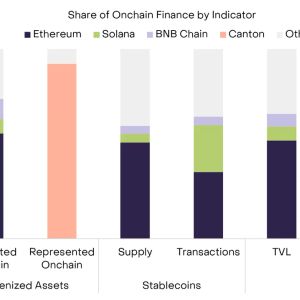
Grayscale Investments, a prominent digital asset manager, recently identified four blockchain networks it believes are best positioned to absorb regulated capital once the proposed CLARITY Act is enacted in the United States. This legislation, should it pass, aims to provide greater regulatory clarity for digital assets, particularly those deemed to be commodities rather than securities. The four networks highlighted by Grayscale are Ethereum, Solana, BNB Chain, and Aptos.
The CLARITY Act, formally known as the "Clarity for Digital Tokens Act of 2023," seeks to establish a clear legal framework distinguishing between digital assets that are securities and those that are commodities. It proposes a grace period for developers to decentralise their networks sufficiently to avoid being classified as securities under the existing framework. This initiative underscores a broader global push for more robust regulatory guidelines in the crypto space, reflecting a growing desire for institutional participation.
Grayscale's selection criteria likely revolved around factors such as decentralisation, existing developer ecosystems, transaction processing capabilities, and potential for institutional adoption. By naming these specific blockchains, Grayscale is essentially signalling to traditional finance that these networks are moving towards, or already possess, characteristics that would make them suitable for institutional investment under a clarified regulatory regime. This move comes as the US Securities and Exchange Commission (SEC) continues to grapple with the classification of various digital assets.
Simultaneously, the SEC has reportedly delayed its decision on exempting tokenised stocks from certain securities regulations. This ongoing regulatory uncertainty from the SEC highlights the complexities involved in integrating digital assets into traditional financial systems. While the CLARITY Act aims to provide a pathway for some digital assets, the broader regulatory landscape, particularly concerning tokenised securities, remains a subject of intense debate and deliberation among policymakers.
Why it matters for Australian investors
For Australian investors, the developments in US regulatory discussions, particularly around the CLARITY Act and asset classification, hold significant weight. While direct legislative impact is geographically limited, the US market often acts as a bellwether for global regulatory trends. A clearer framework in a major economy like the United States could influence how digital assets are perceived and regulated in Australia, potentially leading to increased institutional interest and more defined pathways for investment.
Australian investors currently navigate a regulatory environment where the Australian Taxation Office (ATO) provides guidance on crypto asset taxation, and AUSTRAC monitors digital currency exchange providers for anti-money laundering and counter-terrorism financing compliance. ASIC also has a role in regulating financial products and services, including aspects of crypto. Clarity from a major jurisdiction like the US could inform future policy directions from these Australian bodies, potentially standardising some aspects of digital asset treatment.
Increased institutional capital inflow, driven by regulatory clarity, could lead to greater liquidity and stability in the crypto market. This would inherently benefit Australian investors, regardless of whether they utilise local platforms like CoinSpot, Independent Reserve, Swyftx, or BTC Markets, as the overall market sentiment and price discovery mechanisms are interconnected globally. The four networks identified by Grayscale — Ethereum, Solana, BNB Chain, and Aptos — are all widely accessible to Australian investors through these and other international exchanges.
Furthermore, if these blockchains become recognised as key infrastructure for regulated capital, it could validate their long-term viability and investment potential. Australian investors looking for diversified exposure within the digital asset space might consider these networks more favourably, given their potential alignment with future institutional investment trends. It reinforces the idea that not all digital assets are viewed equally under potential future regulatory frameworks.
Impact on the AUD market
While the CLARITY Act is a US-specific legislative proposal, its implications can ripple through global markets, including those influencing the Australian dollar (AUD). A more mature and regulated global crypto market, spurred by clearer US rules, could attract significant institutional capital. This capital might eventually seek diversified entry points, including Australian-based crypto funds or investment vehicles, once available and regulated by local bodies like ASIC.
For AUD-denominated crypto assets, increased global institutional confidence could lead to higher demand and potentially more stable pricing. Imagine a scenario where large US institutions gain the green light to invest heavily in Ethereum or Solana. The increased buying pressure, even if denominated in USD initially, would flow through to global markets, affecting pricing on Australian exchanges where investors trade AUD for these assets.
Conversely, continued regulatory uncertainty or delays, such as the SEC's postponement on tokenised stock exemptions, could dampen investor enthusiasm globally. This hesitation can create volatility, which, while offering opportunities for some, can also deter more risk-averse Australian investors. The stability of the AUD market often benefits from predictable and clear global economic and financial policies.
Australian exchanges and crypto service providers closely watch these international regulatory developments. Aligning with global best practices and anticipated regulatory shifts is crucial for their long-term growth and for maintaining the confidence of Australian users. A clear US framework could pressure Australian policymakers to accelerate their own efforts in this space, potentially creating a more robust and attractive local market for crypto investments.
What to watch next
The immediate focus for Australian investors should be on the progression of the CLARITY Act within the US legislative process. While passage is not guaranteed, its development will provide valuable insights into the likely direction of US digital asset regulation. Any advancements or setbacks will be closely scrutinised by global market participants and could influence sentiment in the Australian crypto market.
Keep an eye on the US SEC's decisions regarding tokenised securities and other digital asset classifications. The interplay between proposed legislation like the CLARITY Act and the SEC's existing regulatory powers will be critical in shaping the future landscape. These decisions could set precedents that influence how other global regulators, including those in Australia, approach similar financial innovations.
Beyond US developments, Australian investors should also monitor local regulatory discussions. The Australian government continues to examine the appropriate regulatory settings for crypto assets. Any movement from federal bodies, the ATO regarding taxation, or ASIC concerning financial product guidance, will directly impact the Australian crypto ecosystem. This could include new licensing requirements or consumer protection frameworks specific to digital assets.
Finally, observe how institutions, both globally and locally, react to these regulatory shifts. If major financial players begin to integrate the identified blockchains (Ethereum, Solana, BNB Chain, Aptos) into their offerings, it signals a deeper institutional acceptance. This adoption could pave the way for more sophisticated investment products and services in Australia, offering new avenues for local investors to participate in the growing digital asset economy.
Coins covered





Common questions
How does the proposed US CLARITY Act affect my crypto investments on Australian exchanges?
While the CLARITY Act is US-specific, greater regulatory clarity in a major market like the US can have a ripple effect globally. It could influence overall market sentiment, potentially leading to increased institutional investment and market stability. This, in turn, can indirectly benefit your investments on Australian platforms like CoinSpot or Swyftx as global crypto prices and trends are interconnected.
If Ethereum or Solana get US regulatory clarity, will my ATO tax obligations change in Australia?
No, the US CLARITY Act would not directly change your ATO tax obligations. The Australian Taxation Office (ATO) has its own guidelines for the tax treatment of cryptocurrency, which are independent of US legislation. Your tax responsibilities in Australia depend on Australian tax law and how you engage with your digital assets, such as whether you're holding, trading, or staking them. Always refer to current ATO guidance for Australian tax advice.
Are the blockchains named by Grayscale (Ethereum, Solana, BNB Chain, Aptos) available for purchase with AUD on Australian exchanges?
Yes, major Australian digital currency exchanges like CoinSpot, Independent Reserve, Swyftx, and BTC Markets typically offer popular cryptocurrencies like Ethereum, Solana, and BNB Chain for purchase directly with Australian dollars (AUD). Availability of newer or smaller projects like Aptos can vary, so it's always best to check with your preferred exchange directly.
Grayscale's CLARITY Act blockchain picks and SEC delays impact Australian crypto investors. Explore how US regulatory shifts could shape the AUD market.
About this article: this is an AI-generated summary of reporting by CoinOtag. It has not been reviewed by a human editor. We use AI to localise crypto news for Australian readers, and we link back to the original source so you can verify the facts.
Informational only — not financial advice. Always do your own research. Read our AI & editorial policy →