
Grant Cardone says he will keep buying bitcoin using real estate cash flows
AI-summarised from reporting by CoinDesk. How we use AI.
What happened
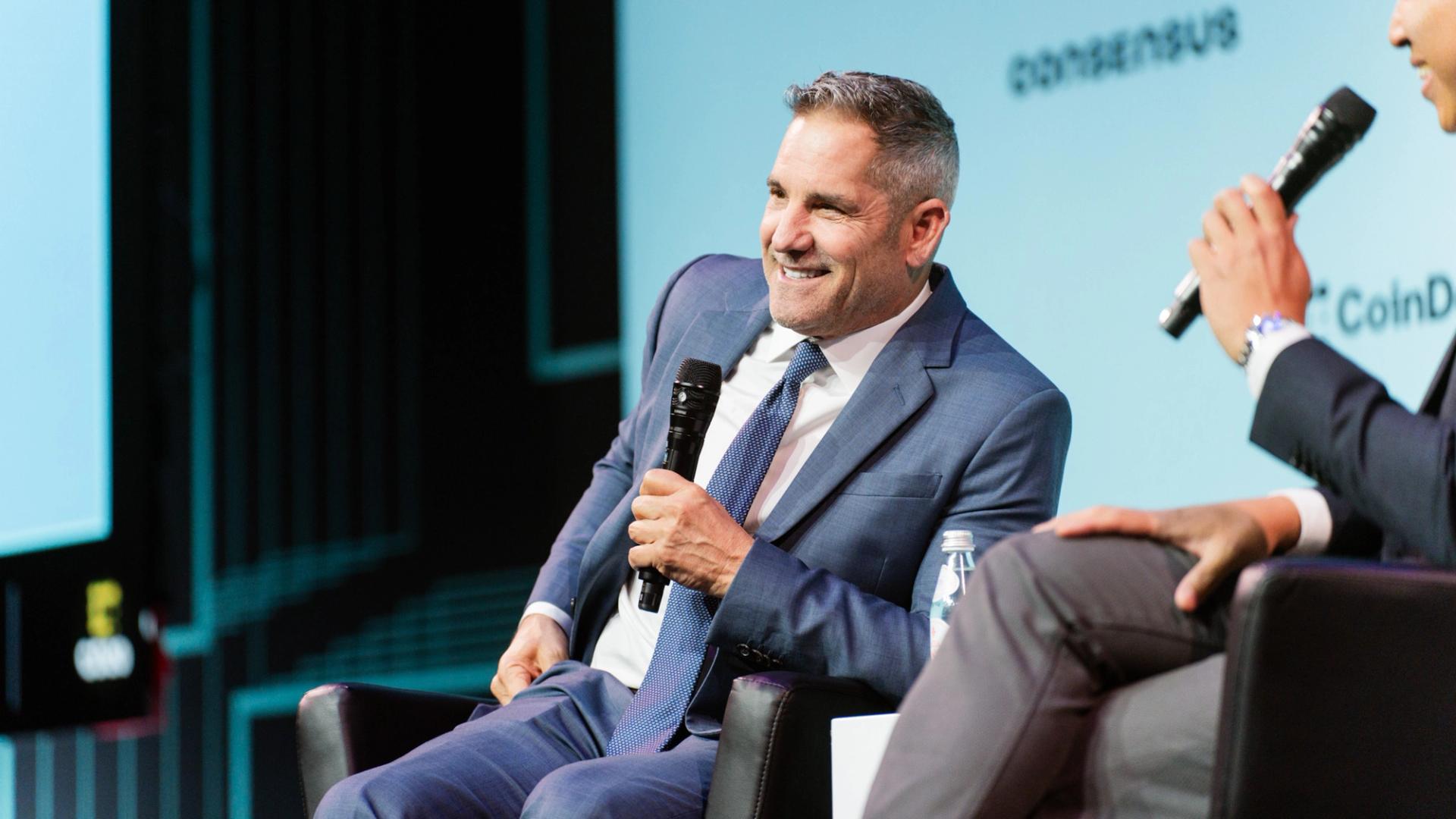
Grant Cardone, a prominent real estate investor known for his substantial property holdings, has publicly stated his intention to continue accumulating Bitcoin. His strategy involves utilising cash flows generated from his real estate portfolio to fund these Bitcoin acquisitions. Cardone likened his operational model to a "treasury company," fundamentally different from typical corporate treasuries that might rely on stock sales or other traditional financial instruments.
This approach signals a distinct perspective on asset allocation, particularly during periods of market downturns. Cardone framed recent slides in Bitcoin's price not as a deterrent, but rather an opportunity for strategic accumulation. His methodology suggests a long-term conviction in Bitcoin's value proposition, viewing it as an asset class worthy of being backed by the consistent income streams of a mature real estate business.
His comments come at a time when institutional interest in Bitcoin remains a key talking point across global financial markets. While many large corporations have explored or committed to Bitcoin on their balance sheets, Cardone's specific method of funding through real estate cash flows offers a unique and tangibly asset-backed approach. This could potentially resonate with investors who value tangible assets as a foundation for their digital asset exposure.
Why it matters for Australian investors
Cardone's strategy offers an interesting case study for Australian investors contemplating their own Bitcoin exposure, particularly those with diversified portfolios or significant real estate holdings. While the Australian property market operates under different nuances, the principle of leveraging stable income streams to acquire volatile assets like Bitcoin could be a consideration. It highlights a sophisticated approach to portfolio diversification, moving beyond simple fiat-to-crypto purchases.
Australian investors often hold substantial wealth in real estate, making this strategy particularly pertinent. Exploring ways to utilise property income for Bitcoin purchases, whether directly or indirectly, could present new avenues for wealth creation and hedging against inflation. However, it's crucial for Australians to consider the local regulatory landscape, including ATO tax implications for both real estate income and crypto gains, as well as the rules enforced by ASIC and AUSTRAC when transacting on Australian exchanges like CoinSpot, Independent Reserve, Swyftx, or BTC Markets.
This trend, if it gains traction, could also subtly influence demand for Bitcoin denominated in Australian dollars (AUD). Increased high-net-worth individual interest, even if not directly Australian-based, can contribute to overall market sentiment and liquidity. Australian investors should observe how such high-profile figures manage their digital asset allocations, as it can offer insights into broader market trends and potential future investment strategies.
Impact on the AUD market
While Cardone's actions are specific to his US-based operations, the broader sentiment of using substantial, consistent cash flows to acquire Bitcoin can have ripple effects globally. For the AUD market, this type of strategic accumulation by large investors can contribute to overall market confidence in Bitcoin as a long-term asset, potentially influencing AUD-denominated Bitcoin trading volumes on Australian exchanges.
If more high-net-worth individuals, including those in Australia, adopt similar strategies, it could lead to increased demand for Bitcoin funded by traditional asset classes. This could subtly impact the AUD/BTC trading pair, as greater buy pressure would be introduced, distinct from speculative retail trading. Australian exchanges like Independent Reserve and Swyftx, which facilitate AUD-to-crypto transactions, would be the primary venues observing any such shifts.
Furthermore, the backing of Bitcoin by tangible real estate assets could lend it a perceived stability that might appeal to a broader, more conservative segment of Australian investors. This might encourage a gradual shift in how Bitcoin is viewed, moving it from a purely speculative play to a more integrated component of a diversified portfolio within the Australian financial landscape. AUSTRAC's oversight ensures that any large-scale transactions on regulated Australian platforms uphold financial integrity.
What to watch next
As Cardone continues to execute his strategy, observers will be keen to see the long-term performance of his Bitcoin holdings in relation to his real estate empire. Australian investors should monitor how this narrative evolves, particularly in terms of whether other major property investors globally adopt similar models. The mainstreaming of such an approach could signal a significant institutional shift towards digital assets.
Key areas for Australian investors to watch include reports on institutional allocations to Bitcoin and other cryptocurrencies, especially those explicitly linking funding sources to traditional assets. Any announcements regarding Australian property developers or large investment funds exploring similar treasury models would be particularly relevant. The regulatory responses from ASIC and AUSTRAC to such burgeoning investment structures will also be critical.
Additionally, keep an eye on the liquidity and pricing of AUD-denominated Bitcoin on major Australian exchanges. A sustained increase in demand from sophisticated investors could lead to tighter spreads and more efficient markets. Observing the evolution of products that allow for easier integration of traditional asset income with crypto investments in Australia will also be insightful for navigating this evolving financial landscape.
Coins covered

Common questions
How does ATO treat Bitcoin acquired from property income in Australia?
In Australia, the ATO generally treats Bitcoin as an asset for capital gains tax (CGT) purposes. If you acquire Bitcoin using income from a property and later sell it for a profit, that profit is subject to CGT. The method of acquisition (e.g., from property income) doesn't change the CGT treatment of the Bitcoin itself. It's crucial to keep detailed records of all transactions for tax purposes.
Can Australian property investors use their self-managed super funds (SMSF) to buy Bitcoin?
Yes, an Australian SMSF can typically invest in Bitcoin, provided the investment strategy is documented and adheres to the 'sole purpose test' – that is, providing retirement benefits to members. However, SMSF regulations are complex. It's highly recommended to seek professional advice from an SMSF specialist or financial advisor to ensure compliance with all ASIC and ATO requirements before committing SMSF funds to cryptocurrency.
Which Australian exchanges are best for large Bitcoin purchases funded by traditional assets?
Australian investors looking to make significant Bitcoin purchases, potentially funded by traditional asset income, can use local regulated exchanges like CoinSpot, Independent Reserve, Swyftx, and BTC Markets. These platforms offer AUD on-ramps and comply with AUSTRAC regulations. For very large transactions, these exchanges often provide over-the-counter (OTC) services with dedicated account managers to facilitate smoother trades and price execution.
Grant Cardone's unique Bitcoin strategy, funded by real estate cash flows, analysed for Australian investors. Discover local market impact and what to watch n
About this article: this is an AI-generated summary of reporting by CoinDesk. It has not been reviewed by a human editor. We use AI to localise crypto news for Australian readers, and we link back to the original source so you can verify the facts.
Informational only — not financial advice. Always do your own research. Read our AI & editorial policy →