
EU watchdogs warn of impersonation scams amid MiCA licensing shakeout
AI-summarised from reporting by Cointelegraph. How we use AI.
What happened
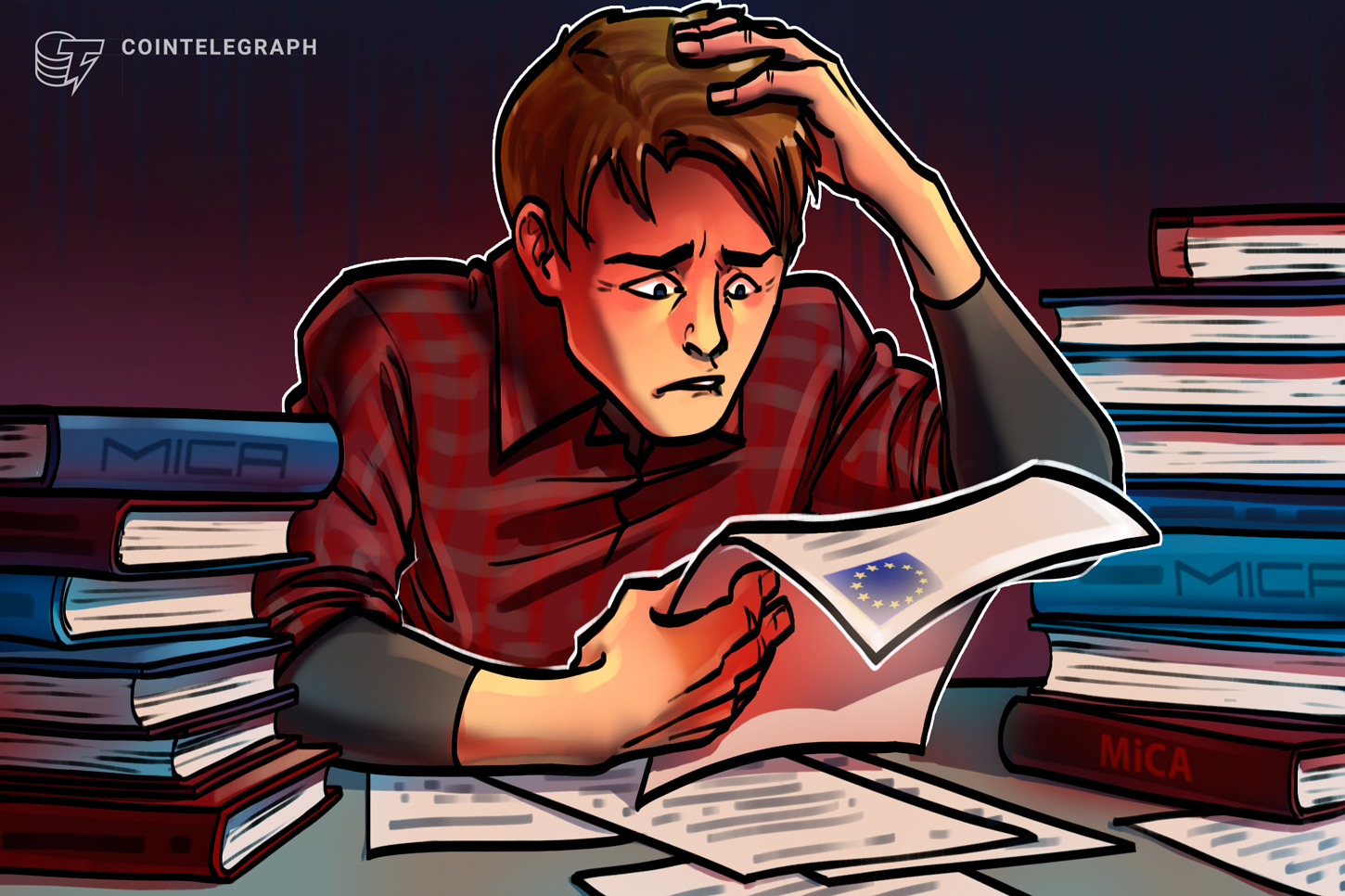
European financial regulators, including the European Securities and Markets Authority (ESMA) and national competent authorities (NCAs), have issued warnings about a significant rise in crypto-related impersonation scams. These scams are reportedly leveraging the ongoing implementation of the Markets in Crypto-Assets (MiCA) regulation, which is bringing a new licensing regime to the European Union. Criminals are exploiting the public's search for legitimate, MiCA-compliant crypto service providers.
Fraudsters are creating highly convincing fake websites and falsified documents designed to mimic legitimate crypto exchanges and service providers. They are then targeting individuals who are actively seeking licensed entities, presenting themselves as trustworthy and regulated platforms. This tactic preys on the desire of investors to engage with compliant and secure services, especially in a rapidly evolving regulatory landscape.
These sophisticated scams aim to trick investors into divulging personal information, transferring funds, or otherwise compromising their digital assets. The warnings from European watchdogs highlight the critical need for vigilance, particularly as the crypto market matures and regulatory frameworks like MiCA come into full effect. The complexity of MiCA's rollout creates a fertile ground for these types of deceptive practices.
The regulatory bodies are urging consumers to exercise extreme caution and to verify the authenticity of any crypto service provider before engaging with them. They recommend checking official registers and legitimate sources to confirm licensing status, rather than relying solely on information presented by the service providers themselves. This proactive stance is a direct response to the increasing prevalence and sophistication of these impersonation schemes.
Why it matters for Australian investors
While MiCA is a European regulation, the warning about impersonation scams carries significant weight for Australian investors. The global nature of cryptocurrency means that scams originating overseas can easily target individuals anywhere, including Australia. Australian investors often use a mix of local and international exchanges, and the tactics employed by these scammers are not geographically confined.
Australian regulators like the Australian Securities and Investments Commission (ASIC) and the Australian Transaction Reports and Analysis Centre (AUSTRAC) have consistently warned about the dangers of crypto scams. The European experience underscores the universal vulnerability to sophisticated fraud, regardless of local regulatory frameworks. Investors here need to be just as vigilant as their European counterparts.
The rise of global crypto regulation, even if not directly applicable, often influences broader market sentiment and scam trends. As the industry matures, fraudsters adapt their strategies. An increase in impersonation scams globally suggests that Australian investors should be doubly careful when selecting platforms, whether they are engaging with established Australian exchanges like CoinSpot, Independent Reserve, Swyftx, and BTC Markets, or looking at international options.
Furthermore, the Australian Taxation Office (ATO) treats cryptocurrency as property for capital gains tax purposes. Falling victim to a scam could have implications for how losses are reported, making due diligence even more crucial. Avoiding scams in the first place is paramount for protecting one's investment and navigating the tax landscape effectively.
Impact on the AUD market
While there isn't a direct and immediate impact on the AUD market or the AUD-to-crypto exchange rates from European scams, the broader implications of these warnings are relevant. Investor confidence can be easily shaken by widespread reports of fraud, regardless of the geographical origin. If global crypto markets react to such warnings with caution, it could indirectly affect Australian investor behaviour.
For instance, if international sentiment turns more conservative due to scam prevalence, Australian investors might become more risk-averse, potentially leading to reduced trading volumes or a preference for more established, locally regulated platforms. This could subtly shift liquidity within the Australian crypto ecosystem, favouring exchanges with strong local reputations and robust security measures.
Australian crypto exchanges operate under their own regulatory obligations, including those set by AUSTRAC regarding anti-money laundering (AML) and counter-terrorism financing (CTF). The European warnings reinforce the importance of these regulations in protecting consumers. A secure, compliant local market is better positioned to withstand the fallout from global scam waves.
Ultimately, the resilience of the Australian crypto market against scams relies heavily on investor education and the robustness of local platforms. While not a direct AUD market mover, the trend of increasing impersonation scams globally serves as a cautionary tale that Australian participants should heed, encouraging more secure practices across the board.
What to watch next
Australian investors should continue to monitor global regulatory developments, even those not directly impacting Australia, as they often signal broader trends in the crypto space. The ongoing implementation of MiCA in Europe will be instructive, particularly how regulators manage consumer protection and combat fraud in a newly regulated environment. Lessons learned there could inform future approaches in Australia.
Pay close attention to updates from Australian regulatory bodies like ASIC and AUSTRAC. They regularly issue warnings and guidance concerning crypto-related risks, including scams. These local advisories are tailored to the Australian context and are vital for protecting investments. Subscribing to official communications from these bodies is a prudent step.
When choosing a crypto exchange or service, always verify its legitimacy through independent channels. For Australian services, check if they are registered with AUSTRAC, and review their reputation within the Australian crypto community. Well-regarded Australian exchanges like CoinSpot, Independent Reserve, Swyftx, and BTC Markets are usually transparent about their compliance and security protocols.
Finally, remain sceptical of unsolicited offers or promises of unusually high returns. Scammers often use social engineering tactics to create a sense of urgency or exclusivity. Always conduct thorough due diligence and remember the adage: if it sounds too good to be true, it probably is. Vigilance remains the strongest defence against these evolving threats.
Coins covered


Common questions
How can Australian investors verify if a crypto exchange is legitimate?
Australian investors should check if a crypto exchange is registered with AUSTRAC, as all digital currency exchanges operating in Australia must comply with anti-money laundering and counter-terrorism financing (AML/CTF) laws. Additionally, look for strong reputations within the Australian crypto community, clear terms of service, and transparent communication about security measures. Always cross-reference information on official websites and reliable independent sources.
What are the tax implications if an Australian investor falls victim to a crypto scam?
If an Australian investor falls victim to a crypto scam and loses their assets, the Australian Taxation Office (ATO) generally treats this as a capital loss. You may be able to claim this loss against capital gains from other assets. It's crucial to keep detailed records of the incident, including any evidence of the scam, the amount lost, and any attempts to recover funds, for accurate tax reporting. Consulting with a tax professional experienced in crypto is highly recommended.
Are Australian crypto exchanges like CoinSpot or Swyftx immune to impersonation scams?
While reputable Australian crypto exchanges like CoinSpot, Swyftx, Independent Reserve, and BTC Markets employ robust security measures and operate under Australian regulatory frameworks, no platform is entirely immune to being impersonated by scammers. Fraudsters often create fake websites or phishing emails that mimic legitimate exchanges. Australian investors should always ensure they are using the official website and app, watch out for suspicious communications, and enable two-factor authentication (2FA) on their accounts for added security.
EU watchdogs warn of a surge in crypto impersonation scams amid MiCA. Learn why this matters for Australian investors and how to protect your assets.
About this article: this is an AI-generated summary of reporting by Cointelegraph. It has not been reviewed by a human editor. We use AI to localise crypto news for Australian readers, and we link back to the original source so you can verify the facts.
Informational only — not financial advice. Always do your own research. Read our AI & editorial policy →