
Elon Musk Accepts Dogecoin for SpaceX Payments as DOGE Stalls Ahead of Historic IPO
AI-summarised from reporting by cryptonews. How we use AI.
What happened
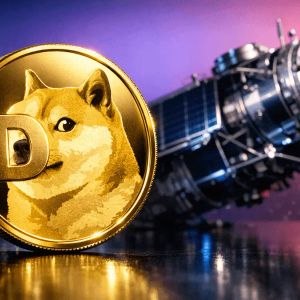
Dogecoin, the popular meme-inspired cryptocurrency, is once again making headlines following a significant announcement from Elon Musk's aerospace venture, SpaceX. The company has confirmed that it accepted DOGE as the sole payment mechanism for the DOGE-1 lunar mission, a satellite launch organised by Geometric Energy Corporation. This development reignites the long-standing association between Musk and Dogecoin, a connection that has historically led to considerable price movements for the digital asset.
The DOGE-1 mission, initially teased by Musk years ago as the "1st crypto in space, 1st meme in space," solidifies Dogecoin’s unusual foray into interplanetary commerce. SpaceX's Vice President of Commercial Sales, Tom Ochinero, reportedly described the mission as laying "the foundation for interplanetary commerce," underscoring the innovative, if unconventional, nature of this payment arrangement. While the financial specifics of the contract remain undisclosed, the move signals a continued embrace of Dogecoin in certain niche, high-profile transactions.
Despite this apparently bullish news, the immediate market reaction for DOGE has been somewhat subdued. Unlike previous instances where Musk's endorsements led to immediate double-digit percentage gains, analysis of recent price action shows Dogecoin hovering in a tight range, specifically between $0.080 and $0.085. This suggests a degree of hesitation among retail investors, a notable shift from the enthusiastic response often seen with past Musk-related news.
Why it matters for Australian investors
For Australian investors, this latest development regarding Dogecoin and SpaceX offers a fascinating case study in market sentiment and the influence of high-profile figures. While the direct financial implications for the Australian dollar (AUD) market are indirect, the event provides crucial insights into the broader cryptocurrency landscape, which often impacts local sentiment and investment patterns.
Australian crypto exchanges like CoinSpot, Independent Reserve, Swyftx, and BTC Markets all list Dogecoin, making it readily accessible to local investors. The ongoing saga of Musk's influence continually shapes the narrative surrounding meme coins, a sector many Australian investors engage with, often due to their speculative potential. The current muted reaction, however, could indicate a maturing market where investors are becoming more discerning, rather than reacting purely on hype.
Furthermore, the Australian Taxation Office (ATO) classifies cryptocurrency as property for tax purposes, meaning any capital gains derived from trading DOGE – whether up or down – are subject to capital gains tax. This makes understanding market drivers, even those as idiosyncratic as Elon Musk’s tweets or SpaceX payments, critical for Australian investors to manage their portfolios and tax obligations effectively. Volatility, often a hallmark of meme coins linked to celebrity endorsements, continues to be a key consideration.
Impact on the AUD market
The immediate impact of Dogecoin’s latest announcement on the Australian dollar (AUD) market is unlikely to be significant or direct. The AUD's value is primarily driven by macroeconomic factors such as commodity prices, interest rate differentials, global economic growth, and domestic policy decisions. However, the broader cryptocurrency market's health and investor sentiment can indirectly influence risk appetite within the Australian financial landscape.
For Australian investors holding DOGE, the lack of a substantial price surge post-announcement highlights the increasing difficulty for meme coins to replicate their historic runs. While the AUD value of their DOGE holdings will fluctuate with the USD/AUD exchange rate, the primary driver will remain the underlying DOGE price action. If Dogecoin were to experience another significant rally, the AUD-denominated value on local exchanges would increase proportionally, potentially leading to capital gains for Australian holders.
It also reinforces the need for Australian investors to conduct thorough due diligence, regardless of the celebrity endorsements. Regulatory bodies like AUSTRAC, which oversees anti-money laundering and counter-terrorism financing in Australia, and ASIC, which monitors financial markets, are increasingly focused on the crypto sector. While this specific event doesn't trigger new regulations, the underlying market dynamics it reveals are pertinent to the ongoing assessment of risk and investor protection in the Australian digital asset space.
What to watch next
The future trajectory of Dogecoin, especially in the wake of the SpaceX payment confirmation, hinges on several key factors. One scenario suggests that DOGE could find support around the $0.078 mark, with further speculation surrounding a potential SpaceX initial public offering (IPO) and fresh commentary from Elon Musk providing renewed narrative catalysts. The actual launch timeline of the DOGE-1 mission itself could also serve as a recurring momentum driver.
A second possibility involves Dogecoin consolidating within its recent $0.080–$0.085 range for an extended period. In this scenario, the broader cryptocurrency market conditions would likely dictate its direction more than any meme-specific news. This would signal a departure from its past behaviour, where Musk's every word could trigger significant volatility.
However, a break below the $0.078 support level could open the door to a more substantial downside for DOGE. Historically, Dogecoin has demonstrated its capacity for sharp corrections, as evidenced by its significant decline following Musk's “hustle” comment on Saturday Night Live. This underscores the inherent volatility and speculative nature of Dogecoin, making it crucial for Australian investors to remain vigilant. The market's reaction to this latest news suggests that while Musk's influence remains, investors may be seeking more fundamental drivers for growth beyond celebrity endorsement.
Coins covered



Common questions
How is Dogecoin taxed in Australia after a transaction like this?
In Australia, the ATO views Dogecoin, and all cryptocurrencies, as property for capital gains tax (CGT) purposes. This means that if you sell, trade, or dispose of your DOGE – even if it's used for a purchase like the SpaceX mission – any profit made in AUD terms (after converting the Dogecoin's cost base) is subject to CGT. Losses can also be used to offset capital gains. Accurate record-keeping is essential for all Australian Dogecoin holders.
Can Australian investors directly participate in meme coin pumps like Dogecoin's past surges?
While Australian investors have access to Dogecoin through local exchanges such as CoinSpot, Independent Reserve, Swyftx, and BTC Markets, direct participation in 'pump and dump' schemes is generally ill-advised and carries significant risks. The market is maturing, and past surges driven purely by celebrity endorsement are becoming harder to replicate. Investors should be wary of speculative movements and understand that meme coins are highly volatile assets.
What regulatory oversight do Australian crypto exchanges have regarding Dogecoin trading?
Australian crypto exchanges listing Dogecoin are subject to regulatory oversight primarily from AUSTRAC, which enforces anti-money laundering (AML) and counter-terrorism financing (CTF) laws. This requires exchanges to verify customer identities and report suspicious transactions. ASIC also has a role in supervising the broader financial services landscape, including aspects of crypto offerings. While there's no specific DOGE-centric regulation, general crypto trading is within their purview, aiming for market integrity and consumer protection.
SpaceX accepts Dogecoin for a lunar mission, but DOGE's price remains flat. Aussie investors, understand what this means for your portfolio!
About this article: this is an AI-generated summary of reporting by cryptonews. It has not been reviewed by a human editor. We use AI to localise crypto news for Australian readers, and we link back to the original source so you can verify the facts.
Informational only — not financial advice. Always do your own research. Read our AI & editorial policy →