
Crypto Market Sheds 7% as Total Cap Hits $2.3T, CFTC Opens US Perp Door, Microsoft Launches Scout Agent
AI-summarised from reporting by CoinOtag. How we use AI.
What happened
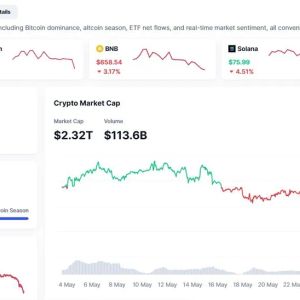
The broader cryptocurrency market experienced a significant downturn this week, with the total market capitalisation plummeting to approximately USD $2.32 trillion. This sharp correction wiped out nearly 17% of the market's value in less than three weeks, pushing investor sentiment firmly into a state of 'fear'. Such rapid contractions are not uncommon in the volatile crypto landscape but always warrant close examination, particularly for Australian investors navigating these waters.
Several factors appear to be converging to create this market pressure. While the exact catalysts can be multifaceted and often debated, macroeconomic concerns and shifts in investor risk appetite frequently play a role. When global financial markets exhibit caution, the more speculative assets like cryptocurrencies often bear the brunt, as investors de-risk their portfolios. This latest dip reflects a significant shift from the more bullish sentiment observed earlier in the year.
Simultaneously, regulatory developments continue to shape the global crypto environment. In the United States, the Commodity Futures Trading Commission (CFTC) has reportedly opened the door for perpetual futures contracts for some cryptocurrencies, a move that could have significant implications for how these derivatives are traded and regulated. Perpetual futures are a type of derivative that allows traders to speculate on the future price of a cryptocurrency without an expiry date, offering high leverage and complex trading strategies.
Big tech's continued integration with blockchain and AI was also in the news. Microsoft launched its 'Scout Agent', an AI-powered agent designed to enhance network security within the enterprise. While not directly crypto-related, such developments underscore the ongoing technological advancements leveraging underlying principles found in decentralised systems. These broader technological narratives often indirectly influence sentiment around the digital asset space by highlighting the innovative potential of related technologies.
Why it matters for Australian investors
For Australian investors, a global market downturn translates directly into the value of their crypto holdings. Popular cryptocurrencies like Bitcoin and Ethereum, often purchased on Australian exchanges such as CoinSpot, Independent Reserve, Swyftx, and BTC Markets, are priced globally, meaning a 17% drop in the total market capitalisation impacts portfolios down under. Monitoring these global trends is crucial for informed decision-making, even when trading locally in AUD.
Regulatory clarity, or lack thereof, also significantly influences the Australian crypto landscape. While the CFTC's actions are specific to the US, they often set precedents or indicate broader regulatory trends that other jurisdictions, including Australia, may eventually consider. Australia's financial regulators, ASIC and AUSTRAC, are keenly observing international developments to shape local policy around digital assets. Any moves towards formalising crypto derivatives in major markets could eventually pave the way for similar offerings, or stricter oversight, in Australia.
Taxation remains a critical consideration for Australian crypto investors. The Australian Taxation Office (ATO) views cryptocurrency as property for capital gains tax (CGT) purposes. A market correction like this highlights the importance of understanding the cost basis of holdings, especially if investors are considering selling. Realising capital losses during a downturn can be a strategy for reducing overall tax liabilities, a nuanced area where professional advice is often invaluable.
Furthermore, the increasing institutional adoption and technological advancements, even outside direct crypto applications, underscore the long-term potential and growing mainstream relevance of the underlying technology. Microsoft's new AI agent, while not a crypto product, signifies how decentralised concepts and advanced computing are intersecting. For Australian investors looking beyond short-term volatility, these broader technological shifts can provide context for the evolving digital economy.
Impact on the AUD market
A global crypto market contraction inevitably leads to a decrease in the AUD value of cryptocurrencies listed on Australian exchanges. For instance, if an Australian investor held Bitcoin, its AUD value would have fallen in line with the global USD price drop, assuming a stable AUD/USD exchange rate. This can lead to increased selling pressure as some investors attempt to minimise losses, or conversely, it can present a buying opportunity for those with a longer-term optimistic outlook.
Australian crypto exchanges will likely experience changes in trading volumes during such periods. While a downturn might deter some new entrants, it often sparks increased activity among existing traders looking to rebalance portfolios or capitalise on perceived discounts. Liquidity on these platforms, such as CoinSpot or Swyftx, can be tested, although established Australian exchanges are generally well-capitalised and adhere to robust operational standards, mitigating extreme risks.
The regulatory environment in Australia, overseen by AUSTRAC for anti-money laundering and counter-terrorism financing (AML/CTF) and ASIC for consumer protection, provides a framework that aims to safeguard investors. However, current regulations do not insulate investors from market volatility. Investors are encouraged to understand the risks associated with highly volatile assets. Any significant market event can prompt Australian regulators to re-evaluate existing frameworks or propose new ones, potentially affecting how crypto products are offered and traded domestically.
Given the relatively smaller size of the Australian crypto market compared to global giants, AUD-denominated crypto prices can also be influenced by the AUD/USD exchange rate. A weaker AUD against the USD would amplify the impact of a global crypto price drop when converted back to Australian dollars, potentially leading to a more pronounced local decline in value for AUD holders. This interplay between global crypto prices and currency exchange rates is a critical consideration for Australian investors.
What to watch next
Moving forward, Australian investors should closely monitor several key indicators. The overall market capitalisation and Bitcoin's price action will remain primary gauges for market sentiment. A sustained recovery above key resistance levels would signal renewed confidence, while further declines could indicate prolonged 'fear' territory. Watching global macroeconomic indicators, such as interest rate decisions and inflation reports, will also be crucial, as these often influence broader risk appetite for speculative assets.
Regulatory developments, both domestically and internationally, warrant close attention. The unfolding situation with the CFTC in the US could set a precedent for how perpetual futures and other derivatives are handled, potentially impacting future product offerings or regulatory stances in Australia. Australian regulators like ASIC and AUSTRAC will continue to consult on and refine local frameworks, which could bring greater clarity or new compliance burdens to the market.
Technological advancements, particularly those from major tech companies like Microsoft and their deeper engagement with blockchain-related solutions, should be observed. While not directly impacting crypto prices, these developments can enhance the underlying utility and perception of the broader decentralised ecosystem. Continued innovation and integration into mainstream applications can provide long-term tailwinds for digital assets, even amidst short-term market fluctuations.
Finally, keeping an eye on trading volumes and liquidity across major Australian exchanges will provide insight into local investor behaviour. Significant shifts in buy or sell pressure on platforms like BTC Markets or Independent Reserve can indicate local sentiment and potential market trends. Prudent Australian investors will stay informed across these various fronts to navigate the evolving and sometimes unpredictable cryptocurrency market effectively.
Coins covered


Common questions
How does cryptocurrency tax work in Australia after a market dip?
In Australia, the ATO treats cryptocurrency as property for capital gains tax (CGT) purposes. If you sell or dispose of cryptocurrency for less than its cost base, you may incur a capital loss. This loss can then be offset against any capital gains you might have in the same financial year or carried forward to offset future capital gains, potentially reducing your overall tax liability. Accurate record-keeping of all transactions is crucial.
Which Australian crypto exchanges are regulated for user protection during volatile periods?
Australian crypto exchanges like CoinSpot, Independent Reserve, Swyftx, and BTC Markets are regulated by AUSTRAC for anti-money laundering and counter-terrorism financing (AML/CTF) compliance. While AUSTRAC ensures these platforms meet financial crime obligations, ASIC oversees consumer protection related to financial products. It's important to understand that while these regulations offer a degree of oversight and security regarding platform operations, they do not guarantee against market volatility or investment losses.
What Australian regulatory changes might impact future crypto investments?
The Australian Government and regulators like ASIC and AUSTRAC are continuously reviewing and developing policies for the digital asset sector. Future changes could include more specific licensing regimes for crypto service providers, consumer protection frameworks for crypto products, or clearer guidelines around decentralised finance (DeFi) and non-fungible tokens (NFTs). Investors should stay informed about government consultations and proposed legislation, as these will directly shape the operational landscape for crypto in Australia.
Australia's crypto market faces headwinds as global cap dips 17%. Explore what this downturn means for Aussie investors and what to watch next.
About this article: this is an AI-generated summary of reporting by CoinOtag. It has not been reviewed by a human editor. We use AI to localise crypto news for Australian readers, and we link back to the original source so you can verify the facts.
Informational only — not financial advice. Always do your own research. Read our AI & editorial policy →