
Crypto and stocks tumble after Trump declares ceasefire 'over' following Iran strikes
AI-summarised from reporting by CoinDesk. How we use AI.
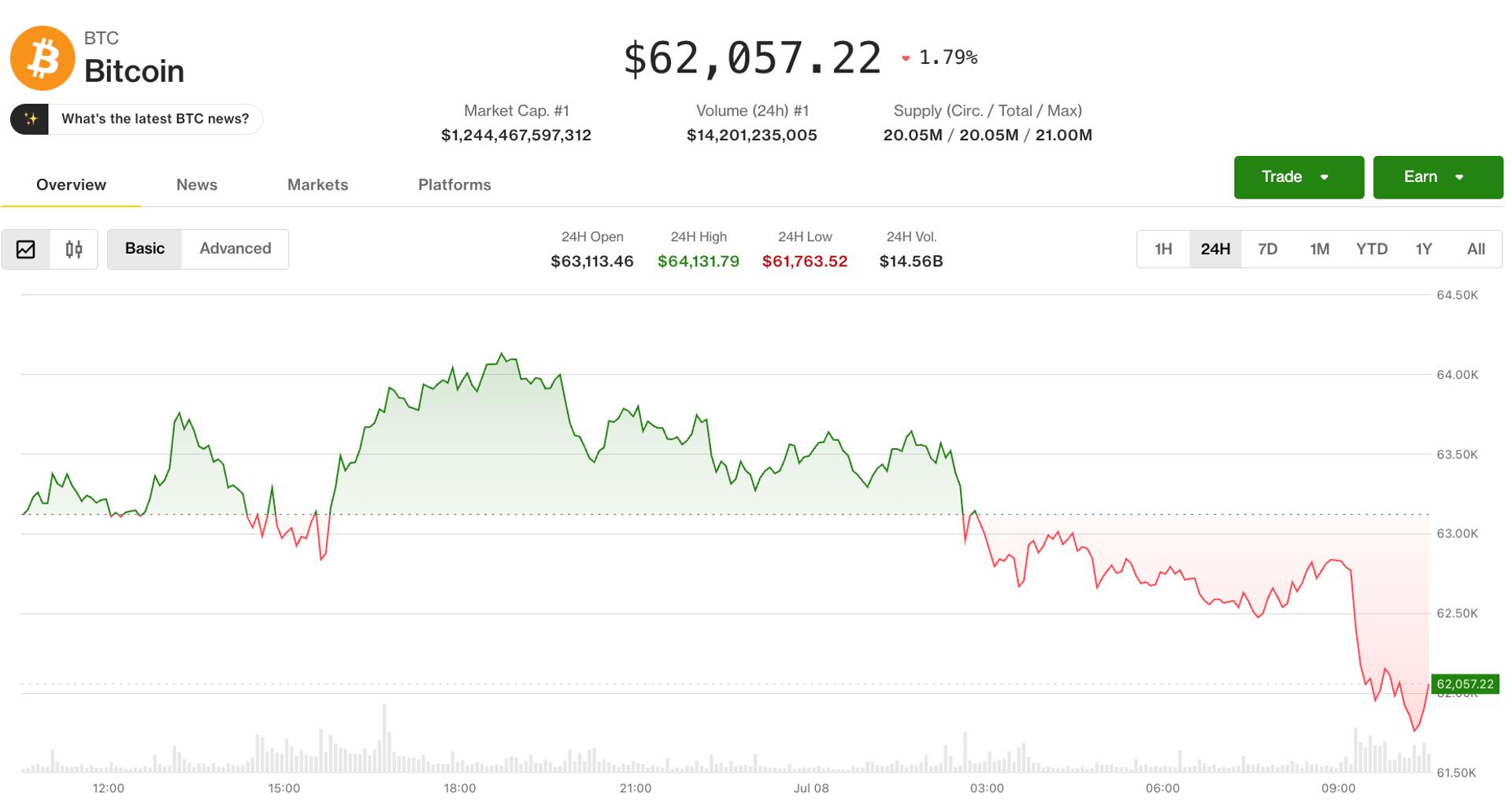
What happened
The cryptocurrency market experienced a notable downturn, with Bitcoin leading the slide, following geopolitical developments in the Middle East. Altcoins, the broader category of cryptocurrencies other than Bitcoin, also saw significant price corrections. This market reaction was triggered by escalating tensions between the United States and Iran, specifically after a period of retaliatory military actions.
The global geopolitical landscape often has a profound impact on financial markets, and the crypto sphere is no exception. Traditional assets like stocks also registered declines, reflecting the widespread investor apprehension. The declaration that a 'ceasefire' was over, subsequent to the exchange of airstrikes, signalled a heightened state of uncertainty that rippled through risk assets globally.
Investors, seeking safe havens amidst the instability, tend to move away from more volatile investments. While Bitcoin is sometimes touted as 'digital gold' and a hedge against traditional financial systems, its price action in this instance suggested it acted more in concert with other risk assets. The immediate response across crypto exchanges was a broad-based downtrend, indicating a significant and rapid withdrawal of capital.
This event underscores the interconnectedness of the global financial ecosystem. Even decentralised digital assets are not entirely insulated from macroscopic geopolitical shifts. The perception of increased risk, whether in traditional markets or nascent digital ones, frequently leads to a flight to liquidity or perceived safety.
Why it matters for Australian investors
For Australian investors, global events of this magnitude can have a direct and indirect impact on their crypto portfolios. While Bitcoin and other cryptocurrencies are traded globally, their AUD pricing reflects international market movements. A significant dip in USD-denominated prices will almost certainly translate into lower AUD values on Australian exchanges such as CoinSpot, Independent Reserve, Swyftx, and BTC Markets.
The Australian dollar itself can also be affected by global instability, often weakening against major currencies like the US dollar during times of geopolitical tension. This twin effect – a falling crypto price in USD and a potentially weakening AUD – could compound losses for Australian investors holding crypto assets. It highlights the importance of understanding not just the crypto market, but also broader macroeconomic factors.
Furthermore, Australian investors need to remain mindful of their tax obligations. The Australian Taxation Office (ATO) views cryptocurrency as property for capital gains tax (CGT) purposes. Any significant market movement, whether up or down, has potential CGT implications if assets are sold. Understanding when a capital loss can be offset against a capital gain is crucial, especially during periods of market volatility.
While the direct operational impact on Australian crypto exchanges or regulatory bodies like AUSTRAC or ASIC might not be immediate, market volatility can prompt increased scrutiny. Investors should always ensure they are using reputable platforms and understand the risks associated with cryptocurrency investments, particularly when global events introduce additional layers of uncertainty.
Impact on the AUD market
The direct impact on the AUD market from this specific event was primarily observed through the depreciation of crypto assets priced in Australian dollars. As global cryptocurrency values fell, so did their equivalent prices across Australian trading platforms. This means that an Australian investor holding, for example, Bitcoin or Ethereum, would have seen the AUD value of their portfolio decrease in line with the international market downtrend.
The Australian dollar's performance as a 'commodity currency' can sometimes add another layer of complexity. During times of global risk aversion, investors often flock to safe-haven currencies, causing the AUD to weaken against currencies like the US dollar or Japanese Yen. If the AUD weakens while crypto prices are also falling in USD terms, Australian investors could face a magnified decline in their portfolio's value when expressed in AUD.
Australian crypto exchanges process millions in AUD transactions daily. While these platforms facilitate the trading, they absorb the price movements dictated by the global market. The regulatory framework, overseen by bodies like AUSTRAC for anti-money laundering and counter-terrorism financing, and ASIC for consumer protection, remains a constant for Australian participants, ensuring that transactions occur within established legal parameters, regardless of market volatility.
It’s also worth considering the psychological impact on Australian investors. Sharp, sudden drops can test conviction and lead to panic selling. This behavioural aspect is a critical component of market dynamics, especially in a relatively young and volatile asset class like cryptocurrency. Rational decision-making, informed by a long-term investment strategy, is often advised during such times.
What to watch next
The immediate focus for Australian and global investors alike will be on how geopolitical tensions evolve. Any further escalation or de-escalation between major global powers could trigger subsequent market reactions. The interconnectedness of traditional and crypto markets means that developments in one sphere are likely to echo in the other.
Beyond the immediate geopolitical concerns, investors should monitor the broader economic indicators that influence both traditional finance and cryptocurrency. Inflation rates, interest rate decisions from central banks, and global economic growth forecasts will continue to play a crucial role in shaping market sentiment. These factors often dictate the overall appetite for risk assets, including cryptocurrencies.
For Australian investors specifically, keeping an eye on the Australian dollar's performance against major currencies is prudent. A strengthening or weakening AUD can significantly impact the effective returns from international crypto investments. Additionally, staying informed about any updates from Australian regulators regarding crypto assets is always advisable, as the regulatory landscape continues to mature both globally and locally.
Finally, observing the resilience and recovery patterns of Bitcoin and other major altcoins will be key. While short-term volatility is common, the long-term trends and adoption rates remain important for many crypto adherents. Market corrections, while unsettling, are often part of the cycle in nascent asset classes, and observing the bounce-back will offer insights into the underlying strength of investor confidence.
Coins covered




Common questions
How do global events affect the price of Bitcoin in AUD?
Global events that cause volatility in international markets, such as geopolitical tensions, typically affect the USD price of Bitcoin first. Since Australian exchanges price Bitcoin based on the equivalent USD value converted to AUD, any significant international price drop will be reflected in the AUD price on platforms like CoinSpot, Independent Reserve, Swyftx, and BTC Markets. A weakening AUD against the USD during such times can also compound the price decline for Australian investors.
What are the tax implications for Australian investors if their crypto portfolio drops significantly?
For Australian investors, the ATO treats cryptocurrency as property for capital gains tax (CGT) purposes. If the value of your crypto portfolio drops and you sell assets at a loss, you may incur a capital loss. A capital loss can be used to offset current or future capital gains, potentially reducing your tax liability. It's crucial to keep accurate records of all crypto transactions for ATO reporting.
Are Australian crypto exchanges regulated during periods of market instability?
Yes, Australian crypto exchanges and digital currency service providers are regulated in Australia under existing laws, primarily by AUSTRAC for anti-money laundering and counter-terrorism financing (AML/CTF) purposes. ASIC also has a role in consumer protection and has issued guidance on crypto-related investments. These regulations remain in effect regardless of market instability, aiming to ensure operational integrity and protect consumers.
Explore how global geopolitical tensions impact Australian crypto investors and the AUD market. Get insights into Bitcoin's reaction and what's next.
About this article: this is an AI-generated summary of reporting by CoinDesk. It has not been reviewed by a human editor. We use AI to localise crypto news for Australian readers, and we link back to the original source so you can verify the facts.
Informational only — not financial advice. Always do your own research. Read our AI & editorial policy →