
CoinDesk 20 performance update: Bitcoin (BTC) price drops 2.8% as index declines
AI-summarised from reporting by CoinDesk. How we use AI.
What happened
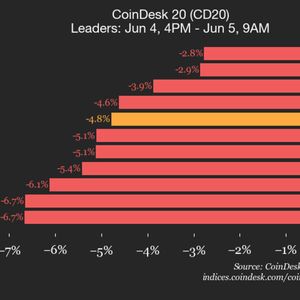
The broader cryptocurrency market, as reflected by the CoinDesk 20 index, experienced a downturn over the past 24 hours. The index, which tracks the performance of 20 prominent digital assets, saw all its constituents register declines. This widespread dip suggests a general bearish sentiment across the significant players in the crypto ecosystem. Bitcoin, the largest cryptocurrency by market capitalisation, was not immune to this trend, recording a 2.8% price drop.
This movement highlights the interconnectedness of the crypto market. When leading assets like Bitcoin face headwinds, it often creates a ripple effect across other cryptocurrencies. Investors frequently use Bitcoin's performance as a bellwether for the overall health of the digital asset space. The synchronised decline across all 20 assets underscores a broad market correction rather than an isolated event affecting a single cryptocurrency.
The CoinDesk 20 index provides a valuable snapshot of the market's pulse, encompassing a diversity of projects from various sectors within the crypto landscape. Its comprehensive nature means that a universal decline among its components signals a significant shift in market psychology. Such events are closely watched by traders and long-term holders alike, seeking to understand underlying causes and potential future trajectories.
Why it matters for Australian investors
For Australian investors, a broad market downturn like this can have several implications. Primarily, it means a potential depreciation in the value of their crypto holdings, whether those are held on Australian exchanges like CoinSpot, Independent Reserve, Swyftx, or BTC Markets, or on international platforms. The AUD pricing of these assets will inevitably reflect the global market movements, often with a slight lag or premium due to local market dynamics and exchange rate fluctuations.
Such market corrections can also present buying opportunities for those with a long-term investment horizon, though it's crucial for investors to conduct their own research and consider their financial position. The volatility inherent in the crypto market means prices can rebound, but there's no guarantee. Australian investors should also be mindful of ATO tax implications, as capital gains or losses from crypto trades must be reported. Understanding the timing of investments and disposals is key for accurate tax declarations.
Regulatory developments in Australia, monitored by ASIC and AUSTRAC, are always a factor for local investors. While this particular market movement is global, the ongoing stability and compliance of Australian-licensed platforms are essential. Investors rely on these organisations to provide secure and regulated access to the crypto market, especially during periods of market stress. Adherence to local regulations helps foster trust and security within the Australian crypto community.
Impact on the AUD market
The Australian dollar (AUD) price of cryptocurrencies is directly impacted by global market movements. When Bitcoin and other major digital assets decline in USD value, their AUD equivalent will also fall, assuming a stable AUD/USD exchange rate. This can lead to a decrease in the AUD value of portfolios held by Australian investors. For instance, a 2.8% drop in Bitcoin's USD price would translate to a similar percentage drop in its AUD price on local exchanges, excluding any AUD volatility.
Trading volume on Australian exchanges may also see shifts. During market downturns, some investors might panic sell, increasing trading activity, while others might 'buy the dip,' also leading to heightened volumes. Conversely, some investors might become more cautious, leading to a temporary reduction in overall market participation. The behaviour of Australian retail and institutional investors during such periods is a key indicator of local market sentiment.
Despite the global nature of this downturn, the resilience of the Australian crypto market infrastructure is important. Reliable functioning of local exchanges and payment gateways ensures that Australian investors can manage their assets effectively, regardless of market conditions. This stability is crucial for maintaining confidence in the digital asset ecosystem within Australia.
What to watch next
Moving forward, Australian investors should closely monitor global macroeconomic indicators, as these often influence the broader cryptocurrency market. Factors such as inflation reports, interest rate decisions by major central banks, and geopolitical events can all contribute to market sentiment. A sustained period of economic uncertainty could further impact risk assets like cryptocurrencies.
Keep an eye on the performance of Bitcoin. As the market leader, its price action often dictates the direction of the wider altcoin market. A stabilised Bitcoin price could signal a potential recovery for the CoinDesk 20 constituents and the broader market. Conversely, continued downward pressure on Bitcoin might indicate further declines across the board.
Also, observe significant news or developments within the crypto industry itself, such as major regulatory announcements from bodies like the SEC in the US or new technological advancements. While these didn't cause the current downturn, they can certainly influence future market movements. For Australian investors, staying informed about both global and local regulatory shifts, particularly from ASIC and AUSTRAC, remains paramount. Watching for any clear signs of reversal or a continuation of the bearish trend will be crucial for informed decision-making.
Coins covered

Common questions
How does this crypto market dip affect my superannuation if it holds crypto?
If your superannuation fund has exposure to cryptocurrencies, a market dip like this would likely result in a decrease in the value of that portion of your super. It's important to check your specific super fund's investment strategy and consult with a financial adviser regarding your individual circumstances, as superannuation funds have varying levels of crypto allocation.
What are the ATO tax implications if I sell my crypto during a market downturn in Australia?
In Australia, selling crypto, even at a loss during a market downturn, generally constitutes a capital gains event for tax purposes. If you sell at a loss, you may be able to use that capital loss to offset capital gains from other investments in the same financial year, or carry it forward to offset future capital gains. Always keep accurate records for ATO reporting.
Can I still buy and sell crypto on Australian exchanges like Swyftx or CoinSpot during a market downturn?
Yes, Australian cryptocurrency exchanges like Swyftx, CoinSpot, Independent Reserve, and BTC Markets typically continue to operate during market downturns, allowing users to buy and sell digital assets. These platforms are generally regulated by AUSTRAC for anti-money laundering and counter-terrorism financing purposes, maintaining functionality even through volatile periods.
Australia's crypto landscape is feeling the pinch as the CoinDesk 20 index sees a broad decline. Discover how this impacts AUD prices and local investors.
About this article: this is an AI-generated summary of reporting by CoinDesk. It has not been reviewed by a human editor. We use AI to localise crypto news for Australian readers, and we link back to the original source so you can verify the facts.
Informational only — not financial advice. Always do your own research. Read our AI & editorial policy →