
Cboe, CME, ICE trade lower amid competition concerns related to perpetual futures
AI-summarised from reporting by Seeking Alpha. How we use AI.
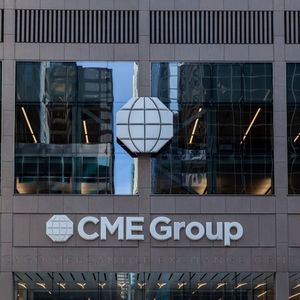
What happened
Recent financial market activity has seen major players like Cboe, CME, and Intercontinental Exchange (ICE) experience a downturn in their stock performance. This trend has been attributed, in part, to increasing competition, particularly within the derivatives market. The landscape for traditional exchanges is evolving rapidly, with new financial products and platforms constantly emerging.
Historically, these established exchanges have been dominant forces in providing derivatives trading, including futures contracts. However, the rise of digital assets and decentralised finance (DeFi) has introduced new forms of competition, challenging their long-held market positions. This shift is creating a dynamic environment where traditional financial infrastructure is contending with innovative, often crypto-native, alternatives.
One significant area of competitive pressure stems from the growing popularity of perpetual futures. These derivatives contracts, which lack an expiry date, have become a staple in the cryptocurrency trading world. Their continuous nature offers different opportunities and risks compared to traditional, time-bound futures, appealing to a segment of the market seeking constant exposure.
The increasing availability and liquidity of perpetual futures on various cryptocurrency platforms mean that traditional exchanges are facing headwinds. Investors and traders now have a broader array of choices for accessing leveraged exposure. This diversification of trading options directly impacts the business models of established financial institutions that have historically relied on more conventional product offerings.
Why it matters for Australian investors
For Australian investors, the performance of major global exchanges like Cboe, CME, and ICE provides a barometer for the broader financial market's sentiment towards evolving financial products. While these are US-based entities, their competitive pressures can signal broader trends that eventually impact Australian financial services providers and investors. Any shift in how derivatives are traded globally could influence local market structures and available investment products.
The rise of perpetual futures, predominantly offered on offshore crypto exchanges, has implications for how Australians access derivatives. While the Australian Securities and Investments Commission (ASIC) has stringent regulations on leveraged products available to retail investors in Australia, the global availability of perpetual futures means some Australian investors may seek these products via overseas platforms. This highlights a regulatory and market development challenge for local authorities and exchanges.
Local Australian crypto exchanges such as CoinSpot, Independent Reserve, Swyftx, and BTC Markets primarily focus on spot trading of cryptocurrencies. However, as the market matures globally, the potential for more sophisticated derivative products, or regulated pathways to access them, could become a key discussion point. Understanding the competitive landscape overseas helps anticipate potential future offerings or regulatory adjustments within Australia.
Moreover, the competitive environment underscores the ongoing innovation in financial markets. Australian investors, whether participating directly in crypto or traditional assets, should be aware of these global shifts. Greater competition in derivatives markets could lead to changes in pricing structures, liquidity, and the overall efficiency of financial trading, aspects that can indirectly benefit or challenge local investment strategies.
Impact on the AUD market
While the direct impact on the Australian dollar (AUD) market from the competition faced by Cboe, CME, and ICE is not immediately apparent, there are indirect considerations. Global financial market trends, including the competitive dynamics within derivatives, can influence risk sentiment. If these established financial giants face significant challenges, it might contribute to broader market uncertainty, which could, in turn, affect the AUD as a risk-sensitive currency.
The growing dominance of perpetual futures, largely traded in cryptocurrencies, also points to the increasing global flow of capital into digital assets. While the AUD's primary drivers remain commodity prices, interest rate differentials, and global economic sentiment, the evolving digital asset landscape adds another layer to international capital movements. This could subtly influence the overall demand for various currencies, including the AUD, particularly if significant institutional capital continues to flow into crypto markets.
From a regulatory standpoint, the Australian Transaction Reports and Analysis Centre (AUSTRAC) is responsible for monitoring financial transactions to combat money laundering and terrorism financing. As more sophisticated products like perpetual futures gain traction globally, AUSTRAC and ASIC will continue to observe how these products might be offered or accessed by Australians, ensuring compliance with local financial regulations.
For Australian investors holding cryptocurrencies priced in AUD on local exchanges, the performance of these major traditional exchanges serves as a reminder of the dynamic nature of financial services. Local platforms must continue to innovate and adapt to global trends, ensuring they remain competitive and provide robust services, which ultimately benefits Australian traders seeking to manage their digital asset portfolios.
What to watch next
Investors should closely monitor how traditional exchanges respond to the growing competition from crypto-native perpetual futures. Will they develop their own competitive offerings, or seek to acquire platforms that already provide these services? The innovation from these established players could re-shape the derivatives landscape and create new investment opportunities or challenges for existing crypto platforms.
Keep an eye on regulatory developments globally and within Australia. As perpetual futures become more prominent, regulators like ASIC may explore further frameworks to manage their accessibility and risks for retail investors. The balance between fostering innovation and protecting consumers will be a key theme. Any regulatory clarity, or lack thereof, could significantly impact the market.
Observe the evolution of institutional adoption of perpetual futures. If more traditional financial institutions embrace these products, it could signal a broader integration of crypto derivatives into mainstream finance. This could unlock significant capital flows and further legitimise the asset class, potentially impacting pricing and liquidity across various crypto assets.
Finally, continued technological advancements in decentralised finance (DeFi) could further intensify competition. New protocols and platforms offering sophisticated derivatives entirely on-chain might present even greater challenges to both traditional and centralised crypto exchanges. The speed and direction of these innovations will be crucial in determining the future landscape of the global derivatives market, impacting Australian investors whether they are directly involved in crypto or not.
Coins covered

Common questions
Are perpetual futures available to Australian retail investors on local exchanges?
Currently, major Australian crypto exchanges like CoinSpot, Independent Reserve, Swyftx, and BTC Markets primarily offer spot trading of cryptocurrencies. Perpetual futures and other high-leverage derivatives typically have stricter regulatory oversight from ASIC, limiting their direct availability to retail investors on locally regulated platforms.
How does ATO tax treatment apply to profits from perpetual futures for Australians?
The Australian Taxation Office (ATO) generally treats cryptocurrency as an asset for capital gains tax (CGT) purposes. Profits from perpetual futures trading would likely be subject to income tax or CGT, depending on whether the activity is considered a hobby or a business, and the individual circumstances of the taxpayer. It is advisable to consult a tax professional for specific guidance.
What is AUSTRAC's role in monitoring perpetual futures trading?
AUSTRAC (Australian Transaction Reports and Analysis Centre) is responsible for detecting, deterring, and disrupting criminal abuse of the financial system, including activities related to digital currencies. While perpetual futures are often traded on platforms outside AUSTRAC's direct jurisdiction, the agency would monitor funds flowing into and out of such platforms from Australia to ensure compliance with anti-money laundering (AML) and counter-terrorism financing (CTF) laws.
Global exchanges face competitive pressure from perpetual futures. Discover what this means for Australian investors, AUD market, and what's next.
About this article: this is an AI-generated summary of reporting by Seeking Alpha. It has not been reviewed by a human editor. We use AI to localise crypto news for Australian readers, and we link back to the original source so you can verify the facts.
Informational only — not financial advice. Always do your own research. Read our AI & editorial policy →