
Bitcoin slips as traders lift July Fed rate hike bets ahead of Inflation report
AI-summarised from reporting by CoinDesk. How we use AI.
What happened
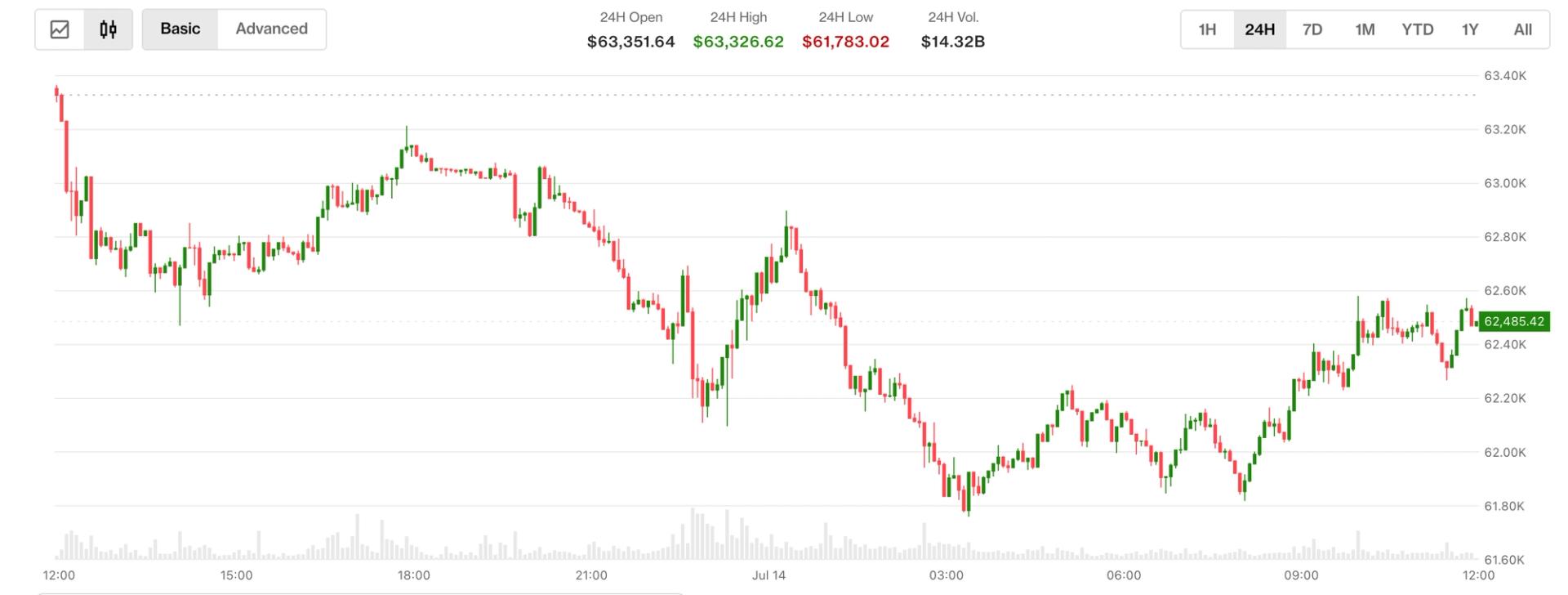
Bitcoin (BTC) and other major cryptocurrencies recently experienced a notable dip, shedding approximately 2% or more from their values within a 24-hour window. This downturn was largely attributed to a significant shift in market sentiment, with traders increasingly pricing in the likelihood of a July interest rate hike by the United States Federal Reserve. The anticipation of this potential monetary policy tightening in the US has a cascading effect across global financial markets, including the often-volatile cryptocurrency sector.
Historically, central bank rate rises are viewed as a bearish signal for risk assets like cryptocurrencies. Higher interest rates typically increase the cost of borrowing and strengthen the US dollar, making dollar-denominated assets more attractive while reducing the appeal of more speculative investments. This dynamic drives investors to re-evaluate their portfolios, often leading to a reallocation of capital away from high-growth, high-risk assets.
The market adjustment occurred as investors digested economic data and forward guidance from the Federal Reserve. Although specific inflation figures or other economic reports were not detailed as the direct trigger in the immediate aftermath, the collective sentiment among traders pointed towards a greater probability of an aggressive stance from the Fed. This forward-looking speculation about monetary policy decisions often moves markets even before official announcements.
The drop in Bitcoin's price was reflective of broader market movements, with most altcoins following suit. This indicates that the market's reaction was not specific to Bitcoin alone but rather a systemic response to macroeconomic pressures. Investors are keenly watching for further economic indicators and the Fed's next moves, as these will likely dictate the short-to-medium term trajectory for digital assets.
Why it matters for Australian investors
Australian investors in the crypto space are not insulated from the ripple effects of US monetary policy decisions. Given the global nature of cryptocurrency markets, movements in Bitcoin and other major digital assets, especially those driven by the significant influence of the US Federal Reserve, invariably impact Australian portfolios. Whether you're holding crypto on Australian exchanges like CoinSpot, Independent Reserve, Swyftx, or BTC Markets, or in self-custody, global price shifts affect your holdings.
The Australian dollar (AUD) also plays an interesting role here. A stronger US dollar, often a consequence of Fed rate hikes, can see the AUD weaken against its US counterpart. This means that even if Australian dollar-denominated prices of cryptocurrencies remain stable, the underlying USD value of those assets might be less favourable when converting back. Conversely, if the base asset (like BTC) dips in USD terms, that dip can feel even more pronounced for AUD investors if the AUD has also weakened.
From a taxation perspective, the Australian Taxation Office (ATO) treats cryptocurrencies as property for capital gains tax purposes. Any realised gains or losses from selling, trading, or otherwise disposing of cryptocurrency, regardless of whether they are influenced by global macroeconomic events, must be reported. Australian investors need to be mindful that volatility spurred by international factors can lead to rapid adjustments in asset values, requiring careful record-keeping for tax compliance.
Furthermore, the Australian regulatory landscape, monitored by ASIC and AUSTRAC, means that Australian investors operate within a structured environment. While these bodies don't directly influence global Bitcoin prices, they ensure that local exchanges and service providers adhere to anti-money laundering (AML) and counter-terrorism financing (CTF) obligations. Understanding how these global macroeconomic shifts affect your portfolio within this regulatory framework is crucial for informed decision-making.
Impact on the AUD market
The immediate impact on the Australian dollar (AUD) denominated cryptocurrency market stems directly from the global price movements. When Bitcoin drops in US dollar terms, its equivalent value on Australian exchanges will also decline. This is a direct pass-through effect, as Australian exchanges generally price their cryptocurrencies based on global market rates, adjusted for the prevailing AUD/USD exchange rate.
For Australian investors looking to buy or sell, a significant dip in global prices, driven by US Fed speculation, could represent either a buying opportunity or a moment of caution. Those holding stablecoins pegged to the US dollar might see their AUD value fluctuate less than those holding volatile assets, but even stablecoins are indirectly affected by the AUD/USD pair's movements. The overall market sentiment can also influence trading volumes and liquidity on Australian platforms.
Consider the implications for capital flow. If global investors perceive heightened risk or anticipate stronger returns in traditional US financial markets due to rising interest rates, some capital might flow out of cryptocurrencies and other risk assets. This outflow can manifest globally, impacting liquidity pools that Australian traders interact with. Consequently, even on platforms like Swyftx or Independent Reserve, bid-ask spreads might widen during periods of high volatility, making trades potentially more expensive.
Moreover, the economic outlook in Australia, while influenced by global conditions, has its own unique drivers. However, the intertwined nature of global finance means that significant shifts in US monetary policy will inevitably create headwinds or tailwinds for the AUD economy, which can indirectly affect local investors' willingness to allocate capital towards a dynamic asset class like cryptocurrency. Australian investors often diversify, and a global risk-off sentiment prompted by central bank actions will see many re-evaluate their exposure to perceived higher-risk assets.
What to watch next
Australian investors should closely monitor upcoming announcements and statements from the US Federal Reserve. Key indicators to watch include inflation reports, employment figures, and any commentary from Fed officials regarding future interest rate policy. These will provide crucial signals about the likelihood and magnitude of further rate adjustments, which directly influence global crypto market sentiment.
Keep an eye on the broader macroeconomic environment. Global liquidity conditions, geopolitical events, and the performance of traditional financial markets (equities, bonds) will continue to play a significant role. A sustained period of economic uncertainty or a flight to safety can further depress demand for risk assets, including cryptocurrencies.
For those trading on Australian platforms, observing the AUD/USD exchange rate is also important. A stronger US dollar can dampen the AUD value of your crypto holdings, even if the US dollar price of Bitcoin stabilises. Conversely, an appreciating AUD could partially offset some global price declines.
Finally, staying informed about the wider cryptocurrency market is essential. While Bitcoin often leads the market, altcoins can react differently to macroeconomic新闻. Pay attention to developments in particular crypto sectors, regulatory updates from bodies like ASIC, and technological advancements within the blockchain space. Diversification and a clear understanding of the risks involved remain paramount for all Australian crypto investors navigating these dynamic global financial waters.
Coins covered

Common questions
How does a US interest rate hike affect my crypto on Australian exchanges?
A US interest rate hike typically strengthens the US dollar and can lead to a 'risk-off' sentiment globally, causing cryptocurrencies to decline in USD value. Since Australian exchanges (like CoinSpot or BTC Markets) price crypto based on global USD rates, your holdings will likely drop in AUD value as well. The AUD/USD exchange rate also plays a role; a stronger USD can mean your AUD-denominated crypto is worth less when converted back to US dollars, or if you were to purchase more.
Do I pay tax on cryptocurrency gains if they're due to US Federal Reserve actions?
Yes, regardless of the underlying reason for price movements (including US Federal Reserve decisions), the Australian Taxation Office (ATO) treats cryptocurrencies as property for capital gains tax (CGT) purposes. If you sell, trade, or dispose of your cryptocurrency and realise a gain, that gain is subject to CGT, even if the price fluctuation was influenced by international macroeconomic factors. Accurate record-keeping of your buy and sell prices is crucial.
What Australian regulatory bodies should I be aware of when investing in crypto during volatile periods?
Australian investors should be aware of ASIC (Australian Securities and Investments Commission) and AUSTRAC (Australian Transaction Reports and Analysis Centre). ASIC oversees financial markets and consumer protection, while AUSTRAC focuses on anti-money laundering (AML) and counter-terrorism financing (CTF) laws. During volatile periods, these bodies ensure that Australian crypto exchanges and service providers comply with their obligations, maintaining market integrity and protecting consumers within the local framework, though they do not directly control global cryptocurrency prices.
Bitcoin saw a dip as traders anticipate a July Fed rate hike. Discover how this US monetary policy shift impacts Australian crypto investors and the AUD marke
About this article: this is an AI-generated summary of reporting by CoinDesk. It has not been reviewed by a human editor. We use AI to localise crypto news for Australian readers, and we link back to the original source so you can verify the facts.
Informational only — not financial advice. Always do your own research. Read our AI & editorial policy →