
Bitcoin Slides 7% to Nine-Week Low Near $65K as $1.8B Liquidated, Traders Hedge $50K Downside
AI-summarised from reporting by CoinOtag. How we use AI.
What happened
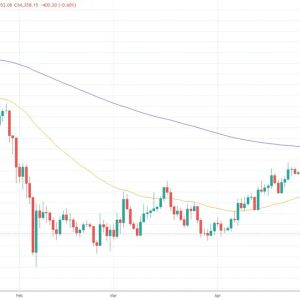
Bitcoin (BTC) recently experienced a significant downturn, shedding approximately 7% in a single trading session. This sharp decline pushed its price to a nine-week low, dipping below the US$66,000 mark. The move represents the most substantial one-day depreciation observed since early February, drawing considerable attention across cryptocurrency markets globally.
This price action initiated shortly after the US Department of Justice (DOJ) announced a major legal settlement with Arthur Hayes, co-founder and former CEO of the BitMEX derivatives exchange. Hayes pleaded guilty to violating the Bank Secrecy Act by wilfully failing to establish, implement, and maintain an anti-money laundering (AML) program at BitMEX. This development, while not directly related to Bitcoin's fundamental technology, contributed to a broader sentiment of regulatory uncertainty.
The market reaction was further amplified by substantial liquidation events across various exchanges. Over a 24-hour period, approximately US$1.8 billion in leveraged positions were liquidated, predominantly impacting long positions. Such large-scale liquidations often cascade, as exchanges automatically close out positions that fail to meet margin requirements, intensifying price movements.
Adding to the downward pressure, data from decentralised perpetual futures platforms revealed a notable increase in calls for Bitcoin prices to reach US$50,000 by the end of June. This suggests that a growing number of traders are hedging against, or outright betting on, further significant declines in Bitcoin's value. This collective sentiment can influence market dynamics and contribute to selling pressure.
Why it matters for Australian investors
For Australian investors, Bitcoin's volatility is a recurring theme, and this recent dip underscores the inherent risks associated with digital asset investments. While Bitcoin's price is typically quoted in US dollars on international exchanges, Australian investors buying from platforms like CoinSpot, Independent Reserve, Swyftx, or BTC Markets will see their holdings' value fluctuate against the Australian dollar (AUD). A decline in BTC's USD value, combined with potential AUD/USD exchange rate movements, directly impacts their AUD-denominated portfolio value.
Regulatory actions, even overseas, can send ripples through the global crypto market. The US DOJ's settlement with BitMEX's co-founder highlights the increasing global focus on Anti-Money Laundering (AML) and Know Your Customer (KYC) compliance within the crypto sector. For Australian investors, this reinforces the importance of using regulated and compliant exchanges, which operate under the oversight of bodies like AUSTRAC, Australia's financial intelligence agency.
Understanding market sentiment and derivatives activity is also crucial. While most Australian retail investors may not directly engage in complex leveraged trading strategies, the derivatives market significantly influences spot prices. Large liquidations can create rapid price changes. Therefore, knowing that a substantial amount of leveraged 'long' positions were wiped out in this event provides context for the sharp price drop observed on Australian trading platforms.
Furthermore, the discussion around hedging for a potential US$50,000 Bitcoin price serves as a stark reminder of the market's speculative nature. Australian investors should always consider their risk tolerance and investment horizon. The Australian Taxation Office (ATO) also continues to treat cryptocurrency as an asset for capital gains tax purposes, meaning any realised gains or losses from such price movements must be declared, adding another layer of consideration for local holders.
Impact on the AUD market
When Bitcoin experiences such a significant price swing, the Australian crypto market inevitably reacts. Local exchanges will reflect these changes in their AUD-denominated BTC prices. For instance, an investor holding Bitcoin on an Australian platform would have seen the AUD value of their assets drop in line with the global market, potentially exacerbated or softened by the AUD/USD exchange rate at the time of the dip.
The volume of trading on Australian platforms like CoinSpot, Independent Reserve, Swyftx, and BTC Markets often increases during periods of high volatility. Some investors may see these dips as buying opportunities, leading to increased 'buy the dip' activity, while others might panic sell, contributing to further price pressure. This dynamic interplay showcases the local market's direct connection to global Bitcoin trends.
While Australia has its own robust regulatory framework, including oversight from AUSTRAC for AML/CTF and ASIC for consumer protection in some areas, global regulatory news continues to impact market confidence. The BitMEX settlement, even though it involved a non-Australian entity, contributes to a perception of heightened regulatory scrutiny that can make some Australian investors more cautious or, conversely, may drive others towards more regulated local options.
Moreover, the broader economic context, including inflation figures, interest rate decisions by the Reserve Bank of Australia (RBA), and the performance of traditional assets in Australia, can indirectly influence how Australian investors react to Bitcoin's movements. During times of economic stability or uncertainty, investors might re-evaluate their exposure to riskier assets like cryptocurrency relative to other investment opportunities available in the Australian market.
What to watch next
The immediate focus for Bitcoin will be on stabilising its price and establishing new support levels. Given the recent downturn, traders will be closely monitoring whether Bitcoin can reclaim key psychological thresholds. A failure to do so could signal further downside potential, particularly in the context of the hedging activity observed for a US$50,000 price point.
Regulatory developments, both domestically and internationally, will remain a critical factor. Any further actions from enforcement agencies, particularly those concerning large crypto entities or compliance failures, could introduce additional volatility. Australian investors should keep an eye on updates from AUSTRAC and ASIC regarding local crypto regulation, as evolving guidelines can influence market access and operational standards for exchanges.
Investor sentiment, often gauged through metrics like funding rates on perpetual futures or social media analytics, will be key. A shift from a predominantly bearish outlook back towards a more optimistic one could signal a potential recovery. Conversely, sustained fear or uncertainty could prolong the current downturn or lead to further price depreciation.
Finally, the broader macroeconomic environment cannot be overlooked. Global inflation figures, central bank monetary policy decisions, particularly from the US Federal Reserve, and the performance of traditional financial markets will continue to influence investor appetite for risk assets like Bitcoin. For Australian investors, the RBA's stance on interest rates and the overall health of the Australian economy will also play a role in their investment decisions surrounding digital currencies.
Coins covered

Common questions
How does Bitcoin's price drop affect my ATO tax obligations in Australia?
A Bitcoin price drop in itself doesn't trigger immediate tax obligations unless you sell or dispose of your Bitcoin. If you sell at a loss, you may incur a capital loss, which can be used to offset capital gains in the same financial year or carried forward to future years. The Australian Taxation Office (ATO) treats cryptocurrency as an asset for capital gains tax purposes.
Are Australian crypto exchanges like CoinSpot or Swyftx safer during global market crashes?
Australian crypto exchanges like CoinSpot, Independent Reserve, Swyftx, and BTC Markets are regulated by AUSTRAC for anti-money laundering and counter-terrorism financing (AML/CTF) purposes, which adds a layer of oversight. However, no exchange is entirely immune to global market crashes as they reflect the asset's underlying value, which is determined by global supply and demand. Always practice caution, consider the exchange's security measures, and never invest more than you can afford to lose.
Should I be concerned about regulatory actions like the BitMEX settlement if I only use Australian exchanges?
While the BitMEX settlement involved an international entity, it highlights a global trend of increased regulatory scrutiny on cryptocurrency platforms, particularly concerning AML/KYC compliance. This can impact overall market sentiment and potentially lead to stricter regulations worldwide. Australian investors using local, regulated exchanges benefit from AUSTRAC's oversight, but the broader regulatory environment can still influence market conditions and investor confidence globally.
Bitcoin plunged over 7% to a nine-week low, triggering US$1.8B in liquidations. CoinPulse AU analyses why this matters for Australian investors, AUD markets,
About this article: this is an AI-generated summary of reporting by CoinOtag. It has not been reviewed by a human editor. We use AI to localise crypto news for Australian readers, and we link back to the original source so you can verify the facts.
Informational only — not financial advice. Always do your own research. Read our AI & editorial policy →