
Bitcoin Sinks to $66,346 as $1.35B in Long Liquidations Accelerate Market Selloff
AI-summarised from reporting by Bitcoin.com. How we use AI.
What happened
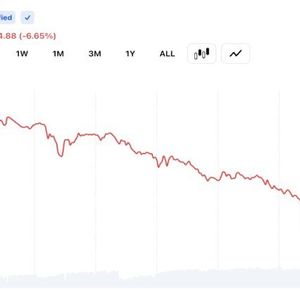
B Bitcoin, the globe's foremost cryptocurrency, recently experienced a significant downturn, tumbling more than 6% in a 24-hour period. This sharp correction saw its price fall below the US$67,000 threshold, reaching an intraday low of US$66,948. This marked a continuation of a downward trend observed since late May, with Bitcoin steadily declining from levels above US$71,500. The broader crypto market felt the tremors, with other major digital assets also registering losses.
A key factor exacerbating this market movement was a substantial wave of long liquidations. Investors holding optimistic positions, leveraging borrowed funds, faced margin calls as prices dropped. This forced selling cascaded across the market, adding significant downward pressure to Bitcoin's price trajectory. The rapid unwinding of these leveraged positions amplified the sell-off, contributing to the speed and depth of the decline.
This event highlights the inherent volatility within the cryptocurrency landscape, where large leveraged positions can quickly amplify market moves. While the specific catalysts for the initial price depreciation were not detailed, the subsequent liquidations illustrate a common mechanism by which market corrections are accelerated in the crypto space. Such periods often lead to increased caution among traders and a re-evaluation of risk exposure.
Why it matters for Australian investors
For Australian investors, Bitcoin's price movements resonate across their crypto portfolios, regardless of where they trade. While Australian dollars (AUD) are used for transactions on local exchanges like CoinSpot, Independent Reserve, Swyftx, and BTC Markets, Bitcoin's global pricing, typically quoted in US dollars, dictates its underlying value. A significant US dollar price drop directly translates to a lower AUD value for Australian Bitcoin holdings.
This recent downturn serves as a timely reminder for Australian investors about the tax implications of their crypto investments. The Australian Taxation Office (ATO) views cryptocurrency as property for capital gains tax (CGT) purposes. A sale of Bitcoin, whether for AUD or another cryptocurrency, can trigger a CGT event. Investors need to meticulously track their cost bases and disposal prices to ensure accurate tax reporting, especially during periods of price volatility.
Furthermore, the transparency and regulatory oversight provided by organisations like AUSTRAC, Australia's financial intelligence agency, are crucial for investor protection. While AUSTRAC focuses on anti-money laundering and counter-terrorism financing, it contributes to a more secure trading environment for Australian investors. ASIC also plays a role in overseeing financial products and services, though its direct regulation of spot crypto markets is evolving. Australians should always use reputable, AUSTRAC-registered exchanges to mitigate risks.
Impact on the AUD market
The immediate impact on the Australian dollar (AUD) market is primarily seen in the AUD-denominated prices of cryptocurrencies. When Bitcoin's US dollar value falls, its AUD equivalent on local exchanges naturally follows suit. This can lead to increased selling pressure from Australian holders aiming to cut losses, or conversely, increased buying interest from those looking to acquire Bitcoin at a perceived discount using their AUD.
Australian exchanges process millions of dollars in cryptocurrency transactions daily. A notable price swing like this affects the overall trading volume and liquidity within the local AUD crypto market. It can also influence the sentiment among Australian retail and institutional investors, potentially leading to a broader shift in investment strategies or asset allocations within their portfolios. However, it's important to differentiate between the direct impact on crypto assets and any indirect, broader economic effects on the Australian dollar itself, which are typically minimal given crypto's current market capitalisation relative to traditional financial markets.
The activity on Australian platforms such as CoinSpot, Independent Reserve, Swyftx, and BTC Markets often mirrors global trends. When significant liquidation events occur internationally, Australian traders linked to larger global markets or those holding substantial positions are also affected. This underscores the interconnectedness of the global cryptocurrency ecosystem, even for those operating within a specific national currency framework.
What to watch next
Moving forward, Australian investors should closely monitor global macroeconomic indicators, as these frequently influence risk sentiment across all asset classes, including cryptocurrencies. Interest rate decisions from central banks, inflation data, and geopolitical events can all contribute to Bitcoin's price trajectory. While Bitcoin often charts its own course, it is not entirely immune to broader financial market forces.
Key technical levels for Bitcoin will be an important watch point. Traders will be looking to see if the cryptocurrency can establish new support levels and consolidate above them, or if further downside momentum will lead to retesting lower price points. Volume metrics will also be crucial; a strong rebound accompanied by high trading volume could signal renewed investor confidence, whereas low volume rallies might be viewed with caution.
For Australian investors, keeping an eye on local regulatory developments is always prudent. While the current tax treatment is clear, the Australian government and financial regulators continue to explore frameworks for the burgeoning digital asset space. Any changes to how cryptocurrencies are regulated or taxed could have significant implications for investment strategies and compliance requirements. Staying informed through reputable news sources and official government channels, including the ATO and ASIC websites, is essential.
Finally, observing the broader sentiment across the cryptocurrency market, particularly among institutional investors and large holders, can provide insights into potential future movements. The unwinding of large leveraged positions suggests a period of deleveraging, which historically can precede either a period of consolidation or further volatility. Vigilance and a well-defined risk management strategy remain paramount for Australian crypto participants.
Coins covered


Common questions
How does Bitcoin's price drop affect my Australian crypto portfolio?
When Bitcoin's global price, typically quoted in USD, drops, the Australian dollar (AUD) value of your Bitcoin holdings on local exchanges like CoinSpot or Swyftx will also decrease. This means your portfolio's total AUD value will be lower, even if you don't sell any assets.
Do I pay tax on Bitcoin losses in Australia?
In Australia, the ATO views cryptocurrency as property for capital gains tax (CGT) purposes. If you sell Bitcoin for less than its cost base, you incur a capital loss. Capital losses can generally be used to offset capital gains in the same financial year or be carried forward to offset future capital gains, potentially reducing your tax liability. It's important to keep clear records for all your crypto transactions.
Is my money safe on Australian crypto exchanges?
Reputable Australian crypto exchanges like Independent Reserve, BTC Markets, and others are typically registered with AUSTRAC, Australia's financial intelligence agency. This registration requires them to comply with anti-money laundering and counter-terrorism financing laws, which adds a layer of security and oversight. While no investment is entirely without risk, using AUSTRAC-registered platforms provides a degree of regulatory assurance for Australian investors.
What is the Australian government's view on cryptocurrency regulation?
The Australian government and its financial regulators, including ASIC and AUSTRAC, are actively working to establish a comprehensive framework for digital assets. While spot crypto markets are not yet under a dedicated ASIC licensing regime, they are subject to AML/CTF laws through AUSTRAC. The government is exploring various regulatory approaches to enhance consumer protection, market integrity, and innovation within the crypto space. Investors should stay updated on official announcements from these bodies.
Bitcoin plunged over 6% recently, triggering significant liquidations. Unpack the impact of this volatility on Australian investors and the local AUD crypto m
About this article: this is an AI-generated summary of reporting by Bitcoin.com. It has not been reviewed by a human editor. We use AI to localise crypto news for Australian readers, and we link back to the original source so you can verify the facts.
Informational only — not financial advice. Always do your own research. Read our AI & editorial policy →