
Bitcoin recedes to $63,000 as Iran-Israel trade strikes and Korean stocks crash
AI-summarised from reporting by CoinDesk. How we use AI.
What happened
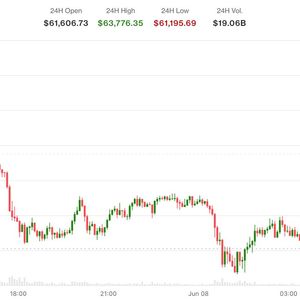
Bitcoin's recent price action saw a notable pullback, receding from its overnight highs. This downward movement appears to be largely influenced by an escalation in geopolitical tensions across the globe. Such events typically trigger a shift in investor sentiment, leading to a general move away from riskier assets.
The global geopolitical landscape is a significant factor in financial markets, often prompting investors to seek safe-haven assets. This pattern was evident as oil prices registered an increase, a common response to heightened geopolitical instability. The cryptocurrency market, while often seen as an alternative asset class, is not immune to these broader economic and political pressures.
Simultaneously, the global financial ecosystem experienced further tremors with a notable crash in Korean stock markets. This confluence of events – rising geopolitical tensions, elevated oil prices, and a downturn in key regional stock markets – collectively exerted selling pressure across the digital asset space, including on Bitcoin. Investors globally are reassessing their portfolios in light of these developments.
The cryptocurrency market's sensitivity to macroeconomic and geopolitical indicators underscores its growing integration with traditional finance. What might once have been considered a niche market now frequently reacts to the same global events that influence stock, commodity, and foreign exchange markets. This interconnectedness means that Australian investors need to pay close attention to international headlines.
Why it matters for Australian investors
For Australian investors, Bitcoin's recent price dip amid global tensions serves as a crucial reminder of the broader market forces at play. While digital assets offer unique propositions, they are not entirely decoupled from international events. The 'risk-off' sentiment observed globally inevitably flows into the Australian market, impacting local crypto portfolios managed through platforms like CoinSpot, Independent Reserve, Swyftx, and BTC Markets.
Geopolitical instability can trigger a flight to safety, often benefiting traditional safe havens. While Bitcoin is sometimes touted as 'digital gold,' its behaviour during such crises can be varied. Australian investors should consider how these global dynamics influence their investment strategies and risk exposure, particularly given the volatile nature of cryptocurrencies.
The Australian dollar (AUD) exchange rate can also be affected by global risk sentiment. A stronger US dollar, often seen during periods of uncertainty, can make purchasing Bitcoin (priced predominantly in USD) more expensive for AUD holders. This indirect impact on purchasing power is an important consideration for Aussie investors calculating their entry and exit points.
Furthermore, regulatory bodies like ASIC and AUSTRAC continue to monitor the crypto space in Australia. While direct regulatory changes might not be a direct response to short-term price movements, sustained global instability could prompt further discussions around stability and consumer protection within the digital asset market. Understanding this regulatory environment is crucial for compliance and informed decision-making.
Impact on the AUD market
The impact on the AUD market from Bitcoin's price movements, particularly those driven by global risk sentiment, is multifaceted. When global investors turn risk-averse, emerging markets and commodity-linked currencies, including the AUD, can face downward pressure. This is because Australia's economy is significantly tied to global trade and commodity exports.
A weaker AUD against the USD means that Australian investors purchasing Bitcoin or other cryptocurrencies priced in USD effectively pay more. For instance, if Bitcoin is trading at $63,000 USD and the AUD weakens, the equivalent AUD cost of that Bitcoin increases, eroding purchasing power. This exchange rate dynamic is a fundamental aspect of cross-border crypto investments for Australians.
Local Australian exchanges such as Swyftx, CoinSpot, and BTC Markets facilitate AUD-to-crypto transactions. While these platforms provide convenience, the underlying AUD/USD exchange rate remains a critical factor for investors. Traders frequently monitor this pair, alongside Bitcoin's USD price, to make informed decisions about their investments and potential returns in local currency.
Moreover, the ATO's taxation guidelines for cryptocurrency in Australia mean that any capital gains or losses resulting from these price fluctuations must be accounted for. Investors need to keep meticulous records of their transactions, denominated in AUD, to ensure compliance. Market volatility, exacerbated by global events, can lead to significant swings in capital gains or losses over a financial year.
What to watch next
Going forward, Australian investors should closely monitor several key indicators. The primary focus remains on geopolitical developments. Any further de-escalation or, conversely, exacerbation of tensions could lead to significant shifts in investor sentiment and, consequently, cryptocurrency prices. Maintaining a keen eye on international news sources is paramount.
Economic data from major global economies, particularly the US, will also be crucial. Inflation figures, interest rate decisions by central banks, and employment reports can all impact the broader financial markets and subsequently influence Bitcoin's trajectory. These macroeconomic factors often dictate the flow of capital into and out of risk assets.
Furthermore, the performance of traditional stock markets, particularly in Asia and the US, should be observed. A sustained recovery in these markets generally signals a return of risk appetite, which could benefit cryptocurrencies. Conversely, continued downturns may indicate a prolonged period of cautious investing.
Finally, keep an eye on regulatory developments both globally and within Australia. While the current price dip is driven by external factors, ongoing discussions by bodies like AUSTRAC and ASIC regarding stablecoin regulation, licensing requirements, and consumer protection could shape the long-term investment landscape for digital assets in Australia. Staying informed on these fronts will be key to navigating the evolving crypto market.
Coins covered

Common questions
How does geopolitical tension affect my crypto portfolio on Australian exchanges?
Geopolitical tensions often lead to a 'risk-off' sentiment globally. This means investors tend to sell riskier assets like cryptocurrencies and move towards perceived safe havens. For Australian investors using local exchanges like CoinSpot or Swyftx, this global trend can result in lower demand and prices for Bitcoin and other digital assets, impacting the AUD value of their portfolios.
Will a weaker Australian dollar make Bitcoin cheaper or more expensive for me?
A weaker Australian dollar generally makes Bitcoin *more expensive* for you. Since Bitcoin is primarily priced in US dollars, if the AUD loses value against the USD, you'll need more Australian dollars to purchase the same amount of Bitcoin. This is an important factor to consider when making investment decisions on platforms like Independent Reserve or BTC Markets.
What Australian tax implications should I be aware of when Bitcoin prices fluctuate due to global events?
The Australian Tax Office (ATO) treats cryptocurrency as a capital gains tax (CGT) asset. Any profits (capital gains) you make from selling, swapping, or spending Bitcoin, regardless of the reason for price fluctuation, are generally subject to CGT. Conversely, if you sell at a loss, you may incur a capital loss that can offset future capital gains. It's crucial to keep detailed records of all your crypto transactions, including their AUD value at the time, to accurately report to the ATO.
Global tensions impact Bitcoin, causing a price dip. CoinPulse AU analyses what this means for Australian investors, AUD markets, and what comes next.
About this article: this is an AI-generated summary of reporting by CoinDesk. It has not been reviewed by a human editor. We use AI to localise crypto news for Australian readers, and we link back to the original source so you can verify the facts.
Informational only — not financial advice. Always do your own research. Read our AI & editorial policy →