
The bitcoin futures yield collapse: Once over 20%, now less than Treasury notes
AI-summarised from reporting by CoinDesk. How we use AI.
What happened
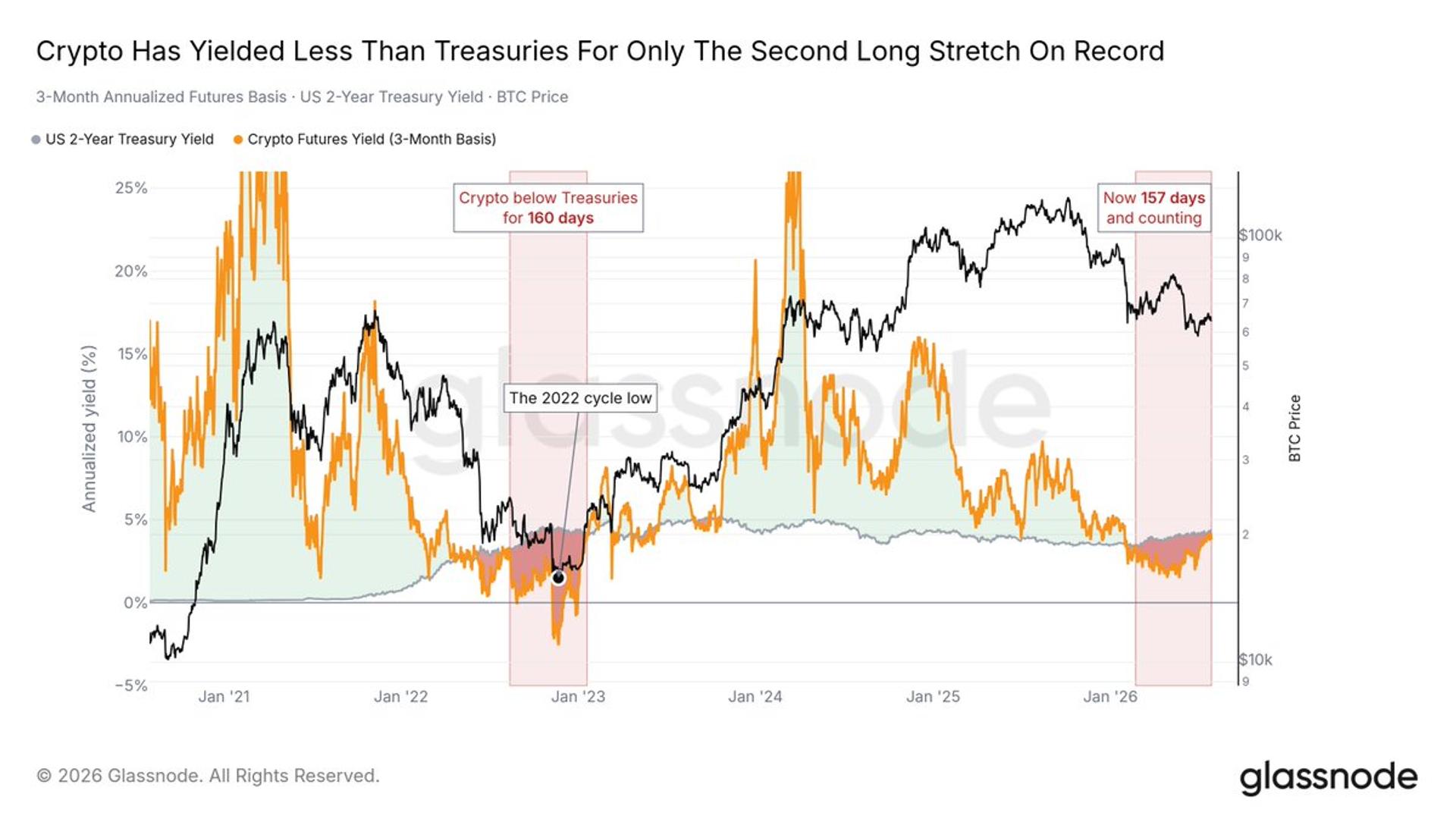
The once-lucrative carry trade in Bitcoin futures has all but disappeared, according to recent analysis. Historically, Bitcoin futures offered a substantial yield, often exceeding 20%, creating an attractive opportunity for arbitrageurs. This 'basis' trade involved buying Bitcoin in the spot market and simultaneously selling a higher-priced futures contract, locking in a profit as the contracts converged at expiry.
However, this landscape has shifted dramatically. Since February, the quarterly basis yields on Bitcoin futures have consistently fallen below those of two-year U.S. Treasury notes. This signifies a significant compression in the premium futures contracts once commanded over the spot price, effectively eliminating the high-yield arbitrage opportunities that defined earlier phases of the crypto market.
This contraction in basis yield points to a maturing market. As Bitcoin gains wider acceptance and institutional participation, market inefficiencies that once provided outsized returns are being eroded. The reduced volatility and increased liquidity, while beneficial for long-term stability, naturally squeeze these arbitrage spreads.
The decline in basis yield also suggests that the market is becoming more efficient at pricing risk and expectations. Investors are no longer willing to pay a hefty premium for future exposure to Bitcoin, perhaps due to a perceived reduction in its extreme price swings or a greater comfort with the asset's overall trajectory.
Why it matters for Australian investors
For Australian investors, the evaporation of high Bitcoin futures yields signals a broader shift in the crypto investment landscape. The days of easily accessible, high-percentage arbitrage profits in derivatives are largely over. This means that strategies focused on exploiting price discrepancies between spot and futures markets will likely yield much smaller returns, making them less appealing for many.
Australian investors looking at Bitcoin futures, potentially via offshore platforms given local regulatory nuances, need to adjust their expectations. The 'yield' component, once a major draw for sophisticated traders, is no longer a significant factor. Instead, futures are increasingly becoming tools for hedging existing spot positions, speculating on price direction, or managing portfolio risk, rather than sources of guaranteed high income.
This maturation also has implications for how Australian financial advisors, who must operate within ASIC guidelines, might view crypto assets. As the market becomes more efficient and less prone to extreme arbitrage, it potentially fits more comfortably into traditional investment frameworks, though its volatility remains a key consideration. The Australian Taxation Office (ATO) continues to treat cryptocurrency as an asset for capital gains tax purposes, so any profits from futures trading, regardless of their size, remain subject to existing tax laws.
The increasing efficiency mirrors trends seen in more established asset classes. While this might be disappointing for those seeking quick, outsized gains, it could be a positive long-term development for the asset class, potentially attracting a more diverse and cautious investor base in Australia.
Impact on the AUD market
The diminished Bitcoin futures basis yield doesn't directly or immediately impact the AUD market in terms of exchange rates or interest rates. However, it does influence how Australian capital might flow into crypto. If the allure of high arbitrage yields diminishes, Australian investors might reallocate capital from these sophisticated derivatives strategies into other crypto-related ventures or even back into traditional Australian asset classes.
Australian crypto exchanges like CoinSpot, Independent Reserve, Swyftx, and BTC Markets primarily facilitate spot market transactions. While some may offer access to derivatives indirectly or through partnerships, the core business is buying and selling Bitcoin and other cryptocurrencies at current market prices. The futures basis yield primarily affects sophisticated traders on derivatives exchanges, not typical retail users on these Australian platforms.
Indirectly, a more mature and less volatile Bitcoin market, signalled by the futures yield compression, could foster greater institutional confidence in Australia. This might encourage more local financial institutions to explore Bitcoin as an asset class, potentially leading to increased liquidity and trading volumes on Australian exchanges over the long term. This would align with AUSTRAC's ongoing efforts to regulate crypto service providers and enhance the integrity of the local digital asset ecosystem.
For retail investors using AUD to purchase Bitcoin on local exchanges, the primary impact will be the general market sentiment and Bitcoin's price discovery. The futures market's efficiency contributes to this broader price discovery, meaning that the spot prices seen on Australian exchanges are likely to reflect a more mature and well-arbitraged global market.
What to watch next
Moving forward, Australian investors should closely monitor several key indicators. Firstly, observe whether the Bitcoin futures basis yield continues to track traditional financial instruments like U.S. Treasuries. A sustained low basis would confirm the market's enduring maturation, indicating that the 'free money' days of futures arbitrage are firmly behind us.
Secondly, keep an eye on the growth and adoption of regulated Bitcoin ETFs or similar investment vehicles in major global markets. The introduction of these products could further increase institutional participation and liquidity, contributing to greater market efficiency and potentially further compressing futures yields. While Australia has seen some regulated crypto products, global trends often influence local sentiment and offerings.
Thirdly, consider how increasing regulatory clarity, both globally and from Australian bodies like ASIC and AUSTRAC, might shape the derivatives landscape. Clearer rules could attract more sophisticated players and further normalise crypto derivatives, reinforcing market efficiency. Any significant shifts in the ATO's tax guidance could also alter investor behaviour.
Finally, monitor the broader macroeconomic environment, particularly interest rate movements in major economies. As traditional safe-haven assets offer more attractive yields, this could continue to draw capital away from higher-risk arbitrage strategies in crypto, further entrenching the current trend of lower Bitcoin futures yields. The interplay between traditional finance and crypto will be crucial to watch.
Coins covered

Common questions
How does the Bitcoin futures market affect the price of Bitcoin on Australian exchanges?
While Australian exchanges primarily deal with spot Bitcoin, the global Bitcoin futures market plays a significant role in price discovery. Efficient futures markets, where arbitrage opportunities are minimal, help to align futures prices with spot prices. This means the prices you see on Australian exchanges like CoinSpot or Swyftx are generally influenced by this global convergence, reflecting a more mature and well-arbitraged market.
Is Bitcoin futures trading legal for Australian investors?
The legality and accessibility of Bitcoin futures trading for Australian investors depend on the specific platform and jurisdiction. While there are no outright bans on Australians trading futures on offshore platforms, ASIC regulates financial products and services offered within Australia. Investors should exercise due diligence, understand the risks, and be aware of their tax obligations to the ATO for any profits generated from such activities.
What does a 'maturing market' mean for Australian investors holding Bitcoin?
A 'maturing market,' indicated by compressed Bitcoin futures yields, suggests a reduction in market inefficiencies and extreme volatility over time. For Australian investors holding Bitcoin, this could mean less potential for sudden, outsized gains but also potentially less extreme downside risk. It implies the asset is becoming more integrated into the broader financial system, which might attract more institutional capital and potentially lead to more stable, albeit perhaps slower, growth.
Bitcoin futures yields have plummeted, now less than Treasury notes. Discover what this market shift means for Australian investors and the AUD market.
About this article: this is an AI-generated summary of reporting by CoinDesk. It has not been reviewed by a human editor. We use AI to localise crypto news for Australian readers, and we link back to the original source so you can verify the facts.
Informational only — not financial advice. Always do your own research. Read our AI & editorial policy →