
Bitcoin drops as South Korean stocks tumble, Senate shelves crypto Clarity Act
AI-summarised from reporting by CoinDesk. How we use AI.
What happened
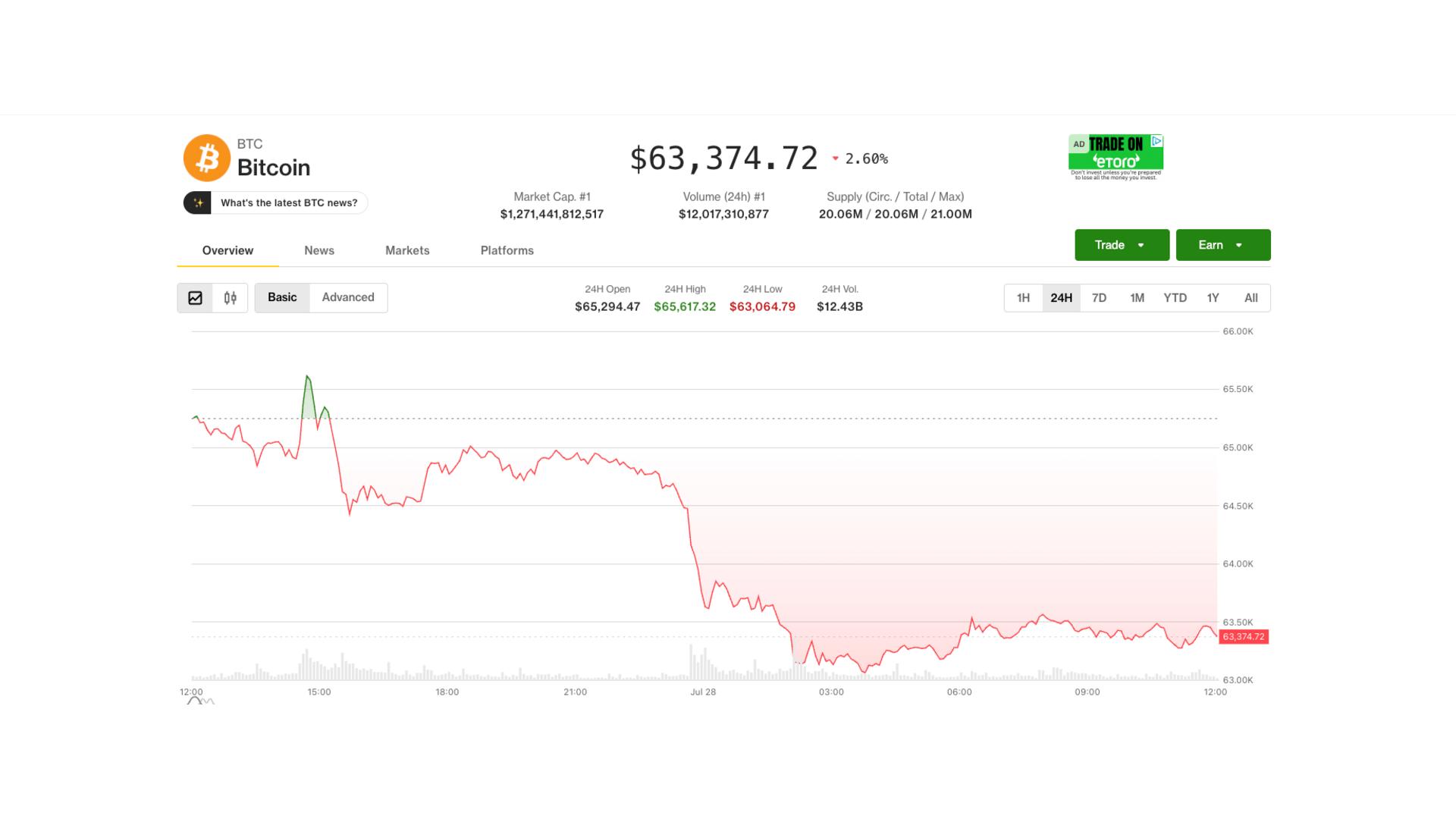
Bitcoin (BTC) recently experienced a notable dip, shedding approximately 2% of its value in a period marked by broader financial market turbulence. This decline coincided with a significant downturn in South Korean equities, where the Kospi benchmark index saw a substantial plunge. The connection between global traditional markets and the cryptocurrency space, particularly in a region as crypto-active as South Korea, often bears watching for Australian investors.
Adding to the market's unease was news from the United States Senate regarding the shelving of the Clarity Act. While the specifics of this proposed legislation aren't detailed in the immediate report, any legislative uncertainty or delay in establishing clear regulatory frameworks for cryptocurrency can contribute to market jitters globally. This comes as market participants eagerly await a crucial decision from the U.S. Federal Reserve, which often sets the tone for financial assets worldwide, including digital ones.
The confluence of these factors – a significant regional stock market slump, regulatory ambiguity in a major economy, and an impending central bank decision – created a challenging environment for Bitcoin. Such events underscore the interconnectedness of the global financial system, where macroeconomic shifts and policy developments can swiftly ripple through various asset classes, including Australia's burgeoning crypto market. Market participants are left to weigh these developments and their potential long-term implications.
Why it matters for Australian investors
For Australian investors, Bitcoin's correlation with traditional financial market tremors, especially in influential Asian economies like South Korea, is a critical data point. A significant drop in the Kospi, for instance, can reflect broader risk-off sentiment that often cascades into less conventional asset classes such as cryptocurrencies. This highlights the importance of diversified portfolios and a keen eye on global economic indicators, even when focusing predominantly on digital assets.
The shelving of the U.S. Clarity Act, while not directly impacting Australian legislation, signals ongoing regulatory uncertainty in a major global market. Australian regulators, including ASIC and AUSTRAC, are actively working on frameworks for digital assets. Delays or changes in other significant jurisdictions can influence the global perception of crypto as an asset class, potentially affecting market sentiment and, by extension, AUD-denominated crypto prices on exchanges like CoinSpot, Independent Reserve, Swyftx, and BTC Markets.
Furthermore, the anticipation of a U.S. Federal Reserve decision is a global event that Australian investors cannot ignore. Interest rate decisions and monetary policy pronouncements from the Fed often dictate the flow of capital internationally and influence investment appetites for risk assets. Understanding these macro drivers is crucial for Australians seeking to navigate the volatility of Bitcoin and other cryptocurrencies successfully, as they directly impact market liquidity and investor confidence.
Impact on the AUD market
The immediate impact on AUD-denominated Bitcoin prices would likely mirror the global downturn, albeit with potential local currency fluctuations. When global BTC prices fall, Australian exchanges will reflect this in their AUD/BTC trading pairs. For example, a 2% drop in USD Bitcoin would translate proportionally to the AUD equivalent, assuming the AUD/USD exchange rate remains relatively stable. Australian investors trading on platforms like Swyftx or BTC Markets would observe this decrease directly.
Beyond direct price impacts, sustained global market uncertainty, as evidenced by the Kospi's dip and regulatory delays, can affect the broader sentiment amongst Australian crypto holders. A protracted period of global risk aversion might lead some local investors to reconsider their allocations to volatile assets like Bitcoin, potentially increasing selling pressure on Australian exchanges or leading to a slowdown in new capital entering the market. This shift in sentiment is a vital aspect of market dynamics.
From a regulatory standpoint, while the U.S. Clarity Act's status doesn't directly dictate Australian policy, a lack of clear international regulatory progress can create a challenging environment for Australian organisations operating in the crypto space. This can influence the speed and nature of local regulatory developments by ASIC and AUSTRAC, which are crucial for fostering a stable and secure environment for Australian investors. Additionally, the ATO's tax treatment of crypto remains a key consideration, and market volatility can complicate tax reporting for active traders.
What to watch next
The immediate focus for Australian investors should be on the upcoming U.S. Federal Reserve decision. This monetary policy announcement will likely be a primary driver of market sentiment, potentially influencing not just traditional equities but also the trajectory of Bitcoin. Any hawkish or dovish surprises could lead to significant market movements, affecting AUD-denominated crypto assets across all major Australian platforms.
Keep a close watch on financial market developments in key Asian economies, particularly South Korea. While the Kospi's plunge was a specific event, ongoing economic indicators from these regions can serve as bellwethers for broader global risk appetite. A continued decline or, conversely, a strong rebound, could offer insights into investor confidence that will undoubtedly ripple through the crypto market globally, including Australia.
Furthermore, while the U.S. legislative process is distinct, any future developments regarding crypto regulation in major economies bear watching. These can indirectly influence Australian policy discussions and the future operating environment for digital asset businesses here. Australian investors should also pay attention to any local announcements from ASIC, AUSTRAC, or the ATO regarding cryptocurrency, as these directly shape the domestic landscape for digital asset holding and trading.
Finally, monitoring on-chain metrics and Bitcoin's technical analysis can provide valuable insights into market health and potential price movements. While external factors play a significant role, the internal dynamics of the Bitcoin network itself, combined with global macroeconomic trends, will ultimately determine its short-to-medium term performance as viewed by Australian investors on their preferred exchanges.
Coins covered


Common questions
How does global stock market performance, like the Kospi's plunge, affect Bitcoin prices for Australian investors?
Global stock market downturns often signal broader risk aversion among investors. When major indices like South Korea's Kospi plummet, capital tends to flow out of riskier assets, including cryptocurrencies like Bitcoin. For Australian investors, this means AUD-denominated Bitcoin prices on local exchanges will typically reflect these global bearish trends.
If the U.S. shelves crypto legislation, what does it mean for Australian crypto regulations and my investments?
While U.S. legislative decisions don't directly change Australian law, ongoing regulatory uncertainty in major global markets can impact overall investor confidence in crypto. Australian regulators like ASIC and AUSTRAC are developing their own frameworks, and global developments can influence the pace and direction of these local efforts. More clarity globally is generally seen as positive for the industry, potentially stabilising the market for Australian investors.
Are there specific Australian crypto exchanges that are more affected by global Bitcoin price movements?
All Australian crypto exchanges, such as CoinSpot, Independent Reserve, Swyftx, and BTC Markets, trade Bitcoin based on its global market value. Therefore, they will all generally reflect global price movements, including dips and surges. The AUD price displayed on these platforms is simply the global BTC price converted to Australian dollars, so any significant global shift affects all of them proportionally.
Bitcoin saw a dip amidst South Korean market turmoil & US regulatory uncertainty. CoinPulse AU analyses what this means for Aussie investors.
About this article: this is an AI-generated summary of reporting by CoinDesk. It has not been reviewed by a human editor. We use AI to localise crypto news for Australian readers, and we link back to the original source so you can verify the facts.
Informational only — not financial advice. Always do your own research. Read our AI & editorial policy →