
Bitcoin Drops 10% in 3 Days, Falls Below $66K as $500M Liquidation Wave Hits
AI-summarised from reporting by Bitcoin.com. How we use AI.
What happened
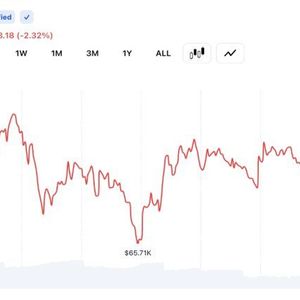
Bitcoin recently experienced a significant downturn, dropping below the US$66,000 mark and effectively erasing all of its gains from April. This sharp correction was observed over three consecutive days, highlighting the inherent volatility of the cryptocurrency market. The digital asset's price fell from approximately US$67,700 to an intraday low of US$65,362, marking a substantial percentage decrease during this period.
The swift decline triggered a wave of liquidations across the market. Reports indicate that hundreds of millions of dollars in leveraged positions were liquidated as prices fell. This cascade effect is characteristic of highly volatile markets where traders utilise borrowed funds, amplifying both potential gains and losses. The downward pressure was exacerbated by these forced sell-offs, pushing Bitcoin's price lower and creating a broader market ripple.
This market correction was not isolated to Bitcoin, as numerous altcoins also experienced significant price drops in its wake. The interconnected nature of the cryptocurrency ecosystem often means that Bitcoin's price movements can heavily influence the broader market. When the leading cryptocurrency experiences such a sharp decline, it typically sends shockwaves through the entire digital asset space, affecting investor sentiment and trading activity globally.
Why it matters for Australian investors
For Australian investors, Bitcoin's price movements have direct implications, particularly regarding their portfolio diversification and risk management strategies. While denominated in USD, the effects are immediately felt when converting to Australian dollars (AUD) on local exchanges like CoinSpot, Independent Reserve, Swyftx, and BTC Markets. A drop in Bitcoin's USD value, coupled with any shifts in the AUD/USD exchange rate, can significantly impact the AUD value of holdings.
Such market corrections serve as a crucial reminder of the speculative nature of cryptocurrency investments. Australian investors are advised to consider their risk tolerance and investment horizons when engaging with digital assets. The Australian Securities and Investments Commission (ASIC) has consistently cautioned investors about the high risks associated with volatile crypto markets, emphasising the potential for substantial losses.
Furthermore, these events underscore the importance of understanding the tax implications of cryptocurrency trading in Australia. The Australian Taxation Office (ATO) views cryptocurrencies as property for capital gains tax (CGT) purposes. Significant price fluctuations can lead to capital gains or losses, which must be declared. A market downturn can trigger capital loss events for those who sell, potentially offsetting other capital gains, but only if they exit their positions.
Impact on the AUD market
The Australian dollar's performance against the US dollar can either mitigate or exacerbate the effects of Bitcoin's price swings for local investors. Should the AUD strengthen against the USD during a Bitcoin downturn, it could slightly cushion the blow for Australian holders. Conversely, a weakening AUD amid a Bitcoin price drop would amplify losses when denominated in local currency.
Local cryptocurrency exchanges play a vital role in providing AUD liquidity for these digital assets. During periods of high volatility and price corrections, these platforms — such as CoinSpot, Independent Reserve, Swyftx, and BTC Markets — often see increased trading volumes as investors react to market shifts. The ease of converting AUD to crypto and vice versa becomes critical for Australian participants navigating such turbulent times.
While Australia doesn't have a direct Bitcoin spot ETF yet, indirect exposure through global funds or holding Bitcoin directly means Australian investors are fully exposed to these price movements. The regulatory landscape, monitored by AUSTRAC for anti-money laundering and counter-terrorism financing, continues to evolve, aiming to provide a safer environment for digital asset transactions. However, these regulatory frameworks do not insulate investors from price volatility.
What to watch next
Investors should closely monitor the broader macroeconomic environment and global market sentiment, as these factors often influence Bitcoin's trajectory. Key economic indicators, central bank policies, and geopolitical events can all contribute to shifts in investor risk appetite, impacting demand for cryptocurrencies. The correlation between traditional markets and digital assets, while debated, often shows intertwining effects during significant events.
Monitoring Bitcoin's key support and resistance levels will be crucial for understanding potential future price movements. Traders and analysts often look to these technical indicators to gauge market strength and predict potential bounce-backs or further declines. The ability of Bitcoin to consolidate above previous support levels could signal a stabilisation, while a breach of these levels might indicate further downside.
Finally, keeping an eye on on-chain metrics, such as exchange inflows and outflows, whale activity, and network hash rate, can provide deeper insights into market sentiment and potential accumulation or distribution phases. While not always predictive, these data points offer valuable context for understanding the underlying health and dynamics of the Bitcoin network and its investor base. For Australian investors, staying informed through reputable financial news sources remains paramount.
Coins covered


Common questions
How does Bitcoin's price drop affect my AUD-denominated crypto portfolio?
A drop in Bitcoin's US dollar price directly reduces the AUD value of your holdings, especially when converting back to Australian dollars. The impact can be further influenced by the AUD/USD exchange rate. Australian exchanges like CoinSpot and Swyftx will reflect these changes immediately in their AUD pricing.
What are the tax implications in Australia if I experienced losses during a Bitcoin price correction?
In Australia, the ATO treats cryptocurrencies as property for Capital Gains Tax (CGT) purposes. If you sell your Bitcoin at a loss, you incur a 'capital loss' which can be used to offset other capital gains from investments in the same financial year, or carried forward to future years. It's important to keep clear records of all your transactions.
Are Australian crypto exchanges like BTC Markets and Independent Reserve safe during market volatility?
Licensed Australian crypto exchanges like BTC Markets and Independent Reserve operate under local regulations, including those from AUSTRAC for anti-money laundering. While they provide secure platforms for trading and custody, this does not insulate investors from market price volatility. Your assets are still subject to market fluctuations, and losses can occur regardless of the platform's security.
Bitcoin plunged over 10%, wiping April gains. CoinPulse AU analyses the impact on Australian investors, AUD market, and what's next for crypto holdings.
About this article: this is an AI-generated summary of reporting by Bitcoin.com. It has not been reviewed by a human editor. We use AI to localise crypto news for Australian readers, and we link back to the original source so you can verify the facts.
Informational only — not financial advice. Always do your own research. Read our AI & editorial policy →