
B2B vs B2C Web3 PR: One Strategy Cannot Serve Both in 2026
AI-summarised from reporting by Crypto Daily. How we use AI.
What happened
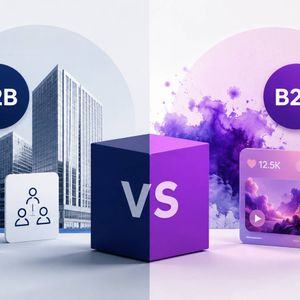
Many Web3 founders and project leaders are making a critical mistake: applying a singular public relations (PR) strategy to vastly different audiences. This includes treating business-to-business (B2B) and business-to-consumer (B2C) publics as a single entity, expecting a one-size-fits-all approach to yield results. However, the unique demands and expectations of these distinct groups mean that what persuades an enterprise partner rarely resonates with a retail token holder, and vice versa.
This misstep leads to wasted resources, diminished momentum, and ultimately, a failure to effectively communicate with either audience. The core issue lies in not recognising that B2B and B2C Web3 PR are fundamentally different disciplines, each requiring tailored strategies. A project’s success hinges on understanding this distinction early and crafting targeted messaging for its specific stakeholders.
Why it matters for Australian investors
For Australian investors, whether retail or institutional, this distinction in PR strategy has significant implications. Understanding how a Web3 project communicates can be a key indicator of its potential success and sustainability. If a project in which an Australian has invested — perhaps through local exchanges like CoinSpot, Independent Reserve, Swyftx, or BTC Markets — fails to articulate its value proposition effectively to its intended audience, its long-term viability could be compromised.
Retail investors in Australia, often navigating complex regulations and ATO tax treatments for crypto, rely heavily on clear, accessible information. They are compelled by compelling narratives, community engagement, and social proof. Conversely, Australian institutional investors, or businesses considering integrating blockchain technology, are driven by technical credibility, security, and proven return on investment (ROI). They will scrutinise audits, integrations, and verifiable track records, much like any traditional investment.
Projects that fail to grasp this nuance risk alienating segments of their audience. An Australian retail investor might dismiss a technically dense announcement as irrelevant, while an institutional player could overlook a project focusing solely on social sentiment. The ability of a project to engage with each audience appropriately directly impacts its perceived value and, by extension, investment confidence.
Impact on the AUD market
The Australian dollar (AUD) crypto market is a growing and increasingly sophisticated ecosystem. The way Web3 projects manage their PR directly influences their traction and adoption within this market. For B2B Web3 entities, such as infrastructure providers or protocols seeking validation, targeted communication can secure partnerships with Australian businesses and financial institutions, potentially driving significant capital into the sector.
This inbound interest can legitimise the broader crypto market in Australia, encouraging further investment and development. Conversely, for B2C projects aiming for retail adoption, effective PR strategies are crucial for attracting everyday Australians. Campaigns that clearly articulate the utility, security, and community aspects of a project are far more likely to resonate with individuals making investment decisions, especially given the scrutiny from regulators like ASIC and AUSTRAC.
Projects that accurately differentiate their PR efforts are more likely to build robust communities and secure strategic partnerships within Australia. This, in turn, can contribute to a more vibrant and liquid AUD-denominated crypto market. A project's success in navigating the Australian media landscape, whether through trade publications or consumer-focused crypto news, will be a key determinant of its local market penetration.
What to watch next
As the Web3 space matures, expect to see a greater specialisation in PR agencies catering specifically to B2B or B2C crypto projects. Australian investors should pay attention to how projects articulate their value proposition. Are they actively engaging with developers and enterprises through industry-specific channels, demonstrating technical prowess and integration capabilities? Or are they prioritising community engagement, accessible language, and social proof to attract retail users?
The most successful projects will likely be those that clearly define their primary audience and tailor their communications accordingly. For projects attempting to serve both, a sophisticated, dual-pronged PR strategy will be essential, but notoriously difficult to execute effectively. Watch for projects that demonstrate a clear understanding of who they are trying to reach and how they are trying to reach them, as this will be a strong signal of their strategic maturity and potential for sustained growth.
Finally, the evolution of regulatory clarity in Australia will also impact PR strategies. Projects will need to carefully consider how their messaging aligns with guidelines from bodies like ASIC, particularly when targeting retail investors, to avoid making claims that could be considered misleading or non-compliant. The ability to navigate both market and regulatory complexities through strategic communication will be paramount.
Coins covered



Common questions
How does ATO tax treatment affect my crypto investments when a project’s PR changes?
The ATO's tax treatment of cryptocurrency, whether as an asset or income, generally remains constant regardless of a project's PR approach. However, clear communication from a project can help investors understand the nature of their involvement (e.g., holding, trading, staking), which in turn can help them accurately report their tax obligations. PR changes focus on market perception, not direct tax laws.
Are Australian crypto exchanges like CoinSpot or Swyftx impacted by a project's B2B vs B2C PR strategy?
Australian crypto exchanges are primarily B2C platforms, serving retail investors. They benefit when projects have effective B2C PR strategies that drive widespread adoption and interest, as this increases trading volume and user engagement on their platforms. However, B2B PR successes for infrastructure protocols can indirectly benefit exchanges by strengthening the underlying blockchain technology they rely on.
What kind of information should Australian investors look for from a Web3 project's PR to assess its legitimacy?
Australian investors should look for transparency, verifiable claims, and consistent messaging. For B2B-focused projects, seek evidence of successful integrations, partnerships, and technical audits. For B2C projects, look for active, engaged communities, clear explanations of utility, and reputable mentions in consumer crypto media. Always cross-reference information and consider the source, especially given ASIC's focus on investor protection.
Discover why a single PR strategy fails Web3 projects. CoinPulse AU analyses the crucial B2B vs B2C Web3 PR divide for Australian investors.
About this article: this is an AI-generated summary of reporting by Crypto Daily. It has not been reviewed by a human editor. We use AI to localise crypto news for Australian readers, and we link back to the original source so you can verify the facts.
Informational only — not financial advice. Always do your own research. Read our AI & editorial policy →