
$2 Million Per Vessel: Inside Iran’s Massive USDT Toll Operation in the Strait of Hormuz
AI-summarised from reporting by Bitcoin.com. How we use AI.
What happened
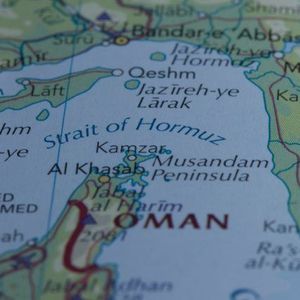
Recent reports have shed light on an alleged maritime toll operation in the Strait of Hormuz, with claims that some payments might be facilitated using stablecoins, specifically Tether's USDT. While details remain somewhat opaque, the suggestion is that vessels navigating this critical global shipping lane are being subjected to charges, and that a portion of these transactions could be occurring outside traditional financial channels.
The U.S. Office of Foreign Assets Control (OFAC) has taken note of these developments. They have issued warnings indicating that maritime companies involved in making such payments could face future sanctions. This highlights the growing concern among international regulatory bodies regarding the use of cryptocurrencies in activities that contravene established financial sanctions or international law. The implications for the global shipping industry, and by extension, global trade, are significant.
The reports suggest that these tolls could amount to as much as $2 million per vessel. This figure, if accurate, underscores the substantial financial scale of the alleged operation. The choice of USDT, the largest stablecoin by market capitalisation, points to a preference for a widely liquid and easily transferable digital asset that can potentially circumvent the traditional banking network that is subject to stricter monitoring and controls.
Why it matters for Australian investors
For Australian investors, this unfolding situation carries several important considerations. Firstly, it underscores the evolving landscape of cryptocurrency usage beyond mainstream investment. While many Australians are increasingly familiar with crypto as an asset class through platforms like CoinSpot, Independent Reserve, Swyftx, and BTC Markets, this situation highlights its potential application in less conventional – and potentially illicit – financial transfers.
Secondly, the involvement of stablecoins like USDT could introduce new layers of risk and regulatory scrutiny. Australian investors holding USDT, or considering it as part of their portfolio, should be aware of the broader regulatory environment and the increasing focus on stablecoin utility in global finance. While the local crypto market operates under AUSTRAC's AML/CTF regulations, international incidents can influence global perceptions and potentially lead to tighter controls.
Thirdly, the threat of sanctions from bodies like OFAC can have ripple effects across the global financial system. Although Australian firms are primarily subject to ASIC and AUSTRAC regulations, doing business with entities that fall under international sanctions regimes can create compliance headaches and reputational risks. Australian investors with exposure to international maritime logistics or trade-related assets should monitor these developments closely.
Impact on the AUD market
The direct impact on the Australian Dollar (AUD) market is likely to be indirect but still noteworthy. The Strait of Hormuz is a crucial choke point for global oil shipments. Any disruption or increased cost of passage in this region can affect global energy prices, which in turn can influence inflation and economic stability in major trading partners. As a commodity-exporting nation, Australia's economy and the AUD are sensitive to global energy market fluctuations.
Should the alleged 'toll' operation escalate or lead to more widespread sanctions and disruptions, it could contribute to supply chain inefficiencies and increased shipping costs globally. These costs would eventually filter down to Australian businesses and consumers, potentially manifesting as higher import prices and contributing to inflationary pressures. The Reserve Bank of Australia carefully monitors such international economic factors when making policy decisions that influence the AUD.
Furthermore, the increasing scrutiny on stablecoin usage in illicit activities could prompt a re-evaluation of regulatory approaches to these digital assets globally. While Australia already has a robust regulatory framework under AUSTRAC for crypto exchanges, significant international events might accelerate discussions around comprehensive stablecoin regulation, potentially impacting how these assets are traded and held within the Australian financial system. This might affect AUD-pegged stablecoins or the liquidity of other stablecoins on Australian exchanges.
What to watch next
Australian investors should closely monitor several key areas. Firstly, any further statements or actions from OFAC and other international regulatory bodies regarding the alleged toll operations and the use of stablecoins. Increased enforcement or specific guidance could impact the broader crypto market's perception and regulatory trajectory.
Secondly, observe how stablecoin issuers, particularly Tether, respond to such accusations and the increasing scrutiny. Their proactive measures to enhance compliance or their engagement with regulators could be crucial in shaping the future of stablecoins. This will be relevant for Australian investors holding USDT, keeping an eye on transparency reports and attestations.
Finally, keep an eye on developments within the global shipping and logistics sectors. Any sustained increase in shipping costs or disruptions in key maritime routes due to geopolitical tensions or illicit activities will eventually impact global trade and, by extension, the Australian economy. Understanding these broader economic currents is vital for any sophisticated investor, regardless of their crypto holdings, as they contribute to the overall economic environment that shapes asset prices, including the AUD and local crypto assets on exchanges like CoinSpot, Independent Reserve, Swyftx, and BTC Markets. The ATO's stance on crypto tax treatment, for example, remains consistent, but broader regulatory shifts could influence future guidance.
Coins covered


Common questions
How does Australia regulate stablecoins like USDT?
In Australia, any business providing digital currency exchange services, including for stablecoins like USDT, must be registered with AUSTRAC. This requires them to comply with Anti-Money Laundering and Counter-Terrorism Financing (AML/CTF) laws, which include identifying and verifying their customers and reporting suspicious transactions. While specific stablecoin legislation is still evolving, existing regulations aim to mitigate risks.
If I hold USDT in Australia, what are the tax implications?
According to the ATO, cryptocurrencies, including stablecoins like USDT, are generally treated as property for capital gains tax (CGT) purposes. This means that if you buy, sell, swap, or gift USDT, a CGT event may occur. It's crucial for Australian investors to keep detailed records of all their transactions to accurately calculate any capital gains or losses.
Could these international incidents affect the availability of USDT on Australian exchanges?
While Australian exchanges like CoinSpot, Independent Reserve, Swyftx, and BTC Markets operate under local regulations, significant international enforcement actions or regulatory shifts concerning stablecoins could potentially influence their offerings. Exchanges might adjust their stablecoin listings or implement stricter compliance measures in response to global developments, though any changes would be communicated directly to their users.
Uncover how alleged USDT-powered 'tolls' in the Strait of Hormuz could impact Australian investors. An in-depth analysis for CoinPulse AU.
About this article: this is an AI-generated summary of reporting by Bitcoin.com. It has not been reviewed by a human editor. We use AI to localise crypto news for Australian readers, and we link back to the original source so you can verify the facts.
Informational only — not financial advice. Always do your own research. Read our AI & editorial policy →