
Youtuber Warns Bitcoin Bottom Is Not In as Stablecoin Dominance Hits Risk-off Level
What happened
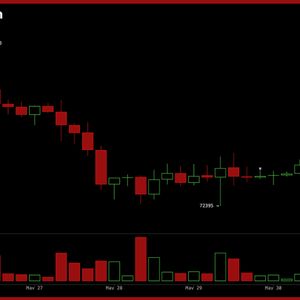
Recent market movements have seen Bitcoin (BTC) trading within a relatively tight range, hovering near the $73,840 mark as of late May 2026. This period has been characterised by a delicate balance, with the world's largest cryptocurrency fluctuating between approximately $73,412 and $74,110. Such price action comes amidst a backdrop of mixed signals from technical indicators, which are currently suggesting potential bearish pressure.
Adding to this complexity, the sentiment among institutional investors appears divided. While some major players are reportedly making substantial moves, their strategies are not entirely aligned. A significant development was the observed increase in stablecoin dominance, often considered a barometer of market sentiment. This rise in stablecoin presence coincided with a notable action from Tether (USDT), which reportedly engaged in the burning of over a billion dollars' worth of its stablecoin within a 24-hour period. Furthermore, a major institution, BlackRock, was noted to have offloaded a substantial holding of Bitcoin, worth approximately $2.1 billion, over a ten-day period.
These events collectively paint a picture of a market experiencing considerable flux. The heightened stablecoin dominance often points to investors moving funds away from volatile assets like Bitcoin into more stable alternatives, signaling a 'risk-off' approach. The actions of large institutional entities, particularly the significant sale by BlackRock, underscore the diverse and sometimes conflicting strategies at play among major investment firms in the cryptocurrency space.
Why it matters for Australian investors
For Australian investors, these global market dynamics have direct implications. The stability or volatility of Bitcoin, a bellwether for the broader crypto market, often influences the performance of other digital assets available on Australian exchanges like CoinSpot, Independent Reserve, Swyftx, and BTC Markets. A market experiencing technical bearish pressure and significant institutional selling can, in turn, affect the AUD-denominated prices of cryptocurrencies.
An increase in stablecoin dominance suggests a period of caution, where investors might be parking funds in stablecoins to mitigate risk or to prepare for potential future buying opportunities. For Australian investors using AUD-pegged stablecoins or converting their AUD to USD-pegged stablecoins, observing this trend can inform their personal risk management strategies and portfolio allocations. The actions of major players like BlackRock, while specific to their portfolios, can also set a broader market tone, influencing investor confidence globally, including in Australia.
Furthermore, understanding these market signals is crucial for complying with Australian tax obligations. The Australian Taxation Office (ATO) views cryptocurrencies as assets, and capital gains or losses from their sale, exchange, or disposal are subject to tax. Periods of price consolidation or potential downward pressure, as indicated by stablecoin dominance and institutional selling, are important to track for accurate tax reporting.
Impact on the AUD market
The broader global trends outlined can directly impact the AUD-denominated cryptocurrency market. When Bitcoin experiences downward pressure or trades within a narrow range, Australian dollar (AUD) prices for BTC and other digital assets typically reflect this. Australian investors trading on local platforms will see the AUD value of their portfolios fluctuate in response to these international movements.
An increase in stablecoin dominance implies a shift away from riskier assets, which could see more AUD being converted into stablecoins or held in fiat to await clearer market direction. This directly affects liquidity and trading volumes on Australian exchanges. If large international institutions are offloading significant amounts of Bitcoin, it can create selling pressure that reverberates through global markets, eventually influencing AUD trading pairs.
Regulators such as AUSTRAC and ASIC continually monitor the cryptocurrency landscape to ensure market integrity and consumer protection. Significant market shifts, particularly those driven by institutional actions or shifts in stablecoin liquidity, may attract their attention regarding market manipulation or investor risks. Australian investors should always remain informed about these dynamics as they navigate the local market, remembering that all investment decisions carry inherent risks.
What to watch next
Going forward, Australian investors should closely monitor a few key indicators. The trend in stablecoin dominance remains a critical metric; continued increases could signal prolonged market caution. Conversely, a decline in stablecoin dominance, coupled with increased trading volumes for assets like Bitcoin, might indicate renewed investor confidence and a potential shift back towards risk-on sentiment.
Institutional activity, particularly from major investment funds, will continue to be a significant market driver. Observing whether institutions like BlackRock reverse their selling trend or if other major players begin accumulating Bitcoin can provide valuable insights into market direction. Any reports on the net flow of Bitcoin into or out of institutional products globally can be an important signal.
Furthermore, keeping an eye on technical analysis for Bitcoin will be crucial. If the cryptocurrency breaks out of its current narrow trading band, either upwards or downwards, it could signal a more definitive market trend. Australian investors should also consider the broader macroeconomic environment, including global interest rates and inflation, as these factors often influence appetite for volatile assets like cryptocurrencies. Staying informed through reputable news sources and utilising the resources provided by Australian exchanges can help investors make more informed decisions.
Coins covered


Common questions
How does stablecoin dominance affect my crypto holdings on Australian exchanges?
Stablecoin dominance reflects a market trend where investors are moving funds into less volatile assets. For Australian investors, if stablecoin dominance is high, it suggests a 'risk-off' environment, meaning your crypto holdings on platforms like CoinSpot or Swyftx might experience lower trading volumes or downward price pressure, as fewer AUD are being converted into volatile cryptocurrencies.
What does institutional selling, like BlackRock's reported actions, mean for Bitcoin's AUD price?
When major institutions like BlackRock offload significant amounts of Bitcoin, it creates selling pressure in the global market. This can lead to a decrease in Bitcoin's USD price, which in turn influences its AUD price on Australian exchanges such as Independent Reserve or BTC Markets. Such large-scale selling can signal a cautious sentiment among major players, potentially affecting broader market confidence.
How should Australian investors consider ATO tax implications during periods of market uncertainty?
During periods of market uncertainty, like those indicated by stablecoin dominance or institutional selling, Australian investors should meticulously track all their crypto transactions. The ATO treats cryptocurrencies as assets, and any disposal – including selling for AUD, exchanging for another crypto, or using them for purchases – triggers a capital gains or losses event. Accurate record-keeping is vital for correct tax reporting, regardless of market sentiment.
Discover how rising stablecoin dominance and institutional selling impact Australian crypto investors. An in-depth analysis for CoinPulse AU readers.