
XRP Falls Sharply as Traders Brace for Deeper Crypto Sell-Off
What happened
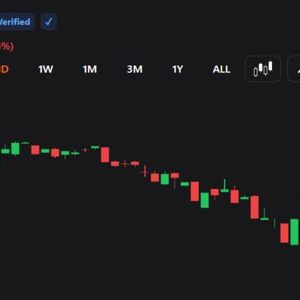
Ripple (XRP) has experienced a significant downturn, with its price testing critical support levels. This decline is largely attributed to sustained selling pressure and a wave of long liquidations across the market. The prevailing bearish market structure, characterised by a series of lower highs, suggests a continuation of this negative trend in the short term.
This recent price action highlights the inherent volatility within the broader cryptocurrency market. Such sharp movements often trigger a cascade of events, as traders look to either secure profits or minimise losses. The intensified selling pressure seen with XRP is not an isolated incident but rather a reflection of wider market sentiment. Investors are currently navigating a period of heightened caution, prompting many to reduce their exposure to riskier assets like altcoins. Liquidation events, particularly in leveraged positions, further amplify these downward price spirals, as forced selling adds to the supply in the market.
Why it matters for Australian investors
For Australian investors, the performance of major cryptocurrencies like XRP can have a ripple effect across their portfolios. While XRP is not directly traded against the Australian dollar on all exchanges, its USD price movements are closely watched and typically reflected in AUD-denominated pairs offered by platforms like CoinSpot, Independent Reserve, Swyftx, and BTC Markets. A depreciation in XRP's value means the AUD equivalent of holdings would also decrease, impacting overall portfolio valuations.
Furthermore, the Australian Taxation Office (ATO) considers cryptocurrencies as property for tax purposes. Any capital gains or losses realised from selling XRP, regardless of the currency it was traded against, must be reported. A sustained downturn could lead to capital losses, which, while undesirable, can be used to offset capital gains in the current or future financial years. Australian investors should meticulously track their trades, noting acquisition costs and disposal prices, to ensure compliance with ATO guidelines, especially during volatile periods like this.
Impact on the AUD market
The broader Australian crypto market often mirrors global trends, although with its own unique nuances. A significant decline in a prominent altcoin like XRP can influence overall investor sentiment Down Under. While Australian exchanges allow for direct AUD-to-crypto trading, the underlying USD valuation heavily influences the AUD trading pairs. For instance, if XRP's USD value drops, its AUD value will likely follow suit, even if the AUD/USD exchange rate remains stable.
Platforms such as Independent Reserve and Swyftx, popular among Australian traders, would reflect these price shifts immediately. The regulatory environment, although increasingly robust with organisations like AUSTRAC overseeing anti-money laundering and counter-terrorism financing, does not directly influence price action but rather aims to foster a secure trading environment. ASIC's consumer protection efforts also play a role in investor confidence. While XRP's direct impact on Australia's fiat currency market is limited, a broad crypto market downturn could indirectly affect local investor behaviour and capital allocation decisions, potentially prompting a shift from crypto assets back into more traditional AUD-denominated investments.
What to watch next
Investors should closely monitor key support and resistance levels for XRP. A sustained break below current support could signal further downside, inviting more selling. Conversely, a rebound from these levels, perhaps driven by a broader market recovery or positive news, could indicate a potential reversal. Analysing trading volumes alongside price action can provide additional insights into the conviction behind any moves. High volume accompanying a price drop often suggests strong selling pressure, while low volume could indicate the move is less robust.
Beyond XRP-specific metrics, keeping an eye on the overall cryptocurrency market sentiment is crucial. Broader economic indicators, regulatory developments from global bodies, and the performance of Bitcoin (BTC) — often seen as the market's bellwether — will heavily influence altcoin trajectories. For Australian investors, it's also wise to stay informed about any updates from local regulators like AUSTRAC or ASIC that could affect the trading landscape or tax obligations. Diversification remains a key strategy, and avoiding over-exposure to any single asset, 특히 during periods of uncertainty, is paramount for managing risk in a volatile market like crypto.
Coins covered


Common questions
How does XRP's price affect my crypto holdings on Australian exchanges?
When XRP's price declines internationally, Australian exchanges like CoinSpot or Swyftx that offer AUD trading pairs will reflect this depreciation in Australian dollar terms. This means the AUD value of your XRP holdings will decrease, impacting your overall portfolio value.
What are my ATO tax obligations if I've made a loss on XRP in Australia?
Under ATO guidelines, if you sell XRP for less than you bought it, you realise a capital loss. You must report this loss in your tax return. Capital losses can be used to offset capital gains from other cryptocurrency sales or other assets in the same income year, or carried forward to future years.
Should Australian investors be cautious about altcoins like XRP during market downturns?
Yes, Australian investors should exercise caution with altcoins during market downturns. Altcoins, including XRP, can be more volatile than Bitcoin and often experience sharper declines during bearish periods. Diversification and setting clear risk management strategies are crucial to navigate such market conditions effectively.
XRP sees sharp decline, testing key support levels. CoinPulse AU analyses the impact for Australian investors, AUD markets, and what's next for crypto holding