
XRP drops to $1.32 as sellers overpower exchange outflows
What happened
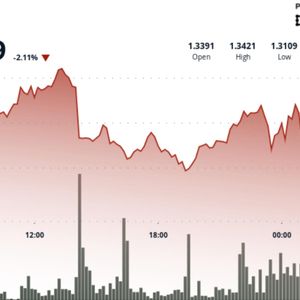
XRP, the cryptocurrency associated with Ripple Labs, recently experienced a significant price downturn, dipping to a 15-week low. This decline occurred as selling pressure intensified across the market, leading to a substantial decrease in its valuation. The digital asset, which consistently ranks among the top cryptocurrencies by market capitalisation, saw its price erode amidst broader market corrections.
The price movement was largely attributed to an increase in selling activity that outpaced buying interest. While specific triggers for this particular downturn were not isolated to a single event, the general market sentiment and ongoing legal uncertainties surrounding Ripple Labs have often influenced XRP's trajectory. Traders observed a 'washout' period, where significant holdings were offloaded, pushing the price downwards before a period of stabilisation.
Following this sharp drop, XRP found a temporary floor, preventing a further immediate collapse. However, market participants are now closely monitoring whether this level will serve as a strong base for recovery or merely a brief pause before another potential leg down. The volatility underscores the speculative nature of the cryptocurrency market, particularly for assets like XRP that are subject to pronounced market dynamics.
Why it matters for Australian investors
For Australian investors holding XRP, or those considering entry, this price action highlights inherent market risks and opportunities. A 15-week low can present a 'buy-the-dip' scenario for some, yet it also serves as a stark reminder of capital volatility. Australian exchanges like CoinSpot, Independent Reserve, Swyftx, and BTC Markets all list XRP, making it a widely accessible asset for local traders.
Diversification remains a key strategy for Australian investors navigating these markets. While XRP has a dedicated following, its price movements are often distinct from general market trends, partly due to its unique regulatory challenges. Investors should consider their personal risk tolerance and investment horizons when evaluating such pronounced price fluctuations.
The regulatory landscape in Australia, overseen by bodies like AUSTRAC for anti-money laundering and ASIC for consumer protection, continues to evolve. While XRP's legal status globally has been a contentious issue, the tax implications for Australian investors remain clear: any gains or losses from selling or trading cryptocurrency, including XRP, are subject to Capital Gains Tax (CGT) as per ATO guidelines. This applies whether the asset is held for short-term profits or longer-term appreciation.
Impact on the AUD market
The price of XRP, when denominated in Australian Dollars (AUD), directly reflects its global market value adjusted by the prevailing AUD/USD exchange rate. A decline in XRP's US Dollar value naturally translates to a lower AUD price on Australian exchanges. This impacts the portfolio valuations of Australian holders and can influence trading strategies on platforms like CoinSpot and Swyftx.
Trading volume on Australian exchanges may also see shifts during periods of high volatility for assets like XRP. Increased selling pressure globally often leads to a corresponding surge in sell orders locally, or conversely, a burst of buying interest from those looking to acquire the asset at a discounted price. This dynamic contributes to the liquidity and depth of the Australian crypto market.
While not directly tied to the Australian economy's fundamentals, the performance of major cryptocurrencies like XRP can influence broader sentiment within the Australian crypto community. It can lead to increased discussion, analysis, and adjustments in investment thesis among local participants. The AUD market for cryptocurrencies is increasingly sophisticated, with investors keen to understand global developments and their local impact.
What to watch next
Moving forward, all eyes will be on XRP's ability to establish a solid price floor and reverse its recent downtrend. Key technical levels will be scrutinised by traders looking for signs of accumulation or continued distribution. A sustained period of stabilisation and subsequent upward momentum would be a positive indicator, suggesting that the recent sell-off has been absorbed.
Beyond price action, the overarching legal situation involving Ripple Labs continues to be a significant factor for XRP. Any developments, positive or negative, from ongoing litigation could have a profound effect on market sentiment and price. Australian investors should remain abreast of these international legal proceedings, as they carry substantial weight for the asset's future.
Furthermore, broader cryptocurrency market trends will play a crucial role. Should the overall market sentiment shift towards renewed bullishness, XRP may find support from a rising tide. Conversely, a general market downturn could see XRP under renewed pressure. Observing global economic indicators and central bank policies, which indirectly influence risk assets like cryptocurrencies, is also prudent.
Australian investors should continue to exercise due diligence, using reliable local exchanges and staying informed through reputable news sources. Understanding the interplay between global market dynamics, regulatory developments, and their direct impact on AUD-denominated prices is critical for making informed decisions in an evolving digital asset landscape.
Coins covered


Common questions
How is XRP taxed in Australia?
In Australia, the Australian Taxation Office (ATO) considers cryptocurrencies like XRP as property for tax purposes. This means that if you buy and sell XRP, or use it to purchase goods and services, any capital gains or losses you realise are subject to Capital Gains Tax (CGT). Records of all transactions, including acquisition cost and sale price, must be kept for tax reporting.
What Australian exchanges list XRP?
Several prominent Australian cryptocurrency exchanges provide access to XRP. These include platforms such as CoinSpot, Independent Reserve, Swyftx, and BTC Markets. Investors can typically buy, sell, and trade XRP on these exchanges, often against AUD or other cryptocurrencies.
Is XRP regulated in Australia?
While there isn't specific legislation solely for XRP, cryptocurrency exchanges operating in Australia, which list XRP, are regulated by AUSTRAC for anti-money laundering and counter-terrorism financing (AML/CTF) purposes. ASIC also plays a role in consumer protection. However, the legal status of XRP itself as a security, particularly in international jurisdictions, has been a subject of ongoing debate, which can indirectly influence its market perception globally.
XRP plunged to a 15-week low. CoinPulse AU analyses what this means for Australian investors, AUD pricing, and what to watch next in this volatile market.