
XRP drops 4% below $1.30 as heavy selling breaks key support zone
What happened
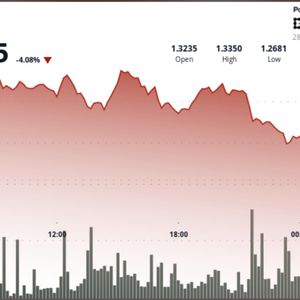
XRP, the cryptocurrency associated with Ripple Labs, recently experienced a notable downturn, shedding approximately 4% of its value and dipping below the US$1.30 mark. This price movement occurred amidst a period of intensified selling pressure, which analysts observed to be particularly pronounced late in the trading session. The significant volume accompanying this sell-off suggests a strong market reaction.
The drop pushed XRP past a critical support level, which had previously acted as a psychological and technical floor for its price. This breach has led to speculation within the crypto community regarding the sustainability of XRP's long-term price trajectory. The focus is now firmly on whether this high-volume selling indicates a more significant breakdown of the asset's months-long price compression structure.
Price compression, often seen as a period of consolidation, typically precedes a substantial price move in either direction. For XRP, the break below a key support point suggests that the market may be heading towards a downward trend following this compression. This development is being closely watched by investors globally, including those in the Australian market.
The immediate impact was a decline in its trading price across various exchanges. While no specific cause for the accelerated selling was highlighted in the original reporting, the market reaction underscores the volatility inherent in cryptocurrency assets, even for established players like XRP.
Why it matters for Australian investors
For Australian investors, XRP has been a cryptocurrency of considerable interest, given its prominence and perceived utility in cross-border payments. The recent price dip directly impacts the AUD-denominated value of their holdings. While the primary trading benchmarks are often in USD, the conversion rate directly affects the returns seen in Australian dollars.
Australian cryptocurrency exchanges such as CoinSpot, Independent Reserve, Swyftx, and BTC Markets all list XRP for trading. Investors using these platforms would have observed the price adjustments in real-time, reflecting the global market movements. Any significant price fluctuation, whether up or down, triggers decisions regarding portfolio management, including potential profit-taking or averaging down positions.
Furthermore, the Australian Taxation Office (ATO) classifies cryptocurrencies as property for tax purposes. A drop in value like this can have implications for capital gains and losses. Investors need to be aware of their cost basis and selling prices to accurately report their crypto holdings and transactions at tax time, especially if they choose to divest or cut losses.
The regulatory landscape in Australia, overseen by bodies like AUSTRAC for anti-money laundering and counter-terrorism financing, and ASIC for consumer protection, means that Australian investors operate within a structured environment. While these bodies don't directly influence price, they ensure market integrity, which is crucial during periods of market volatility. Understanding these regulatory nuances is part of responsible investment for Australians.
Impact on the AUD market
The depreciation of XRP's value in the global market translates directly to the AUD market. When XRP drops against the USD, its value against the Australian dollar also typically falls, unless there's a significant, offsetting movement in the AUD/USD exchange rate itself. Australian investors holding XRP would see the AUD value of their portfolios decrease proportionally.
For those who bought XRP at higher AUD price points, this decline means their investment is currently underwater. This situation often prompts a review of investment strategies, whether to hold, buy more to lower the average cost, or sell to realise a capital loss for tax purposes. These decisions are particularly pertinent given the ATO's stance on crypto as property.
Liquidity on Australian exchanges like CoinSpot and Swyftx affects how easily Australian investors can buy or sell XRP at desired prices. While these platforms typically offer robust liquidity for major assets, high-volume selling events can sometimes test these limits. However, established Australian platforms are generally well-equipped to handle such fluctuations.
While XRP's drop doesn't necessarily indicate a broader recession in the Australian crypto market, it serves as a reminder of the interconnectedness of global crypto prices. Australian investors are not insulated from international market trends, and significant moves in major cryptocurrencies like XRP reverberate through local portfolios and sentiment. The event underscores the importance of a diversified portfolio and risk management specific to the Australian economic context.
What to watch next
The immediate focus for XRP investors, both globally and in Australia, will be on whether the cryptocurrency can stabilise above new support levels or if further downward momentum will take hold. The breach of a key support zone suggests that previous technical analyses may need recalibration. Analysts will be observing trading volumes closely to identify any signs of a potential rebound or continued selling pressure.
Another significant factor to watch is the broader cryptocurrency market sentiment. Should other major cryptocurrencies like Bitcoin and Ethereum experience their own price movements, positive or negative, these could influence XRP's trajectory. The altcoin market often follows Bitcoin's lead, and a sustained recovery in BTC could provide a tailwind for XRP.
Regulatory developments, particularly those in the United States concerning Ripple Labs, continue to be a background factor for XRP's price. While the recent price drop was attributed to selling pressure, any clarity or significant news from ongoing legal proceedings could introduce new volatility or stability. Australian investors should monitor these global legal developments as they can have profound effects on market perception and price.
Finally, for Australian investors, it's crucial to review personal investment strategies and risk tolerance in light of such market movements. Monitoring AUD-denominated pricecharts on local exchanges and staying informed about ATO guidance on crypto tax obligations remains paramount. The ongoing volatility serves as a reminder for due diligence and thoughtful risk management in the dynamic world of cryptocurrency investment.
Coins covered



Common questions
How does XRP's price drop affect my ATO tax obligations in Australia?
If you incur a loss from selling XRP that has dropped in value, you might be able to claim a capital loss for tax purposes. This can then be used to offset other capital gains. If you held XRP and it decreased in value but you didn't sell it, there's generally no immediate tax event, but its value for future capital gains calculations will be lower. Always keep accurate records of your purchase and sale prices in AUD.
Can I still buy XRP on Australian exchanges like CoinSpot or Swyftx after a price drop?
Yes, Australian crypto exchanges such as CoinSpot, Swyftx, Independent Reserve, and BTC Markets typically continue to list major cryptocurrencies like XRP regardless of price fluctuations. A price drop might even be viewed by some investors as a buying opportunity. You can usually place buy orders at the prevailing market rate on these platforms.
What regulatory protections do Australian investors have if XRP prices are volatile?
Australian investors are subject to oversight from bodies like AUSTRAC, which enforces anti-money laundering and counter-terrorism financing regulations on exchanges, ensuring a degree of financial integrity. ASIC also has a role in consumer protection within the financial services sector, although its direct oversight of crypto products is evolving. While these bodies ensure fair operating practices, they do not protect against market volatility or investment losses.
XRP's recent 4% drop below US$1.30 signals potential shifts. CoinPulse AU analyses what this means for Australian investors, AUD markets, and upcoming trends.