
Why is the Ripple (XRP) Price Down This Week? (June 4)
What happened
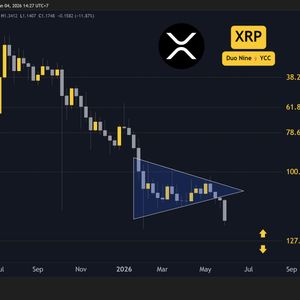
Ripple's XRP experienced a notable decline this week, shedding approximately nine per cent of its value on the weekly chart. This downturn marks a resumption of a broader downtrend for the cryptocurrency, following a sustained period of sideways trading over the past three months. During this consolidation, XRP formed what analysts describe as a large pennant pattern, from which the price has now decisively broken downwards.
The recent price action indicates a significant shift in market sentiment. Buyers have largely receded from order books, contributing to a prevailing sell-off that has impacted numerous crypto assets this week. XRP's inability to withstand this widespread selling pressure has led to concerns among investors, with forecasters suggesting the likelihood of further price depreciation and the establishment of new lower lows.
Several technical indicators underscore this bearish outlook. A significant development last week was a bearish cross observed on XRP's 2-day timeframe MACD (Moving Average Convergence Divergence) chart. This week, a similar bearish cross has emerged on the 3-day MACD, reinforcing the downtrend and potentially encouraging further selling activity. This technical pattern suggests that sellers are currently dominating the market, a trend that appears to have solidified since mid-May.
Why it matters for Australian investors
For Australian investors holding or considering XRP, this recent price action is crucial. The cryptocurrency's performance is not isolated and often reflects broader market sentiment, which can impact portfolios regardless of their local currency denomination. While Bitcoin and Ethereum often garner the most attention, XRP has a substantial following among Australian crypto enthusiasts, making its price movements closely watched.
Key support levels, such as the US$1 mark mentioned in analysis, are important benchmarks. Should XRP fall to or below this level, it could present either a buying opportunity for some, or further losses for those already invested. Australian investors typically monitor these US dollar price points closely, as most major exchanges operate with USD-denominated pairs, even if they allow AUD deposits.
Platforms like CoinSpot, Independent Reserve, Swyftx, and BTC Markets, which are popular choices for Australian investors, facilitate the buying and selling of XRP. A significant price drop could trigger increased trading activity on these platforms, as investors re-evaluate their positions. It's also a pertinent reminder for Australian investors to consider the tax implications of their crypto holdings, as outlined by the ATO, particularly when deciding to realise gains or losses during periods of volatility.
Impact on the AUD market
The immediate impact on the Australian dollar (AUD) denominated XRP market is a corresponding depreciation in value. As the US dollar price of XRP falls, so too does its value when converted to AUD, assuming a stable AUD/USD exchange rate. This means that Australian investors holding XRP would see their portfolio value decline in Australian dollar terms.
While direct AUD trading pairs for XRP exist on some Australian exchanges, the global price action in USD typically dictates the broader trend. Local market liquidity might be thinner for AUD pairs compared to USD, potentially leading to more pronounced price swings during periods of high volatility. AUSTRAC's oversight of cryptocurrency exchanges in Australia ensures regulatory compliance, but it doesn't shield investors from market forces that drive prices down.
The current market conditions could lead to increased scrutiny from ASIC regarding investor education and risk disclosure, especially if a prolonged downturn impacts a significant number of retail investors. However, there's no indication from the source that the current price drop is tied to any specific Australian regulatory event. Instead, it appears to be a global market movement impacting XRP.
What to watch next
The immediate focus for XRP investors, both globally and in Australia, will be the US$1 support level. This price point is not only a significant technical support but also a key psychological threshold. Analysts anticipate a potential battle between buyers and sellers if the price continues its descent towards this level. A successful defence of US$1 could catalyse a relief rally, offering a temporary reprieve from the downtrend.
Conversely, a definitive breach of the US$1 support would signal a further strengthening of bearish sentiment and could open the door to even lower price targets. Traders will be closely monitoring order books for any signs of renewed buying interest, which is currently absent across the wider crypto market. The broader market sentiment, often influenced by Bitcoin's performance, will also be a critical factor to observe.
Australian investors should also keep an eye on Australian exchanges for any unique local market reactions, though global trends are usually dominant. Understanding how the ATO treats capital gains and losses during such volatile periods is also paramount. While the market remains unpredictable, a cautious approach and an emphasis on risk management are advisable for Australian investors navigating these turbulent waters for XRP.
Coins covered



Common questions
How does XRP's price drop affect my ATO tax obligations in Australia?
A drop in XRP's price can lead to capital losses if you sell your holdings below your purchase price. These losses can be used to offset capital gains from other cryptocurrency or asset sales, potentially reducing your overall tax liability. It's crucial to keep detailed records of your buy and sell transactions for accurate reporting to the ATO.
Can I still trade XRP on Australian exchanges like CoinSpot or Swyftx during a downtrend?
Yes, Australian exchanges like CoinSpot, Swyftx, Independent Reserve, and BTC Markets continue to offer XRP trading during market downtrends. These platforms facilitate buying and selling, allowing investors to adjust their portfolios as they deem fit. However, liquidity or bid-ask spreads might fluctuate during periods of high volatility.
What Australian regulations should I be aware of when investing in XRP?
In Australia, cryptocurrency exchanges are regulated by AUSTRAC for anti-money laundering (AML) and counter-terrorism financing (CTF) purposes. While ASIC plays a role in consumer protection, XRP itself is generally considered a 'digital asset' rather than a financial product under current Australian law, meaning it doesn't fall under ASIC's direct product regulation framework, though this could evolve.
XRP sees a significant weekly price drop, impacting Australian investors. Explore why this happened, its effects on the AUD market, and what's next.