Vitalik Buterin ties DeepSeek V4 to Ethereum’s privacy future
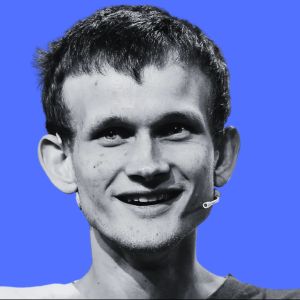
Vitalik Buterin has tied DeepSeek V4 to Ethereum’s privacy future, outlining a roadmap integrating local AI models into Ethereum’s access layer. The Ethereum co-founder specifically notes significant overlap between CROPS’ Ethereum Access Layer and CROPS AI. Buterin introduced the CROPS AI (Censorship-Resistant, Open-Source, Private, and Secure AI) concept at the ETH Mumbai conference on March 12, discussing reasons why AI could become the next major security risk for crypto.
He argued that AI is becoming powerful enough to manage wallets and interact with blockchains, but noted that the current ecosystem is not designed with privacy and security in mind. Buterin believes that if AI agents are going to control crypto, they must be built very differently. He says this reflects how far AI models have come.
According to Buterin, most people assume that AI models running locally on their devices are private. However, he emphasizes that this assumption is wrong. 5 series, locally running agent frameworks, and a growing stack of open-source software.
He points out that while these models may appear independent on the surface, most of them make calls to OpenAI or Anthropic’s APIs whenever they need to perform a task they cannot handle on their own. Buterin says DeepSeek V4 is vital to realizing local private transactions Updating on the progress of the CROPS AI project he has been following, Buterin says that DeepSeek V4 (with a 2-bit quantized version running on 90GB of memory) is vital to realizing private, locally processed transactions.
He notes that the CROPS Ethereum access layer overlaps with CROPS AI, including ZK-based paid remote LLM calls and private Ethereum RPC reads. He calls for more Ethereum-tuned AI models to improve the security of smart contracts and protocol code. “One other thing that has been on my mind is that there’s actually a lot of intersection between “CROPS Ethereum access layer” and “CROPS AI”.
For example, we want a ZK way to make (paid) calls to remote LLMs. ” – Vitalik Buterin , Co-founder of Ethereum The Ethereum co-founder points out that the connection between DeepSeek V4 and Ethereum’s privacy goals centers on the CROPS AI concept. He notes that users can query Ethereum data by using local models like DeepSeek V4 without revealing their metadata, IP addresses, or wallet balances to centralized RPC providers.
DeepSeek V4’s ability to run on self-hosted local setups ensures that users rely on self-sovereign infrastructure rather than corporate cloud servers. Buterin suggests combining private local LLM calls with Ethereum ZK payments Buterin suggests combining private local LLM calls with Ethereum ZK proofs, allowing users to privately process their blockchain interactions off-chain.
He says this helps in hiding on-chain transaction links, noting that DeepSeek V4’s low hardware requirements are key to this. However, DeepSeek V4’s 2-bit-quantized version can also run on high-end consumer workstations. Buterin further notes that the newly released DeepSeek V4 serves as the primary proof-point that this vision is hardware-viable today, not years away.
Users running DeepSeek V4 locally can create a “cryptographic sanctuary” where their financial intentions never leave their physical machines until they are ready to be added to the public ledger. Regarding the next steps, Buterin urges users to watch out for DeepSeek V4 Flash optimization patches for AMD, which he cites as a key area of improvement.
He also reminds users to ensure their hardware has at least 96GB-128GB of Unified Memory (for Mac) or VRAM (for PC) to handle the 90GB of quantization overhead. The push ties into a broader “Cypherpunk” revival in which AI acts as a fiduciary for users. Buterin emphasizes that this effectively mixes the requests, decoupling payments from users’ identities and rendering remote AI computations anonymous.
Buterin also references warnings from the cybersecurity community, noting that a locally running AI might ping OpenAI’s servers when it gets confused. He notes that the mainstream open-source AI ecosystem does not care about the distinction, adding that most of these systems are optimized for capability rather than security. Don’t just read crypto news.
Understand it. Subscribe to our newsletter. It's free .