
US and China pour record capital into AI as funding race intensifies on both sides
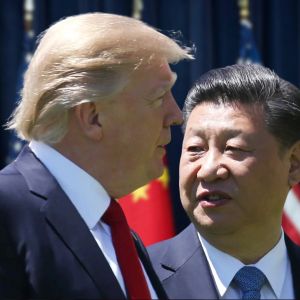
Artificial intelligence (AI) has emerged as a battleground for global technological dominance, with both the United States and China pouring unprecedented capital into the sector. This intense funding race, driven by a confluence of government initiatives and private investment, is reshaping the global tech landscape. For Australian investors watching the crypto space, understanding these macro shifts is crucial, as innovation in AI often intersects with blockchain technology and digital assets.
The sheer scale of investment highlights AI's strategic importance. Global AI start-ups collectively raised a staggering US$255.5 billion in the first quarter of 2026 alone. China's contribution to this boom is particularly notable, with Chinese AI ventures securing over 110 billion yuan (approximately AUD$23.5 billion) in the same period. This aggressive push signifies a long-term commitment from both economic superpowers, creating ripple effects for technology markets worldwide, including Australia.
What happened
China's government has taken a proactive and hands-on approach to fuel its AI boom. At a Beijing press conference in February, the secretary-general of the Ministry of Science and Technology, Pan Xiaodong, unveiled a national venture capital guidance fund. This fund is specifically designed to support early-stage, small, long-term, and 'hard-tech' enterprises, encompassing critical areas such as AI, semiconductors, and advanced manufacturing. The estimated total scale of this ambitious fund is approximately 1 trillion yuan, which translates to over AUD$214 billion.
Further demonstrating its commitment, government-linked investors reportedly participated in more than 140 AI deals in 2025. This marks a dramatic increase from the pre-2018 average of just 10 deals per year. The Chinese authorities are also collaborating with financial institutions and local governments to establish various additional funds, totalling over 350 billion yuan (around AUD$75 billion), targeting tech-industry integration and secondary market investments. Companies like DeepSeek, a notable AI firm known for its cost-efficient models, have seen their valuations surge dramatically, reportedly reaching between US$45-50 billion by early May after an initial US$10 billion valuation in April. Other significant government-backed investment rounds include GPU designer Moore Threads, which raised US$720 million at a US$4.1 billion valuation, and AI firms Moonshot AI and StepFun, securing US$700 million and US$717 million respectively.
In tandem with this investment frenzy, both nations have implemented measures to protect their domestic AI sectors. The US banned American investors from backing Chinese AI and chip companies in January 2025, with China reciprocating a similar restriction in late April. The Chinese National Development and Reform Commission instructed prominent AI companies like Moonshot AI, StepFun, and ByteDance not to accept US capital without explicit government clearance. These defensive strategies underscore the strategic importance of AI and highlight a growing desire for technological sovereignty on both sides.
Why it matters for Australian investors
The intensifying AI funding race between the US and China has significant implications for Australian investors. Firstly, the rapid advancement in AI capabilities, particularly in areas like large language models, can have a transformative impact on various industries, from finance to healthcare. Australian businesses that can strategically integrate AI solutions may see enhanced productivity and competitiveness. Investors should consider companies, including those in the crypto space, that are leveraging or building AI-driven solutions.
Secondly, the US-China tech rivalry could create both opportunities and challenges. While restrictions on capital flows and technology transfer might make it harder for Australian firms to operate seamlessly across these two giants, it also opens avenues for Australia to develop its own niche within the global AI landscape. Australian investors might find opportunities in local AI start-ups or in companies that can bridge technological gaps or offer neutral ground for collaboration.
Furthermore, the advancements in AI, especially in processing power and data analysis, have direct relevance to the blockchain and cryptocurrency sectors. AI can enhance the efficiency of decentralised autonomous organisations (DAOs), improve security protocols, and refine trading algorithms. Australian crypto exchanges like CoinSpot, Independent Reserve, Swyftx, and BTC Markets could potentially integrate AI to improve user experience, security, and compliance, offering new investment avenues or improved services for their users. Investors should monitor how these platforms adopt AI advancements.
Impact on the AUD market
The AI funding race, while primarily focused on the US and China, can indirectly influence the Australian dollar (AUD) market through several channels. A global surge in technological innovation, particularly in AI, generally fosters economic growth and could attract foreign investment into Australia's tech sector. Such investment inflows could support the AUD. Conversely, increased geopolitical tensions due to the tech rivalry could introduce volatility into global markets, potentially impacting the AUD as a commodity-linked currency.
From a regulatory standpoint, Australia's financial watchdogs, such as ASIC (Australian Securities and Investments Commission) and AUSTRAC (Australian Transaction Reports and Analysis Centre), are closely monitoring technological advancements. As AI becomes more sophisticated, its application in financial services and digital assets will present new regulatory challenges and opportunities. For instance, AI-driven solutions for anti-money laundering (AML) and counter-terrorism financing (CTF) could become standard, impacting how Australian crypto businesses operate and how investors interact with these platforms.
The ATO's (Australian Taxation Office) stance on digital assets remains crucial. As AI technology evolves, the methods of generating and managing crypto assets may become more complex, necessitating transparent guidance from the ATO on taxation. Australian investors need to stay informed about how the development and use of AI in the crypto space might affect their tax obligations, particularly regarding intelligent contracts or algorithmic trading strategies. The overall sentiment towards global tech, driven by the US-China dynamic, can also influence risk appetite for the AUD.
What to watch next
Investors should closely monitor the continued pace of AI investment and its geographical distribution. While the US and China currently dominate, watch for other nations, perhaps including Australia, to increase their commitments to AI development. Any shifts in policy or new government-led initiatives in either superpower could dramatically alter the landscape. Future developments in AI hardware, particularly in semiconductor technology, will be critical, as these underpin the capabilities of advanced AI models. Breakthroughs or bottlenecks in this area could significantly impact the speed of AI deployment globally.
Also, keep an eye on the regulatory responses from authorities like ASIC and AUSTRAC. As AI applications in decentralised finance (DeFi) and other crypto sectors become more prevalent, new guidelines or frameworks are likely to emerge to manage risks and foster innovation. The integration of AI tools by major Australian crypto exchanges and financial institutions could signify a maturing market and potentially offer new product offerings or investment strategies.
Finally, the ongoing 'distillation' debate and intellectual property concerns will be important. Accusations of AI model exploitation highlight the need for robust intellectual property protection and ethical guidelines. For Australian investors, this means considering the long-term sustainability and ethical standing of AI projects they might be exposed to, directly or indirectly through their crypto holdings. The geopolitical interplay will largely dictate the global AI narrative, influencing everything from supply chains to data governance, making it a key area for ongoing observation.
Coins covered


Common questions
How does the US-China AI funding race affect the value of Australian cryptocurrencies?
While there isn't a direct impact on individual Australian cryptocurrency values, the broader global tech funding landscape can influence market sentiment. Increased innovation and investment in AI may drive demand for crypto projects that integrate AI, potentially benefiting the overall sector. Conversely, geopolitical tensions or regulatory shifts stemming from this race could introduce volatility across global markets, including those for digital assets in Australia.
Are Australian crypto exchanges investing in AI technology?
Leading Australian crypto exchanges such as CoinSpot, Independent Reserve, Swyftx, and BTC Markets are continually looking to enhance their platforms. While specific investment figures aren't always public, it's highly probable they are exploring or implementing AI for various functions, including improving security, enhancing customer service through chatbots, optimising trading algorithms, and bolstering compliance efforts like anti-money laundering (AML) protocols. These advancements benefit Australian crypto investors through improved services and safer platforms.
What Australian tax implications might arise from AI-driven crypto investments?
The ATO's established tax treatment for cryptocurrencies applies regardless of the technology used. If AI-driven strategies or smart contracts generate capital gains from crypto trading, these gains are typically taxable events in Australia. Similarly, if AI is used to accrue income from activities like staking or DeFi, that income would generally be treated as assessable income. Australian investors using AI tools for crypto should ensure they maintain meticulous records to comply with ATO requirements.
Australia faces the ripple effects of the intense US-China AI funding race. Discover what this tech rivalry means for AUD investors and the crypto market.