
Trump praises prediction markets, defends CFTC as court cases compound
What happened
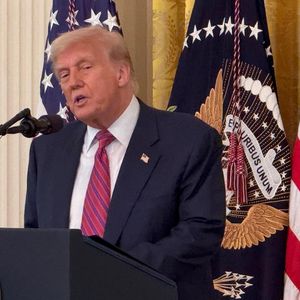
Donald Trump, former U.S. President and current presidential candidate, has recently voiced strong support for prediction markets, emphasising their critical role in the financial landscape. More significantly for the regulatory sphere, Trump publicly defended the Commodity Futures Trading Commission (CFTC), advocating for its exclusive authority over these markets. This stance aligns with comments made by CFTC Chair Michael Selig, suggesting a unified front within certain U.S. regulatory and political circles regarding the oversight of these innovative financial instruments.
Prediction markets, in essence, allow participants to wager on the outcomes of future events, ranging from political elections to economic indicators. They operate by creating contracts that pay out based on whether a specific event occurs. The trading of these contracts establishes a real-time probability forecast for the event. This mechanism has long been a subject of debate, particularly concerning their classification and the appropriate regulatory body to oversee them.
Trump's intervention comes at a time when the regulatory landscape for digital assets and novel financial products in the U.S. is increasingly complex and contested. Various U.S. government bodies, including the Securities and Exchange Commission (SEC) and the CFTC, have at different times asserted jurisdiction over aspects of the crypto and broader digital asset ecosystem. His endorsement of the CFTC's role specifically for prediction markets signals a potential direction for future U.S. policy, favouring a commodities-based regulatory approach over one that might classify them as securities.
This development is particularly notable given the ongoing legal challenges and varying interpretations of crypto assets across different U.S. courts and regulatory bodies. The former President's comments could influence public discourse and future legislative considerations, particularly if he were to return to office. For international observers, including those in Australia, it provides insight into the potential trajectory of U.S. regulatory thought, which often has spillover effects globally.
Why it matters for Australian investors
While Trump's comments directly concern U.S. regulatory frameworks, they carry indirect implications for Australian investors and the broader crypto market Down Under. The U.S. is a major driver of global financial trends and regulatory precedents. A clearer, or at least a more defined, regulatory stance in the U.S. regarding prediction markets could set a precedent for how similar products might be viewed internationally, including by Australian regulators like ASIC (Australian Securities and Investments Commission) or AUSTRAC (Australian Transaction Reports and Analysis Centre).
For Australian investors engaging with prediction market platforms, or those looking at crypto assets involved in such markets, understanding international regulatory shifts is crucial. Although Australian exchanges such as CoinSpot, Independent Reserve, Swyftx, and BTC Markets primarily list cryptocurrencies, the underlying technologies and regulatory categorisations in significant markets like the U.S. can influence global liquidity, sentiment, and the availability of certain products over time. Divergent regulatory approaches can create arbitrage opportunities or, conversely, regulatory gaps that complicate cross-border activities.
Moreover, the categorisation of prediction market instruments, whether as commodities or securities, has significant implications for how they are taxed and regulated. In Australia, the ATO (Australian Taxation Office) treats cryptocurrency as property for capital gains tax purposes. Should prediction market tokens or derivatives become more prevalent and clearly defined by major jurisdictions, the ATO might issue specific guidance. Clarity from major global players often helps inform and solidify local regulatory positions, providing better certainty for Australian investors planning their portfolios.
An emphasis on the CFTC's authority implies a leaning towards prediction market instruments being classified as commodities rather than securities. This distinction is vital because commodity regulation is often less stringent than securities regulation in some aspects, potentially fostering innovation. If this approach gains traction globally, it could encourage more diverse financial products built on blockchain technology to emerge, which Australian investors might eventually access via global platforms, even if not directly through local exchanges initially.
Impact on the AUD market
The immediate impact on the Australian dollar (AUD) market is likely to be indirect and nuanced rather than direct. Traditional foreign exchange markets, including AUD pairs, typically react to major economic indicators, interest rate differentials, or significant geopolitical events. Trump's comments on prediction markets and the CFTC, while important for crypto regulation, are not expected to trigger immediate significant shifts in AUD value against major currencies like the USD.
However, a flourishing and well-regulated prediction market sector in the U.S. could contribute to broader investor confidence in digital assets. This, in turn, could subtly influence Australian investor sentiment towards digital asset classes. If global crypto markets experience increased positive sentiment or institutional adoption due to clearer U.S. regulation, a spillover effect into Australian markets could be observed. This might manifest as increased trading volumes for crypto-AUD pairs on local exchanges or a broader acceptance of crypto assets within Australian investment portfolios.
Furthermore, the evolution of prediction markets could eventually lead to new financial instruments that allow for hedging against or speculating on various economic and political events, potentially including those impacting the AUD. For instance, if liquid prediction markets for Australian economic indicators (e.g., RBA interest rate decisions, CPI figures) were to develop, they could offer alternative avenues for Australian and international investors to gain exposure or manage risk related to the Australian economy. Such developments, however, are typically long-term and depend on significant market maturity and regulatory acceptance.
Finally, any U.S. regulatory clarity that fosters innovation in decentralised finance (DeFi) could indirectly benefit the AUD market by attracting global capital flows into the broader crypto ecosystem. As Australian investors increasingly participate in global DeFi, stronger U.S. regulatory scaffolding could reduce perceived risks, thereby increasing overall market stability and attracting more institutional participation, which could eventually filter down to the AUD. Conversely, regulatory uncertainty would continue to keep institutional investors cautious, limiting major capital flows.
What to watch next
Australian investors should closely monitor the actual legislative and court outcomes in the U.S. concerning prediction markets and the CFTC's jurisdiction. Trump's statements are influential, but official policy changes require congressional action or definitive judicial rulings. Keep an eye on how the various U.S. federal agencies, particularly the SEC and CFTC, continue to delineate their roles. Further clashes or agreements between these bodies will be critical indicators.
Also, observe the development and growth of prediction market platforms themselves. Are new platforms emerging? Are existing ones gaining more traction and liquidity? Increased activity and mainstream adoption would put more pressure on regulators worldwide, including in Australia, to provide clear guidelines. The technological evolution of these platforms, especially those built on decentralised networks, will also shape future discussions on their classification and oversight.
From an Australian perspective, pay attention to any local discussions or guidance from ASIC, AUSTRAC, or the ATO regarding prediction market instruments. While direct engagement with these markets in Australia might be limited for now, regulators often pre-emptively consider global trends. Any local guidance on tax treatment, licensing requirements for operators, or investor protection measures would be highly significant for the Australian digital asset landscape.
Finally, the lead-up to the next U.S. election will be a crucial period. If Trump's previous remarks translate into concrete policy proposals or a shift in regulatory appointments, it could solidify the CFTC's role and influence global approaches to prediction markets. Australian investors holding globally accessible cryptocurrencies or participating in international crypto platforms should stay informed about these potential shifts, as they can impact overall market sentiment and the regulatory environment for digital assets globally.
Coins covered


Common questions
Are prediction markets legal for Australian investors?
The legality of participating in prediction markets for Australian investors can be complex and depends on the specific platform and the nature of the contracts being offered. While some global platforms may be accessible, they may not be regulated by Australian authorities. ASIC generally regulates financial products and services offered to Australians, and prediction markets could fall under their purview depending on their structure. Investors should exercise caution and seek independent legal or financial advice.
How are crypto assets used in prediction markets taxed in Australia?
If cryptocurrencies are used to participate in prediction markets, the ATO's existing guidance on the taxation of crypto assets generally applies. Any gains made from selling, swapping, or otherwise disposing of the crypto (e.g., to collect prediction market winnings) would typically be subject to Capital Gains Tax (CGT). Losses could be used to offset capital gains. Record-keeping is crucial for tax purposes, as with any crypto-related activity in Australia.
Could Australian exchanges like CoinSpot or Swyftx list prediction market tokens?
It's unlikely that major regulated Australian exchanges like CoinSpot, Independent Reserve, Swyftx, or BTC Markets would list prediction market tokens currently, due to the nuanced and evolving regulatory landscape surrounding these instruments. Such products would likely require specific regulatory approval and clear legal classification in Australia. Their current focus is on established cryptocurrencies. Should regulatory certainty improve globally and locally, this could change in the future, but it would be a significant development requiring careful consideration.
Dive into Donald Trump's backing of prediction markets and CFTC authority. Unpack the implications for Australian crypto investors and the AUD market.