
Trump orders government, Fed to review crypto firms' access to payment rails
What happened
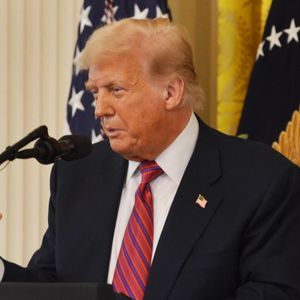
A recent executive order from former US President Donald Trump has called for a comprehensive review into how cryptocurrency firms access traditional financial payment systems. Specifically, the order directs the US Federal Reserve to examine the pathways by which depository institutions grant 'master accounts' and other payment services to entities operating within the burgeoning crypto sector. This directive stems from a long-standing debate about the integration—or lack thereof—between decentralised digital assets and the established, centralised financial infrastructure.
The core issue revolves around crypto firms' ability to connect with the mainstream banking system. Currently, many smaller crypto businesses face hurdles in securing banking services, often relying on a limited number of crypto-friendly banks. The executive order highlights the need for regulatory clarity and potentially a more standardised approach to how these connections are facilitated. It's a move that could significantly impact the operational landscape for crypto companies by either streamlining their access to banking or imposing more stringent requirements.
This isn't an entirely new conversation; financial regulators globally have been grappling with how to oversee and integrate digital assets. However, a direct executive order from such a high office brings renewed urgency and focus to the matter. The stated goal is to ensure stability within the financial system while simultaneously fostering innovation, a delicate balancing act that has implications for the broader digital economy.
Why it matters for Australian investors
While this is a US-centric directive, its implications could ripple across international markets, including Australia. Australian crypto investors often utilise global platforms or Australian exchanges that themselves rely on international banking relationships. Should access to payment rails become more restrictive or standardised in the US, it could indirectly affect the operational costs and service offerings of exchanges like CoinSpot, Independent Reserve, Swyftx, and BTC Markets.
For Australian investors, the ease of converting AUD to crypto and vice versa is paramount. If global banking partners become more cautious or if new compliance burdens emerge, it could impact transaction times, fees, and overall liquidity within the market. Furthermore, greater regulatory clarity or, conversely, increased scrutiny in a major market like the US can often set precedents or influence regulatory approaches in other jurisdictions, including discussions within AUSTRAC or ASIC here in Australia.
Australian tax obligations, as guided by the ATO, remain consistent, but the operational environment for acquiring and disposing of crypto assets could shift. Investors benefit from a robust, well-integrated financial ecosystem. Any disruption or enhancement to crypto firms' ability to interact with traditional banking could therefore be felt by Australian users, either through improved efficiency or new challenges in accessing services.
Impact on the AUD market
The direct impact on the AUD-denominated crypto market would likely be indirect but notable. If US policy changes lead to a more stable or, conversely, a more fragmented global crypto banking landscape, Australian exchanges will need to adapt. For example, if master accounts become easier to obtain for compliant crypto firms globally, it could lead to greater competition and potentially better services even for AUD-fiat pairs.
Conversely, if the review leads to stricter definitions or higher barriers for crypto firms to access banking, it might lead to some service providers consolidating or even exiting the market. This could affect the breadth of options available to Australian investors and potentially influence the pricing of crypto assets when converting from or to AUD due to changes in liquidity or operational overheads for local exchanges.
Australia's regulatory bodies, such as AUSTRAC for anti-money laundering and counter-terrorism financing (AML/CTF) oversight, and ASIC for consumer protection, monitor international developments closely. A significant shift in US policy could prompt Australian regulators to re-evaluate their own frameworks for managing financial crime risks and market integrity in the crypto space. This continuous evolution of regulatory landscapes highlights the dynamic nature of the crypto market for Australian participants.
What to watch next
Australian investors should closely monitor the outcomes of the US Federal Reserve's review. The specific recommendations that emerge from the executive order will be crucial. Will they propose clearer guidelines for banking crypto firms, or will they suggest more restrictive measures? The details of these proposals could set a global precedent.
Observe how major crypto exchanges and financial institutions in the US respond to the review. Their operational adjustments or lobbying efforts could also influence the global narrative around crypto banking. Any significant developments in the US could catalyse similar discussions or policy changes within Australia, particularly as local regulators like AUSTRAC and ASIC continue to refine their approach to digital assets.
Pay attention to how this potential standardisation or restriction affects global liquidity and stability in the crypto market. While Australian exchanges operate within our national framework, the interconnectedness of the global crypto market means that significant changes in one major jurisdiction like the US will inevitably have ripple effects that reach Australian shores. Monitoring these developments will be key to understanding potential shifts in the local investment landscape.
Coins covered

Common questions
How does the US review of crypto payment rails affect my AUD crypto transactions?
While the review happens in the US, its outcomes could indirectly impact Australian investors. If global banking for crypto firms becomes more streamlined, it might improve transaction efficiency and fees for converting AUD to crypto. Conversely, stricter rules could lead to challenges for exchanges, potentially affecting liquidity or service availability for Australian users.
Will this change how I pay taxes on crypto in Australia?
The executive order is focused on banking access, not directly on tax policy. Your existing tax obligations for cryptocurrency in Australia, as outlined by the ATO, are unlikely to change due to this specific US development. However, any operational shifts for exchanges might affect how you record transactions, a key aspect for tax reporting.
Could local Australian crypto exchanges like CoinSpot or Swyftx be impacted?
Yes, indirectly. Australian exchanges conduct international banking relationships and operate within a global market. If the US review leads to significant changes in how crypto firms access banking services worldwide, these changes could influence the operational environment, costs, and service offerings of Australian exchanges like CoinSpot, Swyftx, Independent Reserve, and BTC Markets.
CoinPulse AU analyses Trump's executive order on crypto firms' access to payment rails. Understand the impact on Australian investors and the AUD market.