
Bitcoin Adds $20B to Crypto Economy as Traders Defend $77,000 Support
What happened
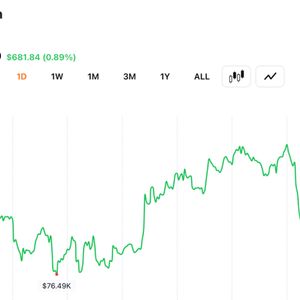
Bitcoin (BTC) recently experienced a period of significant price volatility, particularly around the US$77,000 mark. Despite several attempts, the premier cryptocurrency struggled to maintain a definitive breakout above this resistance level. This range-bound trading saw Bitcoin repeatedly test both higher and lower thresholds, demonstrating a battle between bullish and bearish sentiment in the market.
Throughout this period, market participants observed Bitcoin's inability to sustain upward momentum. Peaks were often followed by pullbacks, indicating strong selling pressure at certain price points. This pattern of consolidation suggests that while there was underlying demand, it was insufficient to propel BTC into a sustained upward trajectory beyond the established resistance.
The broader cryptocurrency market, often influenced by Bitcoin's performance, reflected this uncertainty. Many altcoins also saw sideways movement or correlated dips, underscoring Bitcoin's role as a bellwether for the digital asset space. The collective crypto economy, while demonstrating resilience, showed signs of cautiousness amidst Bitcoin's struggle for a clear direction.
Why it matters for Australian investors
For Australian investors, Bitcoin's price movements are directly relevant, especially given the rising adoption of crypto in the nation. The US$77,000 resistance level, when converted to Australian dollars, represents a significant psychological and technical barrier. Local investors trading on platforms like CoinSpot, Independent Reserve, Swyftx, and BTC Markets would have observed their AUD-denominated holdings fluctuate in tandem with these global price actions.
The consolidation phase highlights the inherent volatility of cryptocurrency markets, a crucial consideration for any investment strategy. While the Australian crypto landscape is maturing, with clearer guidance from organisations like AUSTRAC and ASIC, the underlying assets remain susceptible to global market dynamics. Understanding these patterns helps Australian investors calibrate their risk exposure and set realistic expectations.
Furthermore, the Australian Taxation Office (ATO) views cryptocurrency as an asset for capital gains tax purposes. Periods of high volatility and range-bound trading can significantly impact an investor's tax obligations when they sell or exchange their digital assets. Accurately tracking buy and sell points during such fluctuations is essential for precise tax reporting, making detailed record-keeping paramount for Australian crypto holders.
Impact on the AUD market
Bitcoin's lack of a decisive breakout above US$77,000 had flow-on effects within the Australian dollar (AUD) cryptocurrency market. When Bitcoin trades sideways, it often leads to reduced trading volume and potentially less speculative activity across AUD-pegged crypto pairs. This can translate to tighter spreads on Australian exchanges, though overall market liquidity might experience fluctuations.
Australian investors holding Bitcoin as a primary component of their digital asset portfolio would have seen their AUD-denominated net worth remain relatively stable or experience minor adjustments during this consolidation. This contrasts with periods of significant upward or downward trends, which can dramatically alter portfolio valuations in a short timeframe. Such stability, or lack thereof, directly influences investor confidence and future allocation decisions.
Moreover, the performance of Bitcoin often dictates sentiment for broader AUD crypto markets, including smaller cap altcoins listed on local platforms. When Bitcoin struggles for momentum, investors may become more cautious about venturing into riskier, less established digital assets. This can lead to a 'flight to quality' within the crypto space, where funds might temporarily flow towards more established assets or even stablecoins, impacting AUD trading pairs accordingly.
What to watch next
Moving forward, Australian investors should closely monitor Bitcoin's price action around key resistance and support levels. A sustained breakout above the US$77,000 psychological barrier, or any higher resistance points, could signal a renewed bullish trend. Conversely, a definitive break below established support levels could indicate further downside potential, leading to broader market corrections.
It's also important to observe global macro-economic indicators, as these frequently influence cryptocurrency markets. Factors such as inflation data, interest rate decisions from major central banks, and geopolitical events can all impact investor sentiment and capital flows into digital assets. Australian investors should consider these global forces alongside specific crypto market analysis.
Technological developments within the Bitcoin ecosystem, such as upgrades or network enhancements, could also play a role in altering market dynamics. While Bitcoin's core protocol is generally stable, significant news or adoption milestones can act as catalysts. Staying informed through reputable news sources and analysis is key for Australian investors navigating this evolving landscape.
Finally, keeping an eye on regulatory developments both globally and within Australia is crucial. While Australia has made strides in crypto regulation, further clarity from organisations like ASIC or AUSTRAC could impact how digital assets are traded, held, and taxed, directly affecting Australian investment strategies.
Coins covered


Common questions
How does Bitcoin's global price impact my Australian crypto holdings?
Bitcoin's global price, typically quoted in USD, is the primary driver for its value. Australian exchanges convert this global price to AUD based on the prevailing exchange rate. Therefore, any significant movement in Bitcoin's USD price directly affects the AUD value of your holdings on platforms like CoinSpot or Swyftx.
Does range-bound trading affect crypto tax in Australia?
Yes, range-bound trading can impact your Australian crypto tax position. Every time you dispose of cryptocurrency (e.g., selling for AUD, trading for another crypto, or using it to buy goods/services), a capital gains tax event occurs. Frequent buying and selling within a range can lead to numerous taxable events, making meticulous record-keeping essential for ATO compliance.
What Australian regulations should I be aware of when trading volatile cryptocurrencies?
Australian investors should be aware of regulations from AUSTRAC, which oversees anti-money laundering and counter-terrorism financing for crypto-businesses, and ASIC, which has a role in consumer protection and has issued guidance on crypto-related financial products. While there's no specific 'volatility' regulation, these bodies aim to ensure market integrity and transparency for all digital asset transactions.
Unpack Bitcoin's recent price volatility around US$77,000 and its implications for Australian investors. Explore AUD market impact and what to watch next.