
Tense Selloff Puts $60,000 in Focus as Bitcoin Struggles Under $72,000
What happened
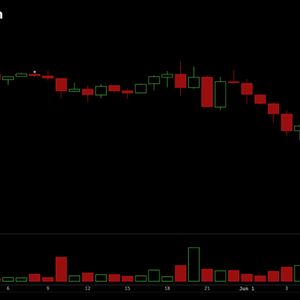
Bitcoin has found itself in a precarious position, trading consistently below the US$72,000 mark. This recent trend follows a period where the cryptocurrency managed to briefly reach above US$73,000 towards the end of May. The current sentiment among some prominent analysts, including Benjamin Cowen and the creator of the stock-to-flow model, PlanB, suggests a potential downturn.
These analysts are pointing to a significant support level around US$60,000 as the next critical point if the current resistance cannot be overcome. The market appears to be in a tense standoff, with bulls and bears vying for control. This indecision could lead to increased volatility in the near term, impacting price action.
Historically, such periods of price consolidation can precede significant movements. While the cryptocurrency market is known for its rapid shifts, the current atmosphere indicates a cautious approach from many participants. Traders are closely monitoring key indicators and psychological price levels to gauge the market's next direction.
Why it matters for Australian investors
For Australian investors, Bitcoin's performance directly influences their portfolios, whether they hold BTC directly or through exchange-traded products. A potential move towards US$60,000 translates to a significant drop in Australian dollar terms, impacting the value of their digital assets held on platforms like CoinSpot, Independent Reserve, Swyftx, and BTC Markets. Understanding these price fluctuations is crucial for managing risk and making informed decisions.
The Australian dollar's exchange rate against the US dollar also plays a role in the actual returns for local investors. A weaker AUD against the USD could partially offset some of Bitcoin's losses, while a stronger AUD would exacerbate them. Investors should consider both the BTC/USD price movements and the AUD/USD exchange rate when evaluating their holdings.
Furthermore, the Australian Taxation Office (ATO) views cryptocurrency as a form of property for capital gains tax purposes. Any significant price drop could trigger tax considerations for those selling their assets, whether at a profit or a loss. Keeping accurate records of purchase and sale prices in AUD is essential for compliance.
Impact on the AUD market
The Australian cryptocurrency market, while robust, often mirrors global trends. A sustained decline in Bitcoin's price could lead to a broader market cool-off, potentially affecting the trading volumes on local exchanges. We might see a shift in investor sentiment, with some moving to stablecoins or cashing out to AUD, while others might view current levels as a buying opportunity.
Local exchanges are well-regulated under AUSTRAC's anti-money laundering and counter-terrorism financing (AML/CTF) laws. However, price volatility doesn't directly impact their regulatory standing. Instead, a downturn might test the liquidity of certain platforms and the resolve of their user base.
ASIC keeps a watchful eye on crypto-related investment products and consumer protection. While they don't regulate the underlying assets directly, significant market movements could draw their attention to how these products are marketed and managed. Australian crypto investors should always be aware of the inherent risks, especially during periods of market uncertainty.
What to watch next
The immediate focus for investors will be on whether Bitcoin can regain its footing above the US$72,000 level. A decisive break above this point could signal a reversal of the current bearish sentiment. Conversely, continued pressure below this threshold could validate the warnings of analysts and lead to a test of the US$60,000 support.
Key technical indicators and on-chain metrics will be closely scrutinised. Traders often look at trading volumes, moving averages, and order book depth on major exchanges to predict short-term movements. Macroeconomic factors, such as interest rate decisions globally and geopolitical events, could also influence investor confidence in risk assets like Bitcoin.
Australian investors should monitor global crypto news, but also pay attention to local market reactions and the AUD/USD exchange rate. Keeping an eye on announcements from local regulatory bodies like AUSTRAC and ASIC regarding consumer protection or digital asset oversight is also prudent. Diversification and a clear understanding of personal risk tolerance remain crucial in this dynamic environment.
Ultimately, Bitcoin's performance in the coming weeks will largely depend on the battle between buyer and seller conviction. A definitive move in either direction, whether towards a recovery or a deeper retraction, will shape the narrative for the remainder of the quarter.
Coins covered


Common questions
How does Bitcoin's price affect my tax obligations in Australia?
In Australia, the ATO treats Bitcoin and other cryptocurrencies as property for capital gains tax (CGT) purposes. If you sell, trade, or dispose of your Bitcoin, you will incur a CGT event. If you make a profit, you'll need to declare it as assessable income. If you incur a loss, you may be able to use it to offset other capital gains. Keeping detailed records in AUD for all transactions, including purchase and sale dates and prices, is crucial for accurate tax reporting.
Which Australian exchanges are most affected by Bitcoin price volatility?
All Australian cryptocurrency exchanges, such as CoinSpot, Independent Reserve, Swyftx, and BTC Markets, are affected by Bitcoin's price volatility, as their primary business revolves around facilitating crypto trading. While the exchanges themselves are regulated by AUSTRAC for AML/CTF compliance, significant price swings can impact trading volumes, user sentiment, and the overall liquidity of assets available on their platforms. Users might deposit or withdraw AUD more frequently during volatile periods.
What Australian regulatory bodies oversee Bitcoin trading?
In Australia, several bodies have roles related to Bitcoin and cryptocurrency. AUSTRAC (Australian Transaction Reports and Analysis Centre) regulates crypto exchanges for anti-money laundering and counter-terrorism financing (AML/CTF) purposes. ASIC (Australian Securities and Investments Commission) focuses on consumer protection, market integrity, and regulates financial products and services related to crypto, such as exchange-traded funds (ETFs). The ATO (Australian Taxation Office) governs the tax implications of cryptocurrency investments.
Bitcoin struggles below US$72,000, with analysts eyeing US$60,000. Australian investors face heightened volatility and tax considerations. CoinPulse AU analys