
Pendle and Tokenized Yield: Why Fixed-Rate DeFi Is Becoming a Serious Altcoin Narrative
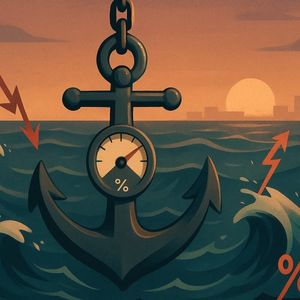
Fixed-income strategies have long been the bedrock of traditional finance, offering predictable returns for investors seeking stability. In the often-volatile world of cryptocurrency, however, such certainty has been a rare commodity. Crypto investors are accustomed to returns that ebb and flow with market sentiment, incentive programmes, and narrative shifts. Yet, a significant, quieter innovation has been brewing: fixed-rate DeFi, powered by tokenised yield.
This emerging sector is gaining traction, promising a way to lock in known rates on-chain without ceding custody of assets. For Australian investors accustomed to variable yields in traditional markets, or those navigating the inherent volatility of crypto, this represents a potentially powerful new tool. At the forefront of this movement is Pendle, a protocol designed to unbundle yield-bearing assets into tradable cash flows. It transforms unpredictable future yield into a market where rates can be priced, hedged, and integrated into strategies reminiscent of traditional fixed income, rather than just speculative farming.
What happened
Pendle’s core mechanism involves taking yield-bearing tokens – such as ETH staked for validating, stablecoins generating revenue, or newer restaking assets – and splitting them into two distinct components: Principal Tokens (PTs) and Yield Tokens (YTs). A Principal Token represents the underlying asset itself, which can be redeemed at par upon maturity. A Yield Token, conversely, entitles its holder to all the variable yield generated by the underlying asset until that same maturity date.
This 'splitting' mechanism is what allows for the creation of an implicit fixed rate. An investor who purchases a PT at a discount to its par value and holds it until maturity effectively locks in a fixed return, regardless of how the actual variable yield of the underlying asset fluctuates over time. The discount at which the PT is bought determines this fixed annualised percentage yield (APY). Conversely, YTs offer pure exposure to the variable yield; an investor benefits if the actual yield outperforms market expectations, or can use them to express a view on future rate changes.
Pendle operates an automated market maker (AMM) that facilitates the trading of PTs and YTs across various maturity dates. This effectively creates a yield curve on-chain, allowing for price discovery and liquidity for these tokenised components. The protocol also incorporates governance, where holders of vePENDLE tokens can vote to direct incentives to specific pools and expiries, further shaping where rate discovery occurs. This innovation is timely, with higher base yields from staking, restaking, and 'real-yield' tokens creating a more attractive environment for locking in fixed rates.
Why it matters for Australian investors
For Australian investors, the advent of fixed-rate DeFi through protocols like Pendle offers a novel pathway to managing risk and enhancing portfolio predictability in the crypto space. Traditionally, Australian investors have accessed crypto through local exchanges like CoinSpot, Independent Reserve, Swyftx, and BTC Markets, primarily for spot trading. While some of these platforms offer staking or earn programmes, these typically provide variable returns, much like a flexible savings account.
Tokenised fixed yield provides a new dimension. Imagine being able to lock in a predictable return on a portion of your ETH or stablecoin holdings, much like buying a fixed-term deposit in a traditional bank, but all within a decentralised, transparent framework. This could appeal to self-managed super fund (SMSF) trustees permitted to hold crypto, who often prioritise stable, predictable returns and clear accounting for tax purposes. The Australian Taxation Office (ATO) currently treats crypto much like property for Capital Gains Tax (CGT) purposes, and the ability to lock in and clearly define a future return could simplify some accounting for certain strategies.
However, it's crucial to understand that while offering fixed rates, these instruments still carry inherent crypto risks. These include smart-contract vulnerabilities, oracle risks, and potential de-pegging or slashing events for underlying staking assets. Liquidity can also become an issue closer to maturity. Investors should conduct thorough due diligence, assessing the underlying assets, the protocol’s audit history, and the specific terms of the PTs and YTs they consider. This is not financial advice, but a call for informed decision-making.
Impact on the AUD market
While Pendle and similar protocols operate globally, their increasing maturity and liquidity introduce new opportunities for Australian investors looking to diversify beyond traditional AUD-pegged assets. The ability to generate fixed returns in crypto assets could draw capital from Australian investors who might otherwise keep funds in low-yielding AUD savings accounts or short-term fixed income products. If a robust market for fixed-rate stablecoin yields (e.g., on USDT or USDC) develops, it could present an alternative to AUD-denominated fixed income, albeit with higher inherent risks.
The volume of crypto trading in AUD on exchanges like BTC Markets or Swyftx might also indirectly reflect increased sophistication in Australian investor strategies. As more AU investors potentially move beyond simple spot holdings to more complex DeFi strategies, the overall demand for stablecoins and yield-bearing assets on these platforms could see shifts. Regulatory bodies like ASIC and AUSTRAC are continuously monitoring the crypto landscape. As these more advanced DeFi products gain traction, they may eventually attract greater scrutiny, especially regarding consumer protection and anti-money laundering frameworks. For now, tokenised yield remains an area where individual investors bear primary responsibility for understanding the risks involved.
However, it's important to temper expectations. We are unlikely to see a direct, immediate, and massive shift of AUD capital into these specific fixed-rate DeFi protocols. The impact will be more gradual, influencing sophisticated early adopters first, and slowly filtering down as infrastructure matures and regulatory clarity evolves. The primary impact will be in offering Australian crypto holders new tools to manage their existing digital asset portfolios, rather than fundamentally altering the AUD's broader financial market dynamics.
What to watch next
The evolution of tokenised fixed yield will be driven by several key factors. Firstly, the continued growth and stability of underlying yield sources, such as Ethereum staking, restaking protocols, and high-quality stablecoin returns, will be paramount. Higher and more reliable base yields make the act of locking in a fixed rate more appealing. Australian investors should monitor the health and security of these foundational protocols, as the risks of PTs and YTs ultimately mirror those of their underlying assets.
Secondly, market liquidity and tooling maturation will be critical. As more capital flows into Pendle and similar platforms, the depth of PT and YT markets will improve, reducing slippage and making larger trades more feasible. Keep an eye on new integrations and front-end tools that simplify access and risk management, particularly those adapted for mobile use, which is popular among many Australian crypto holders.
Finally, regulatory developments, both globally and within Australia, will significantly shape the long-term trajectory. While the ATO provides guidance on crypto tax, specific rulings on complex DeFi strategies like tokenised yield are still evolving. Potential future regulatory frameworks from ASIC or AUSTRAC around decentralised finance could impact how Australian investors can access or report on these products. Observing how these protocols adapt to and interact with global regulatory trends will provide valuable insights into their sustainability and broader adoption. Continued innovation in fixed-rate DeFi suggests a move towards a more mature, diverse crypto financial ecosystem, offering a greater spectrum of risk and return profiles for the discerning Australian investor.
Coins covered
 View ethEthereumethLive price, charts & AUD analysis
 View usdcUSDCusdcLive price, charts & AUD analysis
 View pendlePendlependleLive price, charts & AUD analysis
 View jstJUSTjstLive price, charts & AUD analysis
 View mkrMakermkrLive price, charts & AUD analysis
 View ipStoryipLive price, charts & AUD analysis
 View compCompoundcompLive price, charts & AUD analysis
 View aaveAaveaaveLive price, charts & AUD analysis
Common questions
What Australian crypto exchanges allow me to access Pendle or similar tokenised yield protocols?
Currently, direct integration with Pendle or similar complex DeFi protocols is generally not available on major Australian centralised exchanges like CoinSpot, Independent Reserve, Swyftx, or BTC Markets. These platforms primarily offer spot trading and basic staking services. To access protocols like Pendle, Australian investors typically need to use a decentralised wallet (e.g., MetaMask) and interact directly with the protocol on supported blockchain networks.
How does the ATO treat income from fixed-rate decentralised finance (DeFi) in Australia?
The Australian Taxation Office (ATO) generally views income derived from crypto assets, including those from DeFi protocols, as taxable events. If you generate a fixed yield from Principal Tokens, this income would likely be treated as ordinary income received periodically, or as a capital gain if you sell the tokens at a profit, depending on your individual circumstances and whether you are seen as trading or investing. It's crucial for Australian investors to keep meticulous records and potentially seek advice from a tax professional familiar with crypto and DeFi.
Are there any specific risks for Australian investors using global DeFi protocols like Pendle?
Beyond the general crypto and DeFi risks (smart contract, liquidity, de-pegging), Australian investors face additional considerations. These include navigating foreign exchange risk if your underlying assets are not AUD stablecoins, understanding cross-border tax implications, and being aware that Australian consumer protection laws may not directly apply to decentralised, global protocols. Always ensure you have a strong understanding of the technology and the associated risks.
Discover fixed-rate DeFi with Pendle: your guide for Australian investors to navigate tokenised yield, hedge risks, and secure predictable returns in crypto.