
New Fed Chair Warsh Eyed for Rate Cuts as ECB Rejects Euro Stablecoin Easing Push
What happened
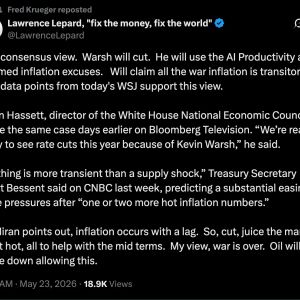
Kevin Warsh, recently appointed as the new Chairman of the US Federal Reserve, has surprised some financial analysts with his stance on interest rates. Contrary to a prevalent market expectation that anticipated a rate hike, Warsh is reportedly leaning towards a potential reduction in borrowing costs. This signals a dovish approach from the new Fed Chair, diverging from what many in traditional finance and crypto markets were forecasting.
Simultaneously, the European Central Bank (ECB) has reportedly rejected calls for a more lenient regulatory stance on euro-denominated stablecoins. This indicates a continued cautious and perhaps stringent approach from European financial regulators towards digital assets that aim to peg their value to the euro. The ECB's position underscores a prevailing regulatory conservatism in the Eurozone concerning the integration of stablecoins into the broader financial system.
These two developments, while geographically distinct, highlight a growing divergence in central bank approaches to monetary policy and digital asset regulation. The US Fed's potential dovish pivot could inject liquidity into global markets, while the ECB's firm stance on stablecoins suggests a tightening of their regulatory perimeter. Both scenarios carry significant implications for the broader cryptocurrency landscape, influencing investor sentiment and strategic planning across regions.
The market had largely priced in a rate hike from the Federal Reserve, making Warsh's potential move towards a cut a significant deviation from consensus. This contrast underlines the unpredictable nature of central bank leadership transitions and their immediate impact on financial markets. Observers are now keen to understand the underlying rationale for Warsh's position and its potential for longer-term policy shifts.
Why it matters for Australian investors
For Australian investors, the US Federal Reserve's monetary policy decisions exert considerable influence on global capital flows and risk appetite, directly impacting the Australian dollar (AUD) and local asset markets. A dovish Fed, potentially leading to lower US interest rates, could weaken the US dollar. This scenario might make the AUD more attractive to international investors seeking higher returns, potentially strengthening the local currency.
Conversely, a weaker US dollar generally makes risk-on assets, including cryptocurrencies, more appealing. Australian investors holding digital assets could see increased demand and potentially higher AUD-denominated prices for their crypto portfolios if global liquidity improves. Australian crypto exchanges like CoinSpot, Independent Reserve, Swyftx, and BTC Markets would likely observe heightened trading activity in such an environment.
The ECB's firm stance on euro stablecoins, while not directly involving the AUD, reflects a broader global regulatory trend. Australian regulators, including ASIC and AUSTRAC, often monitor international developments when formulating their own approaches to digital assets. A conservative stance from a major central bank like the ECB could influence Australian policymakers to maintain or even tighten their oversight of stablecoins and other crypto products available to Australian consumers.
Australian investors need to consider how these international signals might shape local regulations or influence the digital asset offerings available on Australian platforms. Any move towards standardised global regulation could impact how crypto assets are treated for tax purposes by the ATO, potentially requiring adjustments to portfolio structures and reporting strategies. Staying informed on these trends is crucial for navigating the evolving crypto landscape responsibly.
Impact on the AUD market
A potential rate cut from the US Federal Reserve would likely reverberate through global financial markets, including the AUD. Lower US interest rates typically reduce the attractiveness of holding US dollar-denominated assets. This can lead to capital outflow from the US and into regions offering relatively higher yields or perceived stability, potentially benefiting risk-sensitive currencies like the AUD.
Should the AUD strengthen against the USD due to this shift, Australian investors would find it cheaper to acquire US dollar-denominated assets, including many major cryptocurrencies often priced in USD. However, for those holding existing crypto assets, a stronger AUD means that their AUD-denominated value might reflect smaller gains, or even losses, if the underlying USD price of the cryptocurrency remains stagnant or falls. These dynamics are vital for understanding real returns.
Furthermore, increased global liquidity stemming from a dovish Fed could encourage a broader 'risk-on' sentiment. This environment often sees investors allocate more capital to higher-risk assets like cryptocurrencies. Australian crypto exchanges would likely experience higher trading volumes as local investors respond to these global market conditions. The interplay between interest rates, currency strength, and investor risk appetite is a complex but crucial factor for the AUD crypto market.
The regulatory approach taken by the ECB, while distinct from the Fed's monetary policy, contributes to the overall regulatory climate for digital assets. If this signals a precedent for stricter global oversight, it could prompt Australian regulators to review existing frameworks. Such reviews might introduce new compliance requirements for Australian exchanges and users, potentially affecting market liquidity and the types of crypto products available in the AUD market.
What to watch next
Australian investors should closely monitor official statements and indicators from the US Federal Reserve regarding Chairman Warsh's future monetary policy decisions. Any confirmation or further hints of rate cuts will be a key market driver. Tracking the US dollar's performance against the AUD will provide immediate insights into how these policies are translating into currency movements and impacting Australian portfolio values.
Keep an eye on global stablecoin regulatory developments, particularly from major economic blocs like the EU. While the ECB has indicated a firm stance on euro stablecoins, further pronouncements or the introduction of new legislation could set precedents. These global regulatory trends often influence Australia's own financial watchdogs, such as ASIC and AUSTRAC, in their approach to digital asset oversight.
Domestically, observe how Australian crypto exchanges (CoinSpot, Independent Reserve, Swyftx, BTC Markets) react to these international shifts. Changes in their listed asset availability, fee structures, or compliance requirements might signal adaptations to evolving global and local regulatory landscapes. Their responses can provide practical indications of market health and accessibility for Australian traders.
Finally, remain attentive to the broader economic indicators, both domestically and internationally. Inflation data, employment figures, and consumer sentiment will continue to factor into central bank decisions globally, including any potential future moves by the Reserve Bank of Australia (RBA). These factors will collectively shape the economic environment in which Australian investors navigate the cryptocurrency market.
Coins covered

Common questions
How do US Fed rate decisions typically affect cryptocurrency prices for Australian investors?
US Fed rate decisions significantly influence global liquidity and investor risk appetite. Generally, lower US interest rates can weaken the US dollar and encourage investors to seek higher-risk assets like cryptocurrencies. This can lead to increased demand and potentially higher AUD-denominated prices for crypto assets, making them more attractive for Australian investors.
Will the ECB's stricter stance on euro stablecoins impact Australian crypto exchanges or the ATO's tax treatment?
While the ECB's decision directly targets euro-denominated stablecoins, it sets a global regulatory precedent. Australian regulators like ASIC and AUSTRAC often consider international developments. This could potentially influence how stablecoins are regulated in Australia, affecting offerings on local exchanges such as CoinSpot, and might prompt reviews of their classification or tax treatment by the ATO, though no immediate direct impact is guaranteed.
As an Australian, where can I monitor the AUD's reaction to global interest rate changes?
Australian investors can monitor the AUD's reaction to global interest rate changes through major financial news outlets focusing on currency markets, financial data platforms, and by checking the exchange rates on reputable Australian currency exchange services or investing platforms. Keep an eye on the AUD/USD pair specifically, as this directly reflects the interplay between Australia's and the US's economic policies.
New Fed Chair's surprising dovish stance and ECB's stablecoin rejection send ripples. How do these global shifts impact Australian investors and the AUD marke