
A look at all the stocks Trump is currently insider-trading, with profits at $750 million
What happened
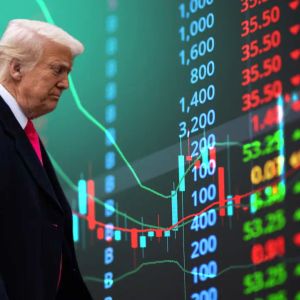
Recent ethics filings with the US Office of Government Ethics have revealed significant stock market activity by Donald Trump during the first quarter of 2026. The filings detailed over 3,700 financial transactions linked to his holdings, with the total value ranging between US$220 million and US$750 million. A substantial portion of these transactions involved the technology sector.
Among the companies whose securities were bought and sold were tech giants such as Nvidia (NVDA), Microsoft (MSFT), Amazon (AMZN), Meta Platforms (META), ServiceNow (NOW), Adobe (ADBE), Oracle (ORCL), Broadcom (AVGO), Motorola Solutions (MSI), Texas Instruments (TXN), Dell Technologies (DELL), Visa (V), Citigroup (C), Boeing (BA), Qualcomm (QCOM), GE Aerospace (GE), and Intel (INTC). These documents showcased dozens of individual transactions, with many valued between US$1 million and US$5 million.
Notably, there were substantial sales in tech stocks, with four of the largest for the quarter falling within this sector. For instance, on February 10, securities related to Microsoft (MSFT), Amazon (AMZN), and Meta Platforms (META) were sold, each reportedly in the range of US$5 million to US$25 million. While the filings provide value ranges rather than specific figures or exact gains, Reuters has calculated the profits to be around US$750 million based on these activities.
Some of these trading dates appear to coincide with significant company news or governmental decisions. For example, a purchase of Nvidia (NVDA) securities, valued between US$1 million and US$5 million, occurred on February 10, just one week before Nvidia announced a major chip agreement with Meta Platforms. Another Nvidia trade, valued between US$500,000 and US$1 million, took place about a week before the US Commerce Department cleared the sale of certain Nvidia chips to China. These filings, however, do not clarify if Trump authorised these specific trades, with some transactions labelled "unsolicited."
According to a spokesperson for The Trump Organisation, all investment holdings are managed within fully discretionary accounts by independent third-party financial institutions. They assert that these institutions have sole discretion over all investment decisions, and trades are executed through automated processes. The spokesperson stated that neither Donald Trump, his family, nor The Trump Organisation play any role in selecting, directing, or approving specific investments, nor do they receive advance notice of trading activity or provide input on portfolio management.
Why it matters for Australian investors
The sheer volume and timing of these high-value trades, particularly around significant company announcements and government decisions, can raise questions about market fairness and access to information. For Australian investors contemplating their own investment strategies, understanding such dynamics in global markets is crucial. While these directly involve a US political figure, the ripple effects of perceived information asymmetry can influence broader market sentiment and regulatory discussions worldwide.
Transparency in financial markets is a cornerstone of investor confidence. When high-profile individuals engage in extensive trading, especially in sectors like technology that drive global innovation, it prompts scrutiny. Australian investors often participate in these global markets directly or indirectly through their superannuation funds or investments in international ETFs. Therefore, the integrity and perceived fairness of these markets are directly relevant to their financial well-being.
Furthermore, the discussion around "insider trading" or even the appearance of it, regardless of the official verdict, highlights the need for robust regulatory frameworks. While Australia has its own comprehensive rules enforced by ASIC and AUSTRAC to prevent market misconduct, events like these can inform debates on how to maintain market integrity across borders, particularly in a globally interconnected financial system. Investors using Australian exchanges like CoinSpot, Independent Reserve, Swyftx, and BTC Markets for their crypto holdings often also have diversified traditional portfolios potentially impacted by global market perceptions.
Impact on the AUD market
While these particular stock trades are centred on US-listed companies and a US political figure, the implications of such large-scale financial activities can subtly influence the broader global economic landscape that Australia is part of. Significant movements in major US tech stocks can impact global equity markets, which in turn can influence investor sentiment towards risk assets, including those priced in Australian dollars.
For the AUD market, any perceived instability or controversy in a major global market can lead to a 'flight to safety' or a re-evaluation of risk. If these events contribute to broader market volatility, Australian investors might see fluctuations in the value of their globally exposed assets. This could also indirectly affect commodity prices, which are a major driver of the Australian economy and, consequently, the Australian dollar's strength.
Moreover, the tech sector's performance often correlates with global economic health. Given the dominance of tech stocks in these transactions, any significant market reaction or regulatory outcomes linked to these trades could spill over into global tech indices. Australian tech companies, while smaller in scale, operate within this global ecosystem and could face indirect impacts on investor confidence or valuations if major international peers are affected.
What to watch next
The ongoing scrutiny of these transactions, particularly the timing of trades relative to significant corporate and governmental news, will be key. While The Trump Organisation maintains that trades are automated and discretionary, the public discourse around these filings may continue.
Australian investors should monitor how regulatory bodies in the US, if any, respond to these revelations. Broader discussions on ethics in public office and financial transparency in major economies can set precedents or influence policy discussions globally. Any new definitions or interpretations of "unsolicited" transactions could also be relevant for understanding future market dynamics.
Furthermore, the performance of the specific technology stocks involved, especially Nvidia given its central role in the AI chip race, will remain a focal point. Changes in the regulatory environment surrounding the AI supply chain and US-China tech relations could have significant market implications. For Australian crypto investors, understanding the movements and sentiment in traditional tech markets can offer insights into risk appetite and capital flows that often influence the digital asset space, even if indirectly. The interaction between traditional finance and emerging digital assets will continue to evolve, making comprehensive market awareness crucial for informed decision-making here in Australia.
In Australia, it's also worth observing how local regulators like ASIC and AUSTRAC might view global developments in market transparency and integrity. While these specific events are US-centric, they contribute to the global conversation about market fairness, which is always on the radar of Australian financial watchdogs. Tax treatment of investment gains, as outlined by the ATO, remains a critical consideration for all Australian investors navigating both traditional and crypto markets.
Coins covered


Common questions
How does the ATO treat profits from stock trading for Australian investors?
For Australian investors, the Australian Taxation Office (ATO) generally treats profits from stock trading as either capital gains or ordinary income, depending on whether the trading activity constitutes a business. If shares are bought with the intention of making a profit on resale, they are usually subject to Capital Gains Tax (CGT). If trading is frequent and systematic, it might be considered a business, with profits taxed as ordinary income. Losses can generally be used to offset gains.
Are Australian exchanges like CoinSpot or Swyftx affected by US stock market ethics investigations?
Australian crypto exchanges such as CoinSpot or Swyftx primarily facilitate the buying and selling of digital assets, not traditional stocks. While direct impact is unlikely, significant ethics investigations or market instability in major global stock markets, like the US, can indirectly influence overall investor sentiment. This sentiment can sometimes spill over into the cryptocurrency market, affecting prices or trading volumes on Australian platforms.
What is ASIC's role in ensuring fair trading practices in Australia?
The Australian Securities and Investments Commission (ASIC) is Australia's corporate, markets, financial services, and consumer credit regulator. Its role includes ensuring fair and efficient markets, which involves enforcing laws against insider trading, market manipulation, and other forms of misconduct. ASIC works to protect Australian investors and maintain confidence in the integrity of Australia's financial system by supervising compliance and taking enforcement action where necessary.
Dive deep into the US$750M Trump stock trades. Our CoinPulse AU analysis examines the tech-heavy portfolio, market timing, and what it means for Australian in