
Long Traders Lose $17.3M as Bitcoin Stalls Below $77,000 on Iran Tension
What happened
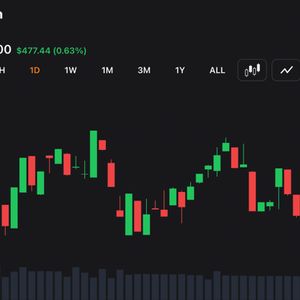
Bitcoin, the world's leading cryptocurrency, recently experienced a period of significant volatility, trading within a relatively tight range between $76,200 and $77,245. While registering a modest daily gain of approximately 0.7%, its weekly performance saw a decline of nearly 5%. This price action ultimately led to Bitcoin stabilising around the $76,750 mark, maintaining a substantial market capitalisation of $1.54 trillion.
This sideways movement and subsequent stabilisation occurred amidst heightened geopolitical tensions. Global markets, including the highly interconnected cryptocurrency space, often react acutely to such events. The uncertainty stemming from these developments appeared to be a key factor in Bitcoin's struggle to push past significant resistance levels.
Long traders, those speculating on an upward price movement, faced considerable losses during this period. Data indicates that these traders lost an estimated $17.3 million across various cryptocurrency exchanges. This figure underscores the inherent risks of leveraged trading in volatile markets and the swift impact of price reversals.
Despite the immediate downturn, Bitcoin's overall market presence remains robust. Its sustained market capitalisation highlights its entrenched position as a major global asset, even as it navigates complex macroeconomic and geopolitical landscapes. The recent price action serves as a reminder of the asset's sensitivity to external factors.
Why it matters for Australian investors
For Australian investors, Bitcoin's performance is often a bellwether for the broader crypto market. While daily fluctuations might seem distant, the underlying reasons for Bitcoin's movement — such as geopolitical tension — directly influence the sentiment and pricing across all digital assets, including those traded on Australian platforms like CoinSpot, Independent Reserve, Swyftx, and BTC Markets.
When global tensions cause Bitcoin to stall, it typically leads to a more cautious investment environment domestically. This can manifest as reduced trading volumes or slower adoption rates for new investors in Australia. The ATO's consistent approach to taxing crypto assets means that understanding these market movements is crucial, as any realised gains or losses, even from short-term fluctuations, have tax implications.
The volatility also highlights the importance of risk management. Australian investors utilising high-leverage products on certain exchanges would have felt the impact of the $17.3 million in long liquidations. While local regulations from ASIC and AUSTRAC aim to protect consumers, the global nature of crypto trading means Australian participants are exposed to global market dynamics.
Furthermore, Bitcoin's struggle to break key resistance levels suggests a period of consolidation. For Australian investors contemplating entry or exit points, this consolidation phase offers both challenges and opportunities. It reinforces the need for thorough due diligence and a clear understanding of market narratives beyond the immediate price charts.
Impact on the AUD market
Bitcoin's price movements inevitably influence the AUD-denominated crypto market. When Bitcoin experiences significant volatility or a downturn, it affects the AUD conversion rates for all cryptocurrencies. Australian exchanges, which largely deal in AUD pairs, reflect these global shifts almost instantaneously.
During periods of market deceleration, like the recent stall below $77,000, Australian investors might observe a dip in the AUD value of their portfolios. This can affect investment strategies, rebalancing decisions, and potentially trigger tax events if assets are sold. The direct correlation means that a weaker global Bitcoin price will translate to a lower AUD price on platforms like CoinSpot or Swyftx.
Conversely, a stabilising Bitcoin price, even after a drop, can bring a sense of relative calm to the Australian market. It allows investors to reassess their positions without the immediate pressure of rapid depreciation. The market's reaction to geopolitical events underscores the interconnectedness of global finance, where Australian crypto holdings are not insulated from international incidents.
AUSTRAC's oversight ensures that digital currency exchanges operating in Australia adhere to anti-money laundering and counter-terrorism financing regulations. While these regulations don't impact market prices directly, they contribute to the overall stability and trustworthiness of the Australian crypto ecosystem, which can be particularly valued during periods of global market uncertainty.
What to watch next
The key metric to observe moving forward will be Bitcoin's ability to decisively break and hold above the previous resistance levels. Analysts will be keen to see if it can convert these resistance zones into support, a classic indicator of bullish momentum. Sustained trading above the $77,000 mark would signal a potential return to upward trajectory.
Australian investors should also keep a close eye on geopolitical developments. While not directly an economic indicator, the easing of global tensions often contributes to increased investor confidence across all asset classes, including cryptocurrencies. A calmer international environment could provide the impetus needed for Bitcoin to resume its ascent.
Monitoring on-chain metrics for signs of accumulation or distribution by large holders will also offer insights. Significant inflows or outflows from exchanges can often precede major price movements. Similarly, funding rates on derivatives exchanges will provide clues about market sentiment, particularly the balance between long and short positions.
Finally, the broader macroeconomic landscape, including inflation data and interest rate discussions from central banks globally, will continue to play a role. While cryptocurrencies are often seen as an alternative asset class, they are not immune to the gravitational pull of traditional financial markets. For Australian investors, observing how these global cues influence local exchange liquidity and AUD-denominated prices will be crucial for informed decision-making.
Coins covered

Common questions
How does global geopolitical tension affect my Bitcoin holdings on Australian exchanges?
Global geopolitical tensions often trigger uncertainty across all financial markets, including cryptocurrencies. When Bitcoin's price is affected globally due to such events, its AUD-denominated value on Australian exchanges like CoinSpot, Independent Reserve, or Swyftx will also fluctuate. This means your portfolio's worth in Australian dollars can change based on international developments.
What Australian tax implications should I be aware of if Bitcoin's price drops significantly?
If Bitcoin's price drops, and you choose to sell, swap, or otherwise dispose of your Bitcoin for a loss, the ATO considers this a capital loss. Capital losses can generally be used to offset capital gains realised in the same or subsequent financial years, potentially reducing your overall tax liability. It's crucial to keep accurate records of all your crypto transactions for tax purposes.
Are Australian crypto exchanges regulated to protect investors during market volatility?
Yes, digital currency exchanges operating in Australia are subject to oversight from AUSTRAC for anti-money laundering and counter-terrorism financing (AML/CTF) purposes. While these regulations don't prevent market volatility, they aim to ensure operational integrity and transparency. ASIC also has some oversight powers related to certain crypto-related products, contributing to a more regulated environment for Australian investors.
Bitcoin saw significant volatility and stalling below $77,000 amidst geopolitical tensions. Learn what this means for Australian investors and the AUD market.