
Gaming Tokens After the Web3 Reset: Why Builders Need Players Before Token Demand
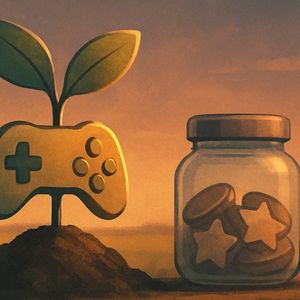
On May 12, 2026, one of the most watched gaming networks went dark on purpose. Ronin paused for roughly ten hours to migrate from a standalone chain to an Ethereum Layer-2 built on the OP Stack. When it came back, the network promised lower token inflation and a new way to reward the builders who keep players engaged — not just speculators.
Three days later, Binance announced the removal of several low-liquidity spot pairs, including AXS/BTC — a sign that legacy gaming tokens without steady demand can fall off major venue menus. Two weeks on, a web3 studio called Moonveil said it would wind down, and its MORE token cratered toward zero. Same market, different outcomes — and a blunt reminder that players, not tokens, are the scarce resource.
Call it a reset. The message to game teams after the froth: build a game people want to return to tomorrow before you ask a market to buy your token today. The Big Picture Editor's note: The Ronin migration stood out: a hard downtime window, a credible supply rethink, and builder-centric rewards.
On the other side, I saw exchanges quietly delist thin gaming pairs and a few studios wind down with tokens fading to pennies. In our newsroom chats with market makers, the refrain was consistent: depth follows users, not tweets. My takeaway is simple — prove retention and sinks first, then let a token formalize value the game already creates.
— Elliot Veynor Web3 gaming’s pandemic-era boom gave way to a long sorting-out. Emissions-heavy play-to-earn loops lost steam as subsidies faded. Exchanges started pruning thin pairs.
Infrastructure shifted toward Ethereum-aligned Layer-2s for lower fees and shared security. Through it all, one lesson hardened: token demand cannot substitute for product-market fit. In sustainable game economies, usage creates value first; only then can a token become the settlement layer for that value.
Reversing the order invites a rush of mercenary capital — and a swift exit. That is what makes Ronin’s May migration noteworthy. The chain introduced a “Proof of Distribution” (PoD) system that pays ecosystem builders and targets a dramatic drop in RON issuance (from double-digit annual inflation to under ~1% annual issuance), aligning rewards with retained player activity rather than raw speculation ( Ronin Network (official blog) ).
Meanwhile, exchange liquidity signposts turned pragmatic: Binance scheduled the delisting of AXS/BTC for May 15, 2026, citing its periodic review — a quiet vote for pairs that actually trade ( Phemex ). And when projects miss the mark on player traction, token utility evaporates, as Moonveil’s wind-down and MORE token collapse underscored ( PlayToEarn ).
From Token-First Hype to Player-First Design What went wrong in the first wave Across 2021–2023, many web3 titles launched with tokens designed as upfront marketing engines. High emissions and reflexive rewards attracted short-term activity, but the core loops — the actual fun — often lagged behind. As emissions tapered, so did the player base.
Tokens priced on future growth had no present-tense utility to catch them. In that cycle, teams treated token demand as the product. But a token is infrastructure.
It routes value through an economy already worth visiting. Without that economy, “number go up” becomes the only gameplay that matters — until it doesn’t. What’s changing in 2026 Builders are quietly rewriting that sequence.
Ronin’s OP Stack pivot brought transaction costs down in an Ethereum-aligned environment, and its PoD builder rewards aim to channel emissions toward creators who keep players satisfied — a measurable, defensible target. The chain’s plan to reduce RON inflation to under ~1% annual issuance signals a new discipline around supply ( Ronin Network (official blog) ).
The migration wasn’t hand-wavy either: it required a hard fork at block #55,577,490 and ~10 hours of planned downtime on May 12, 2026 as assets and state moved into the new L2 environment ( The Block ). This was a complex, visible commitment to infrastructure that supports games — not the other way around. Case Studies from 2026: Signals in the Noise Ronin’s OP Stack pivot For a network centered on gaming IP, aligning with Ethereum’s OP Stack does two things.
It scales developer reach through familiar tooling and inherits security assumptions that mainstream players increasingly demand. Pair that with PoD, and you have a model where token supply is a downstream variable of builder success. Liquidity reality check on exchanges Exchanges are not museums — they rotate inventory to what trades.
Binance’s scheduled removal of the AXS/BTC spot pair on May 15, 2026 was a small but telling cue ( Phemex ). Legacy gaming tokens that relied on narrative rather than consistent usership face dwindling secondary-market attention, especially in BTC-quoted pairs that see thinner retail flow compared with stablecoin pairs. 9% from launch highs toward near-zero levels ( PlayToEarn ).
It’s a stark reminder: token utility is tethered to a living game community. The exit of players often precedes the exit of liquidity. Mechanics That Actually Matter for Game Economies Design sinks before you mint sources Most web3 games list out rewards (sources) before they ship entertaining sinks — the places where players willingly spend.
Reverse it. Durable sinks are cosmetics, status collectibles, time-savers that respect player agency, competitive entries, and seasonal resets that preserve long-term meaning without erasing progress. If a sink can’t stand without a token subsidy, it’s not a sink; it’s an emissions drain.
Let progress, not prices, carry the loop Players return for mastery, social status, and fair competition. Tokens should grease these loops — fast markets for cosmetics, trustless tournament fees, guild treasury governance — not substitute for them. , PoD)Success metricFDV and tweet volumeDay-30 retention, payer conversion, ARPDAU Sequencing Token Demand the Right Way Getting the order of operations right is the difference between a token that amplifies a hit and one that suffocates a prototype.
A pragmatic sequence: Prototype the core loop off-chain. Validate that it’s fun without tokens or NFTs. Instrument retention and session length early.
Add soft sinks. Cosmetics, social features, and progression systems that players ask for — not ones they tolerate. Introduce on-chain rails where trustlessness matters.
Start with custodial or embedded wallets for UX; graduate to self-custody when players care. Token-gate nothing critical. Keep the funnel free-to-start; make ownership an upgrade, not a toll.
Pilot limited-scope tokens. Consider seasonal or off-chain currencies first; test sinks before widening supply. Publish a transparent emissions and sink plan.
Tie issuance to verifiable usage targets and sunset clauses. List later, and list narrow. Favor one or two liquid venues and stablecoin pairs over a scattershot of thin listings.
How to Measure Health Before You List Player metrics that predict durable demand Day-1/Day-7/Day-30 retention across cohorts, median sessions per user, and churn-adjusted daily active users reveal whether the game stands on its own. On-chain, look for unique buyers of cosmetic items, secondary-market resale cycles that stabilize, and a rising share of revenue from non-extractive sinks (things players pay for without expecting a financial return).
Economic telemetry you can’t skip Track the ratio of earned vs. purchased currency, average sink depth per payer, and time to first purchase. If earned currency overwhelms purchased currency for long, speculation is subsidizing fun.
That’s precarious. KPI categoryWhat to trackWhy it mattersRetentionCohorted D1/D7/D30Validates core loop without incentivesMonetizationPayer conversion, ARPPU/ARPDAUEvidence of voluntary spend on sinksOn-chain demandUnique buyers, resale velocityOrganic marketplace activity over airdropsSupply pressureNet emissions vs. burn/sink rateDetects inflation risk before it’s pricedLiquidity qualityDepth at 1% price move, slippageAssesses tradability without artificial boosts Ronin's May 2026 announcement banner (Ronin 'coming home' to Ethereum) — it visually documents the May 12 L2 migration and the new builder‑reward Proof of Distribution, a core tokenomics shift that reframes demand as coming from builders and players rather than pure inflation-driven rewards.
— Source: Ronin Network (official blog) Market Structure, Liquidity, and Exchange Reality Fewer, deeper venues beat many thin listings Teams often chase as many exchange tickers as possible. But venues prune pairs that don’t trade. Binance’s scheduled delisting of AXS/BTC is a case in point: thinner BTC-quoted gaming pairs can fall below venue thresholds ( Phemex ).
Deep liquidity in a small number of stablecoin pairs usually serves players and price discovery better than a spread of illiquid listings. The maker layer matters Market makers provide continuity, but they can’t manufacture demand. Good programs tie incentives to time-weighted quotes and inventory risk, not to wash trading or headline volume.
Lock in fair, transparent terms and avoid obligations that force makers to defend unsustainable levels. L2s, appchains, and the UX trade Ronin’s move to an OP Stack L2 shows the appeal of shared security and EVM tooling for game economies and marketplaces ( Ronin Network (official blog) ). Whether you choose an L2 or an appchain, the decision should be driven by latency needs, custody options, and how easy it is for non-crypto-native players to join.
If migrations are on your roadmap, plan for maintenance windows — Ronin’s ~10-hour downtime shows the operational cost of big pivots ( The Block ). Risks & What Could Go Wrong Speculative overhang: Airdrop farmers and mercenary liquidity exit quickly once subsidies taper, leaving volatile price gaps. Supply creep: Emission schedules that look conservative on paper can bloat under pressure from stakeholders or misaligned reward programs.
Market structure risk: Thin pairs face delisting, wider spreads, and slippage that punish real players trying to buy small amounts. Economic exploits: Smart-contract bugs or design flaws in sinks/sources can create infinite mint loops or drain treasuries. Regulatory uncertainty: Tokens with return-like characteristics may face scrutiny; jurisdictional mismatches can limit exchange access.
Migration complexity: Chain upgrades and bridges introduce downtime, operational risk, and user confusion during state moves. Community fatigue: Pivoting token designs too often can erode trust and depress long-term retention. Assume volatility .
Architect for players who ignore price and return for the game; they are the only counterweight to reflexive drawdowns. For ongoing coverage of ecosystem migrations, token design shifts, and venue liquidity changes, independent desks and founders often cite reporting from outlets like Crypto Daily to track how narratives move from marketing tweets into code commits and exchange notices.
Frequently Asked Questions Do we need a token before we have a playable build? Usually, no. A token is most useful as the settlement and coordination layer for an economy that already shows retention and voluntary spend.
Launching too early shifts focus from fixing the game to propping up price action, which rarely ends well. How should emissions look in 2026 and beyond? Conservative by default, adaptive by design.
Tie issuance to observable usage and sunset emissions that don’t move retention or sink utilization. Ronin’s approach to target under ~1% annual issuance and route rewards via a builder-focused scheme (PoD) is a directionally cautious template ( Ronin Network (official blog) ). What is “Proof of Distribution” in simple terms?
It’s a framework to allocate network rewards to builders based on criteria that reflect ecosystem contribution — for example, maintaining experiences that attract and retain players. The intent is to pay for sustained utility rather than raw speculative activity. How do we reduce the risk of exchange delistings?
Focus on real trading demand, not ticker count. Prioritize deeper liquidity on one or two stablecoin pairs, keep communications with venues transparent, and avoid manufactured volume. Pairs with minimal activity (like some BTC-quoted gaming pairs) are more vulnerable to periodic pruning, as shown by AXS/BTC’s scheduled removal ( Phemex ).
Are NFTs alone enough to build a durable economy? NFTs can anchor identity and cosmetics, but they’re not a substitute for balanced sinks and sources. Strong economies use NFTs for status, community, and creator ecosystems while keeping core progression accessible and fun without mandatory purchases.
How can we tell real players from airdrop farmers? Look for behavioral patterns: session length, completion of skill-based tasks, social graph depth, and spending on non-financial sinks. On-chain, filter for addresses with sustained activity across seasons rather than one-off, incentive-driven bursts.
Should we build on an L2 or launch an appchain? It depends on your needs. L2s like OP Stack environments offer shared security, liquidity adjacency, and familiar tooling, which lower friction for mainstream players.
Appchains give you sovereignty and customization at the cost of bootstrapping your own validator or sequencer set. Ronin’s L2 migration illustrates why many gaming ecosystems now favor L2 alignment ( Ronin Network (official blog) ; The Block ). Disclaimer: This article is provided for informational purposes only.
It is not offered or intended to be used as legal, tax, investment, financial, or other advice.
Coins covered
 View ETHEthereumETHLive price, charts & AUD analysis
 View JSTJUSTJSTLive price, charts & AUD analysis
 View GTGateGTLive price, charts & AUD analysis
 View MKRMakerMKRLive price, charts & AUD analysis
 View OPOptimismOPLive price, charts & AUD analysis
 View AXSAxie InfinityAXSLive price, charts & AUD analysis
 View BTCBitcoinBTCLive price, charts & AUD analysis
 View IPStoryIPLive price, charts & AUD analysis