
Ethereum Price Prediction: ETH Faces $1.8K Risk Unless Bulls Reclaim This Critical Level
What happened
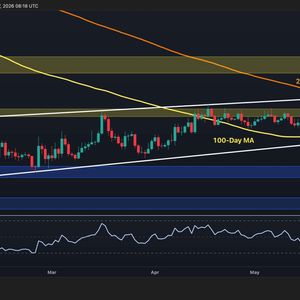
Ethereum (ETH), the second-largest cryptocurrency by market capitalisation, has been navigating a challenging period, with its price recently hovering around the US$2,080 mark. This follows a rejection from the US$2,400 area in mid-May, pushing ETH into a technical zone that, on the surface, appears precarious. The 100-day moving average, positioned at approximately US$2,200, has shifted from a support level to a consistent resistance point, further exacerbating the bearish sentiment.
The cryptocurrency is currently testing the lower boundary of an ascending channel, a critical juncture that could dictate its short-term trajectory. Should this boundary fail, analysts are eyeing the significant demand zone around US$1,800 as the next potential downside target. This represents a considerable drop, approximately US$280 from current levels. The Relative Strength Index (RSI) has also dipped into the 35-40 range, signalling increased selling pressure without yet reaching oversold extremes, suggesting there might be further room for a decline.
However, a glimmer of hope for bulls is emerging on the 4-hour chart. A potential inverse head-and-shoulders pattern appears to be forming. This pattern, if confirmed, could signal a bullish reversal. The potential 'left shoulder' formed near US$2,100, the 'head' at around US$2,000, and the 'right shoulder' is currently taking shape near US$2,080. The neckline for this pattern is identified at roughly US$2,150. A breakout above this level could project a rebound towards at least US$2,250, potentially even retesting the key US$2,400 supply zone.
Despite the price action, on-chain data provides a more nuanced picture. Ethereum's exchange reserves currently stand at 14.8 million ETH. This figure is historically low, indicating that the significant price correction from US$4,800 has not triggered a widespread capitulation among long-term holders. While there has been a modest increase in exchange reserves from 14.4 million in early May, it does not suggest a mass exodus of ETH from personal wallets to exchanges for selling. This scarcity of supply on exchanges could mean that if buying pressure returns, it might encounter less resistance, potentially accelerating a price recovery.
Why it matters for Australian investors
For Australian investors, the performance of Ethereum is consistently a key consideration, given its prominence in many crypto portfolios. ETH is readily accessible on Australian exchanges such as CoinSpot, Independent Reserve, Swyftx, and BTC Markets, where it is often paired with the Australian Dollar (AUD). Volatility in ETH's USD price directly translates to movements in its AUD equivalent, impacting the value of local holdings.
The technical signals currently at play—the potential breakdown of the ascending channel and the emerging inverse head-and-shoulders pattern—offer contrasting outlooks. A move towards the US$1,800 demand zone could see ETH's AUD price drop significantly, potentially triggering stop-loss orders or presenting new entry points for those looking to buy the dip. Conversely, a confirmed bullish reversal could lead to a substantial uplift in Australian portfolios, especially if it reclaims the US$2,400 level.
Australian investors also need to consider the tax implications of their crypto activities. The Australian Taxation Office (ATO) treats cryptocurrency as property for capital gains tax (CGT) purposes. Any profits realised from selling ETH, or even exchanging it for other cryptocurrencies, could be subject to CGT. Understanding these technical levels and potential price movements is crucial for making informed decisions regarding buying, selling, or holding ETH, all of which have ATO implications.
The on-chain data, particularly the historically low exchange reserves, is particularly pertinent. It suggests that despite the price dip, the underlying conviction of many ETH holders remains strong. If this continues, any significant buying pressure, whether from institutional or retail investors, could face a supply squeeze, potentially leading to sharp price increases in AUD terms. This dynamic makes Ethereum's current technical and on-chain setup a crucial watch for local investors.
Impact on the AUD market
The AUD-denominated Ethereum market is intrinsically linked to its USD counterpart, with exchange rates amplifying or moderating movements. When ETH's USD price exhibits strong trends, these are typically reflected in its Australian dollar value on local platforms. A substantial dip towards US$1,800 could see ETH's price on Australian exchanges like Swyftx or BTC Markets fall proportionally, creating potential buying opportunities for those with an AUD cash position.
Conversely, a strong recovery, possibly driven by the confirmation of the inverse head-and-shoulders pattern and a reclaim of US$2,400, would likely lead to a significant surge in ETH/AUD trading pairs. Such movements can also influence broader sentiment within the Australian crypto market, potentially drawing in new retail investors or prompting existing holders to adjust their portfolios. Local trading volumes on Australian exchanges often spike during periods of significant price volatility.
The behaviour of large Australian ETH holders can also play a role. If a significant number of Australian investors were to move their holdings onto local exchanges for sale, it could temporarily increase supply and exert downward pressure on AUD prices, irrespective of global USD trends. However, the current low global exchange reserves suggest that this mass capitulation has not yet occurred on a large scale, which bodes well for the AUD market should global buying interest pick up.
Regulatory developments, specifically from bodies like AUSTRAC or ASIC, though not directly tied to price action, can also subtly influence the confidence of Australian investors. While there are no current signals indicating direct regulatory intervention impacting ETH's price, a stable and well-regulated local market environment generally fosters greater investor confidence, which can indirectly support asset prices during periods of uncertainty.
What to watch next
For Australian investors closely following Ethereum, several key indicators deserve immediate attention. The most critical technical level to observe is the US$2,150 neckline of the potential inverse head-and-shoulders pattern on the 4-hour chart. A sustained 4-hour close above this level would be a strong bullish signal, indicating a potential bounce towards US$2,250 and possibly retesting the US$2,400 supply zone.
Conversely, a failure of the 'right shoulder' to hold above the US$2,000 support, leading to a drop below this level, would invalidate the bullish reversal pattern. This scenario would open the door for a retest of the critical US$1,800 demand zone. Australian investors should also monitor the ascending channel's lower boundary on the daily chart; a conclusive breakdown here would confirm further downside risk.
Beyond technicals, the on-chain data related to exchange reserves requires close observation. While current reserves are historically low, any significant, sustained uptick in ETH moving onto exchanges could signal a shift in sentiment among holders and potentially increase selling pressure. Persistent low reserves, however, would reinforce the narrative of supply scarcity, bolstering the case for a more rapid recovery once demand resurfaces.
Finally, broader market sentiment and macroeconomic factors remain relevant. While not explicitly detailed in the source, global economic conditions, regulatory news from major jurisdictions, and the performance of Bitcoin often influence the wider crypto market, including Ethereum. Keeping an eye on these overarching themes, alongside the specific ETH technical and on-chain metrics, will provide Australian investors with a comprehensive view for navigating the weeks ahead. Decisions around holding, buying, or selling on local exchanges like CoinSpot or Independent Reserve should be informed by these evolving dynamics, always keeping ATO tax obligations in mind.
Coins covered




Common questions
How does Ethereum's USD price impact my ETH holdings on Australian exchanges?
Ethereum's price on Australian exchanges like CoinSpot or Swyftx is typically derived from its USD price, converted to Australian Dollars using the prevailing AUD/USD exchange rate. Therefore, any significant movement in ETH's USD value directly translates to a change in the AUD value of your holdings, affecting your portfolio's overall worth.
What are the tax implications if I sell my Ethereum at a profit in Australia?
In Australia, the Australian Taxation Office (ATO) considers cryptocurrency as property rather than currency. This means that if you sell your Ethereum for a profit, it is generally subject to Capital Gains Tax (CGT). The amount of tax you pay will depend on your individual circumstances, including how long you held the ETH and your other income.
Are there specific Australian regulations I should be aware of when trading Ethereum?
Yes, Australian crypto exchanges are regulated by AUSTRAC (Australian Transaction Reports and Analysis Centre) for anti-money laundering and counter-terrorism financing (AML/CTF) purposes. This typically means you'll need to complete identity verification (KYC) when signing up. While ASIC (Australian Securities and Investments Commission) is also increasing its oversight of the crypto sector, there aren't specific trading restrictions on Ethereum itself for retail investors beyond general market laws.
Ethereum faces critical price levels. Analyse ETH's potential US$1.8K risk versus bullish signals, and what it means for Australian investors and the AUD mark