
Ethereum Holds $2K as Bitmine Adds $52M ETH, Whale Opens $44M Short
What happened
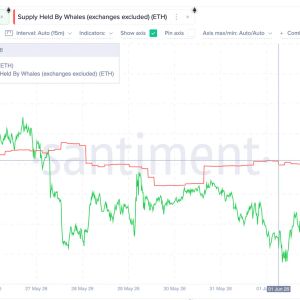
Recent on-chain data has revealed a significant manoeuvre in the Ethereum market. A large trader, often referred to as a 'whale' due to the size of their holdings, initiated a substantial short position for Ethereum (ETH) on the Hyperliquid platform. This position involved 21,948 ETH, valued at approximately $44 million USD at the time of opening. The entry price was close to $2,004 USD per ETH, utilising 10x isolated leverage.
Simultaneously, Bitmine, a prominent entity in the crypto mining space, made a notable acquisition. They added a substantial 26,000 ETH to their holdings, an investment worth around $52 million USD. This move by Bitmine indicates a bullish sentiment, contrasting sharply with the bearish wager placed by the aforementioned whale. These two large-scale transactions highlight divergent institutional and significant investor perspectives on Ethereum's immediate future.
While one large player is betting on a decline, another is signalling confidence through accumulation. Such conflicting high-volume activities often create market volatility and uncertainty. The $2,000 USD price point for Ethereum frequently acts as a psychological and technical support or resistance level, making these trades particularly noteworthy as the asset hovers around this threshold.
Why it matters for Australian investors
These large-scale movements in the global Ethereum market have direct implications for Australian investors. The Australian dollar (AUD) price of ETH is intrinsically linked to its USD value, so any significant price action, whether driven by whales or institutional accumulation, will be reflected on local exchanges like CoinSpot, Independent Reserve, Swyftx, and BTC Markets. Even modest price shifts can impact portfolio valuations for Aussie holders.
For Australian investors holding ETH, or those considering entry, understanding these underlying market dynamics is crucial. While not financial advice, observing such large short positions alongside institutional buying offers insights into market sentiment. It helps in assessing potential future price volatility, which is a key consideration given the ATO's guidance on treating crypto as an asset for capital gains tax purposes.
Furthermore, the use of significant leverage, as seen in the whale's short position, amplifies risk and potential returns, influencing market liquidity and price swings. Australian investors should always consider their personal risk tolerance and investment objectives, especially when observing highly leveraged plays that can lead to rapid price changes. Market volatility can affect both profits and losses, impacting tax obligations in Australia.
Impact on the AUD market
The interplay between a major short position and substantial institutional buying creates a dynamic environment for the AUD-denominated Ethereum market. Should the whale's short position prove profitable, it could exert downward pressure on the global ETH price, subsequently lowering its value when converted to Australian dollars across local platforms. Conversely, if Bitmine's bullish bet prevails, the global price of ETH could rise, translating to a higher AUD value for Aussie holders.
Australian exchanges process transactions in AUD, and while they reflect global prices, local liquidity and trading volumes can also influence micro-level price discovery. Periods of high volatility, triggered by such large trades, can lead to wider bid-ask spreads on Australian platforms. For Australian traders, this means that the effective price they buy or sell at might fluctuate more significantly during these times.
Additionally, the regulatory landscape in Australia, overseen by AUSTRAC for anti-money laundering and ASIC for investor protection, ensures that all transactions on regulated exchanges adhere to specific standards. While these large global trades don't directly fall under Australian regulatory purview, their impact on the AUD ETH price will be felt by all Australian investors operating within this regulated ecosystem.
What to watch next
The immediate focus for Australian investors will be to monitor how Ethereum's price responds to these divergent plays, particularly around the $2,000 USD mark. The liquidation price of the whale's short position, near $2,004 USD with 10x leverage, suggests that any sustained move above this level could trigger a short squeeze, potentially leading to a rapid price increase as the whale covers their position. Conversely, a dip below this level could validate the bearish bet.
Beyond these specific trades, Australian investors should keep an eye on broader market sentiment and macro-economic factors. Global interest rate decisions, inflation data, and regulatory developments, both international and local from ASIC and AUSTRAC, continue to influence the overall crypto market. These factors often have a more enduring impact than individual large trades.
Monitoring on-chain data for further large institutional accumulation or distribution by other significant players will also provide valuable insights. The collective actions of large holders often set trends that retail investors subsequently follow. Staying informed of these developments, combined with a clear understanding of potential ATO tax implications, will be key for Australian investors navigating the dynamic world of Ethereum.
Ultimately, market participants will be keenly watching which perspective — the whale's short or Bitmine's accumulation — proves more influential in determining Ethereum's near-term price trajectory. Such high-stakes moves underscore the volatile yet potentially rewarding nature of the cryptocurrency market, urging Australian investors to conduct thorough due diligence.
Coins covered



Common questions
How does the ATO view leveraged crypto trading for Australian investors?
The Australian Tax Office (ATO) generally treats gains from crypto assets, including those from leveraged trading, as capital gains. If you make a profit from a leveraged position, it could be subject to capital gains tax. Conversely, losses may be eligible for capital losses. It is crucial for Australian investors to keep detailed records of all trades, including leveraged positions, to accurately report their tax obligations.
Can Australian investors use platforms like Hyperliquid for leveraged ETH trading?
While Hyperliquid is a global platform, Australian investors considering leveraged trading on any platform should be aware of the high risks involved and verify if the platform is compliant with Australian regulations. ASIC has restrictions on offering certain leveraged products to retail investors. Always ensure you understand the terms, risks, and regulatory standing before engaging in such activities, and check if the platform offers suitable protections for Australian users.
What impact do large 'whale' trades have on ETH prices on Australian exchanges?
Large 'whale' trades, like the $44 million ETH short, can significantly influence the global price of Ethereum. Since Australian crypto exchanges like CoinSpot, Independent Reserve, Swyftx, and BTC Markets derive their ETH/AUD prices from the global ETH/USD market, these large trades can lead to corresponding price movements in Australian dollar terms. Increased volatility from such events can also affect liquidity and spread on local platforms, impacting the effective buying and selling prices for Australian investors.
A new whale short position and institutional ETH buying signal market divergence. CoinPulse's analysis for Australian investors examines implications for AUD