
Coins.ph adds Bitcoin, Ethereum payments via Philippines QR payment network
What happened
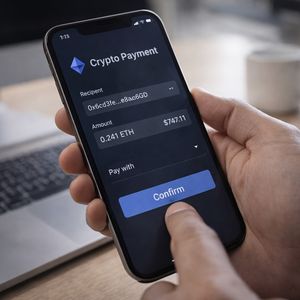
Philippine-based cryptocurrency exchange Coins.ph has significantly expanded its QRPh crypto payment capabilities, now integrating Bitcoin (BTC) and Ethereum (ETH) into the national QR code payment network. This builds upon their existing support for stablecoin payments, notably USDT, which was previously integrated into the same system. The updated functionality allows Coins.ph users to make direct payments in BTC, ETH, or USDT at an estimated 700,000 merchants across the Philippines that accept QRPh.
The core innovation lies in the seamless conversion process: when a user initiates a payment in crypto, the selected digital asset is automatically converted into Philippine pesos (PHP) at the point of sale. This eliminates the need for users to manually convert their crypto to fiat beforehand, streamlining the transaction experience. Coins.ph operates under the regulation of the Bangko Sentral ng Pilipinas (BSP), holding licenses as both a Virtual Asset Service Provider and an Electronic Money Issuer, ensuring regulatory compliance within the Philippine financial ecosystem.
Why it matters for Australian investors
While this development occurs in the Philippines, a significant global remittances market, its implications resonate with Australian investors and the broader crypto landscape. The successful integration of major cryptocurrencies like Bitcoin and Ethereum into a national payment infrastructure demonstrates mature crypto adoption and real-world utility. For Australian investors closely watching the evolution of digital assets, this serves as a powerful case study in how crypto can move beyond speculative trading to become a functional medium of exchange.
Australia has a growing crypto market, with platforms like CoinSpot, Independent Reserve, Swyftx, and BTC Markets facilitating millions in transactions daily. The successful rollout of such a system in a neighbouring APAC nation could signal future trends or inspire similar innovations in Australia. Although Australia's regulatory environment, overseen by ASIC and AUSTRAC, has different characteristics, the push for greater crypto utility and interoperability is a global one. Australian investors holding BTC or ETH may see this as a positive indicator of increasing mainstream acceptance and utility for their assets globally.
Impact on the AUD market
Directly, the Coins.ph expansion does not immediately impact the value of the Australian dollar (AUD) or the AUD-pegged crypto markets. However, indirectly, it contributes to the overall narrative of cryptocurrency mainstream adoption, which can influence investor sentiment globally, including in Australia.
As more nations, particularly within the APAC region, develop robust frameworks for crypto payments, it strengthens the argument for digital assets as legitimate financial instruments. For Australian investors, this reinforces the long-term potential of cryptocurrencies and may encourage further capital allocation into the sector, potentially impacting AUD-denominated crypto trading volumes on local exchanges. The real-world utility demonstrated in the Philippines could also prompt Australian regulators and financial institutions to further explore similar integrations or policy developments around digital currencies and payments, albeit with a focus on AU-specific use cases and consumer protection. Currently, the ATO has clear guidelines on the tax treatment of cryptocurrency as property, and developments like this show a growing potential for crypto to be used regularly, which could inform future discussions around its classification and taxation in Australia.
What to watch next
The success of Coins.ph's expanded QRPh integration will be crucial to observe. Key metrics will include transaction volume, user adoption rates for BTC and ETH payments, and the overall reliability of the system. If this expansion mirrors the significant transaction activity seen with the initial USDT rollout, it could set a precedent for other countries, including those in Australia's economic orbit, to explore similar national integrations.
Australian investors should monitor how regulatory bodies, such as AUSTRAC and ASIC, react to international trends of crypto-to-fiat payment innovation. While Australia has a robust financial system, the global movement towards embedding crypto into national payment infrastructures could spur local discussions on how digital assets can further integrate into the everyday economy. Further observation of the Philippines' experience could provide valuable insights into the opportunities and challenges of scaling crypto-backed payment solutions, informing future strategic considerations for Australian crypto platforms and financial policy makers. The increased utility of major assets like Bitcoin and Ethereum abroad may also influence Australian investor confidence and long-term holding strategies.
Coins covered



Common questions
How does the ATO treat cryptocurrency payments if I use them like this in Australia?
The Australian Tax Office (ATO) currently treats cryptocurrencies as property for capital gains tax (CGT) purposes. If you were to use Bitcoin or Ethereum to pay for goods or services in Australia, this would generally be considered a 'disposal' event, potentially triggering CGT. Any gain or loss from the crypto's value since you acquired it would need to be declared. For common transactions and personal use, specific exemptions or rules might apply, so it's always best to consult the latest ATO guidance or a tax professional.
Could Australian crypto exchanges like CoinSpot or Swyftx offer similar QR code payments?
While the Philippines has a national QR payment standard (QRPh), Australia's payment landscape is different, primarily using EFTPOS, PayID, and NPP for instant transfers. However, Australian crypto exchanges like CoinSpot, Independent Reserve, Swyftx, and BTC Markets already facilitate easy AUD fiat on/off-ramps and crypto purchases. Should a national, interoperable QR payment standard for crypto emerge or gain traction in Australia, it's plausible these exchanges would explore integration to enhance user experience and utility, similar to Coins.ph's model.
What is AUSTRAC's role in regulating crypto payments like those in the Philippines?
AUSTRAC (Australian Transaction Reports and Analysis Centre) is Australia's financial intelligence agency primarily focused on anti-money laundering (AML) and counter-terrorism financing (CTF). While the Coins.ph development is in the Philippines, AUSTRAC regulates Australian businesses dealing with digital currency, ensuring they report suspicious transactions and comply with AML/CTF obligations. Any future crypto payment systems in Australia would fall under AUSTRAC's purview to prevent illicit financial activity, ensuring the integrity of the Australian financial system.
Discover how Coins.ph's Bitcoin & Ethereum integration into the Philippines' QR payment network impacts Australian investors and the global crypto adoption na